
Onward: A Strange Choice for PIFF

This review was written by McKinzie Smith.

Like many in our class, I was interested to see how the screenings of the new Pixar film Onward would fit into PIFF. PIFF is no stranger to children’s films; one of the most vibrant films I saw last year was a Japanese anime in the “Films for Families” programming block called Okko’s Inn. This “Films for Families” block was always a welcome sidebar. Its films were never too heavy, being family friendly, and brought in a more diverse audience than some of the other categories. This year, the block has been dissolved along with all of the other traditional PIFF blocks like “PIFF After Dark” and “Global Panorama.” Instead, there are two competitions “Future/Forward” and “Future/Future,” with a couple of films thrown in with no distinct category other than “Feature” or “Shorts”. Personally, I find this confusing for the casual festival-goer who may desire more guidance, or who may know their tastes but now have no programming indication as to which films may fit that taste.

A good example of this change is the case of Onward. Removed from its context as one of the hypothetical “Films for Families,” it has its own special page in the schedule-book that says “Family Screenings.” It is the only film listed under this label, despite there being two other family-oriented films from GKids (Children of the Sea and Marona’s Fantastic Tale) at PIFF this year. This makes Onward stick out like a sore thumb. Had it been in a more cohesive family category, it may have appeared less like the financial favor to PIFF from Pixar that it likely is. All three films may have also acted as legitimizers of each other when placed in an “equal” category, with Onward gaining potential cultural capital and the two GKids releases gaining potential economic capital. I think this damaged Onward‘s chances of being truly seen as a festival film. I was a volunteer for the paid screening of the film and we had more ticket buyers than pass holders attend. The largest groups were of families that didn’t seem to care that they were technically attending a festival; they just wanted to see the film without necessarily engaging with PIFF.

The film itself was sweet and emotionally resonant, exploring grief and regret in a mature way, despite some so-so jokes sprinkled throughout. Onward is a Pixar film and they are known for well-above-average children’s entertainment. It felt like the kind of family film that belonged at a festival, but to belong in a festival a film must be treated as such by its organizers. I do think having the community screening was an important step for the festival in introducing families to their event. However, the paid screening was a fumble. Less than one hundred people showed up, a low turnout. If PIFF wants to continue to reach into more mainstream entertainment or toward family fare, they’ll need to come up with a more effective way to both advertise and legitimize their choices.
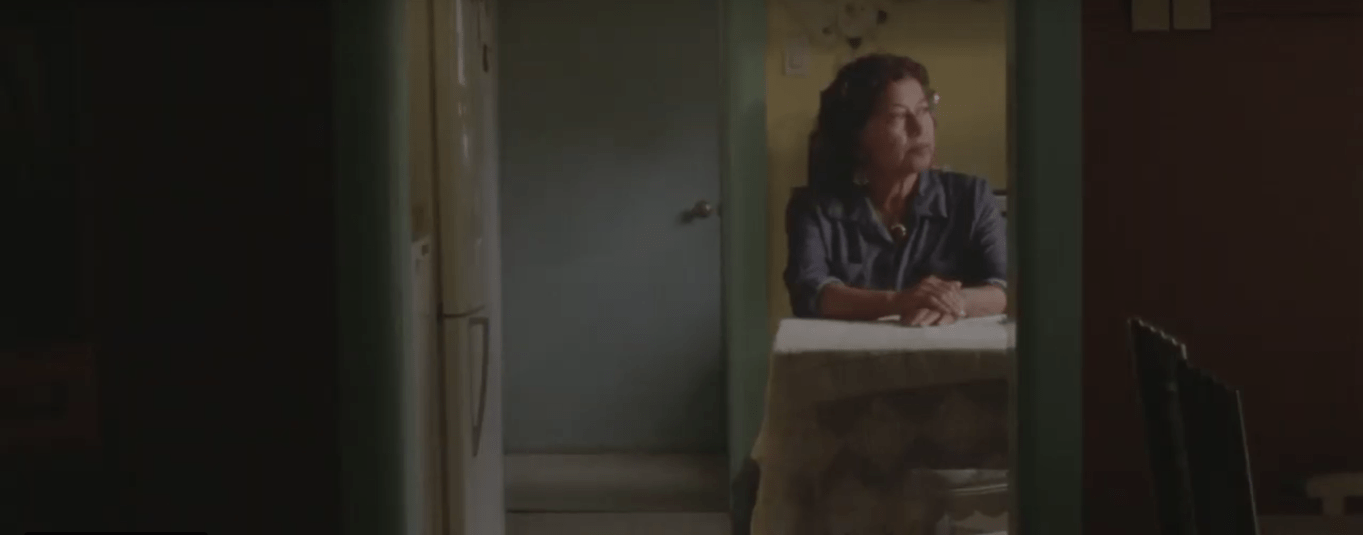

Borrufa (2020)

This year at the 43rd Portland International Film Festival, the festival was running a Future/Future Competition. The festival describes this competition as “highlighting boundary-pushing new cinema from emerging filmmakers”(cinemaunbound.org). The first film to play from this selection was Borrufa(2020), which PIFF described as an immigrant woman’s navigation of her husband’s betrayal, and a film that blurred the lines between documentary and narrative. It claimed the film utilized “long, thoughtful takes,” raising the expectations for an aesthetically, if not also narratively, brilliant film. Though perhaps this description was not clear enough for many, as the audience seemed quite appalled by the overall pacing of the film.

The film style had borrowed many elements from Neorealism, such as 3-5 minute takes with little action, little dialogue, and a stagnant camera, often leaving us with an empty frame. The actors were also untrained and confirmed in the talk-back that this was their first film, and all of them had been apprehensive about their roles initially. However, each actor completely embodied their role, filling the story with powerful human emotion. The woman the story primarily follows had a strong sense of loss and longing, highlighted by several solo scenes. One of which, she dances to a slow song in her kitchen, holding her chest as she gently sways alone. Without a word from her we can feel her hurt in the light of her husband’s betrayal, and her loneliness appears overwhelming. In another scene she speaks to her mostly incoherent mother, who sits directly beside her, and she tells her mother how much she misses her presence. Sadly, The actor revealed in the talk-back that the old woman was her actual mother, and she passed 4 months after shooting had completed. Those moments of longing and love for her mother feel so genuine, and it’s because they were.

The shots were primarily empty, leading the viewer to focus on a few particular objects that were visible. In one scene, the woman walks in a garden space, mostly out of view. She disappears completely and yet we continue to sit in that space in her absence. This occurs multiple times throughout, where a character will walk out of frame and the camera stays to watch the empty space the character has left behind. It seems a theme of change and the passage of time are all tied to the characters, plot and the style. This long pensive film about loss holds us in moments of absence, in moments of quiet sorrow, and all of this is so human that it is uncomfortable.

During the talk-back following the screening, filmmaker Roland Dahwen revealed that he wasn’t so interested in the final product, but instead he was more captured by the process of creation. He claimed it was a 7-year journey creating this 110 minute film, and he seemed quite melancholy that the journey had finally ended, interestingly lining up with the themes of his film. His creation was not meant for the masses, it was meant for himself, his actors, and a small community of supporters. The fact that anyone outside of that group would enjoy the film seems merely coincidental. Perhaps this is why the film aggravated so much of the audience, perhaps they could sense that the film was not made for them as mass-market and even most festival films are.

Being the first film to show in this competition, it may have put off quite a few of the attendees. “Boundary-pushing” can mean many things, and in this case the film challenged our sense of a traditional film’s pacing and the attention paid to the most insignificant of details. Slow cinema like this is considered a difficult style to watch, especially for the average audience members used to high paced action movies of Hollywood. Many people walked out of the film, and more complained throughout to their neighbors. This outrage from the audience members was very distracting to anyone who was trying to enjoy the film for what it was. Perhaps the festival should have been more clear in the description of the film that it was not an entertainment piece, but an art piece. This would have whittled the audience down to those who could quietly enjoy the film, and saved angry guests the ticket price of a film they clearly despised.

  • Emma Mayfield (717 words)

Onward, directed by Dan Scanlon

Onward, a Pixar film released on March 6, was one of the first films screened at the Portland International Film Festival. The film, directed by Dan Scanlon – who also directed the popular Pixar film Monsters University – follows the journey of two brothers on a quest to (with the help of a little magic) spend one last day with their father, who passed away when one brother was young and the other had yet to be born. This film highlights the role family plays in life and in growing up – as many Disney films do – but it deviates slightly in how familial relationships are emphasized and demonstrated to be important. In the end, by revealing the significance of sibling relationships and the role older siblings play in someone’s life, Scanlon has deviated from the “norm” of Disney films, in which parents are almost always the key adult figure in a child’s life.

The animation was visually engaging, as a film whose target audience is children should be, and the world in Onward was unique. A place in which modern technology and innovations have become easier and more popular than magic, and in which most creatures forget they even had magic to begin with, is an interesting concept. The intersection between modernity and magic and how that is demonstrated in the film – whether with the architecture of high-rise buildings with castle turrets at the top, or with the the classical “loyal steed” as a beat up old van with a unicorn painted on the side – is entertaining.

Onward is an interesting and potentially controversial choice for a film festival, as it is a Hollywood film produced by a very large and well-known corporation. Film festivals provide a space for independent films to be shown, to gain an audience, to share ideas, and to educate people on the world around them. Onward does not fit with the dozens of other independent films chosen for this festival in this regard. As well, it has the potential to take away some of the prestige of the festival because it is a Hollywood film. It also takes two screening slots away from an independent film that could have been just as interesting, and needs a place to show their work. Onward will never have trouble finding an exhibition space, so offering this film a place in PIFF seems contrary to the purpose of film festivals. Conversely, screening a widely-publicized and easily recognizable children’s film could help gain audiences with adults whose first introduction to PIFF is through bringing their child to the community screening.

The only difference between seeing Onward at the Hollywood Theatre rather than at a Regal or Cinemark Theater is the fact that it is involved in a festival. Onward was released on March 6 around the United States of America, and was screened twice for the Portland International Film Festival on March 7, so contrary to what the volunteer said in the announcements at the beginning of Onward’s showing at the Hollywood Theatre, PIFF did not premiere Onward. Besides the fact that Onward’s screenings at the Whitsell Auditorium and the Hollywood Theatre were a part of PIFF, there don’t seem to be any other differences between them and a corporate exhibition space. Even the price is similar – in truth, an adult attending the paid screening of Onward through PIFF is two dollars more expensive than going to see it in the evening at a Regal Cinemas Theater.

In all, Onward is a fine film and one that many families will enjoy. However, it does not measure up as a part of the Portland International Film Festival and would be better left to commercial theaters.

Emma Chitwood

Introduce Yourself (Example Post)

This is an example post, originally published as part of Blogging University. Enroll in one of our ten programs, and start your blog right.

You’re going to publish a post today. Don’t worry about how your blog looks. Don’t worry if you haven’t given it a name yet, or you’re feeling overwhelmed. Just click the “New Post” button, and tell us why you’re here.

Why do this?

  • Because it gives new readers context. What are you about? Why should they read your blog?
  • Because it will help you focus you own ideas about your blog and what you’d like to do with it.

The post can be short or long, a personal intro to your life or a bloggy mission statement, a manifesto for the future or a simple outline of your the types of things you hope to publish.

To help you get started, here are a few questions:

  • Why are you blogging publicly, rather than keeping a personal journal?
  • What topics do you think you’ll write about?
  • Who would you love to connect with via your blog?
  • If you blog successfully throughout the next year, what would you hope to have accomplished?

You’re not locked into any of this; one of the wonderful things about blogs is how they constantly evolve as we learn, grow, and interact with one another — but it’s good to know where and why you started, and articulating your goals may just give you a few other post ideas.

Can’t think how to get started? Just write the first thing that pops into your head. Anne Lamott, author of a book on writing we love, says that you need to give yourself permission to write a “crappy first draft”. Anne makes a great point — just start writing, and worry about editing it later.

When you’re ready to publish, give your post three to five tags that describe your blog’s focus — writing, photography, fiction, parenting, food, cars, movies, sports, whatever. These tags will help others who care about your topics find you in the Reader. Make sure one of the tags is “zerotohero,” so other new bloggers can find you, too.

Design a site like this with WordPress.com
Get started