The Climb at Cinema 21

In a post-screening Q&A, writer, producer, and actor Kyle Marvin described contemporary comedy in cinema to be focused on fitting as many jokes into the script as possible. In The Climb, Marvin and his director/co-producer/co-star Michael Angelo Covino come together to create a different kind of contemporary buddy comedy, one with uniquely long takes, slow burns, and a humor that doesn’t feel the need to prove itself to an audience by throwing out jokes faster than can be appreciated. The film paces itself, and builds on its array of characters over a long period of time, revealing only the most poignant parts of them when is necessary. The Climb is about relationships, love, and the toxicity of a friend. Its subtle withholding of information throughout the story paves the way for audiences to fill in any remaining gaps about these characters, which brings thematic elements of the film to life. Judgements that the characters make about each other are mirrored in the judgements the film encourages audiences to make by its in-media-res approach to exposition and minimalist dialogue. Despite The Climb’s unorthodox approach to jokes, it is couched in a timeless storyline that is a mix of classic buddy and romantic comedy.

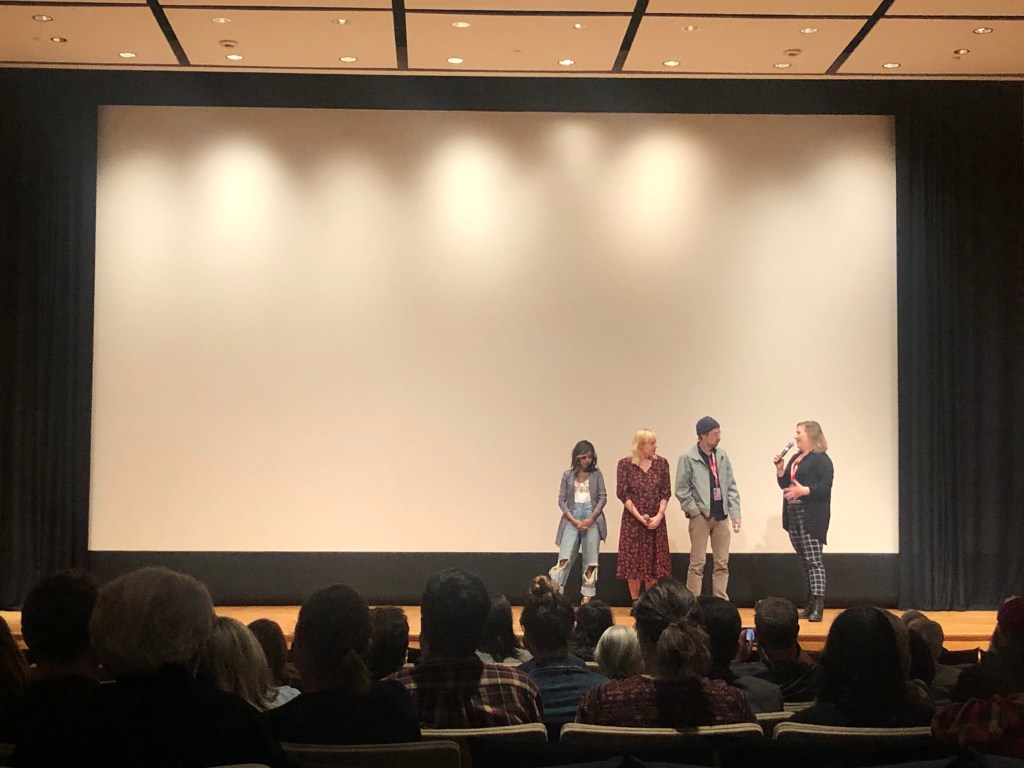
The event of The Climb’s opening night at Cinema 21 was as singular as the film. Marvin and Covino were in attendance with their families, mixing it up with festival-goers over popcorn. They made a short appearance before the screening, proclaiming that they “made this movie for Portland,” which is to potentially say, for an audience with a distinct sensibility favoring eclecticism and creative transgression, offered by The Climb in spades. Adding to the ‘eventness’ of the evening, the co-creators were asked a handful of questions regarding their artistic inspirations and careers immediately following the film. Marvin and Covino were charismatic and humble, and both spoke candidly about the importance young filmmakers should put on helping others make films if they have dreams of creating independent features. It was an enjoyable and inspirational way to close out the screening, not only because it shed light on the film and its makers, but because it encouraged audiences to engage further. 

Showing the darker side of a friendship through a character driven comedy, The Climb gives audiences a chance to appreciate the intricacies and complexities of people that can be difficult to talk about. Marvin and Covino’s performances examine some harsh realities of long term friendships with a comedic tone that viewers can relate to and laugh at, and The Climb offers audiences a modern cinematic representation of relationships that can be used to think about our own lives and how we treat the people who love us. During the Q&A, the filmmakers shared that The Climb began as an original short Marvin and Covino produced together that got into Sundance. From there, the idea grew, and the duo adapted it into their own feature. The unpretentious honesty about their journey towards making The Climb exemplifies that it is just as much the films that make up PIFF as the stories, conversations, and people that surround them. Films like The Climb integrate well into PIFF’s festival theme of unbound cinema through a unique vision and expression that has the power to engage our communities.  

–Sarah Johnson
It Must Be Heaven (2019)

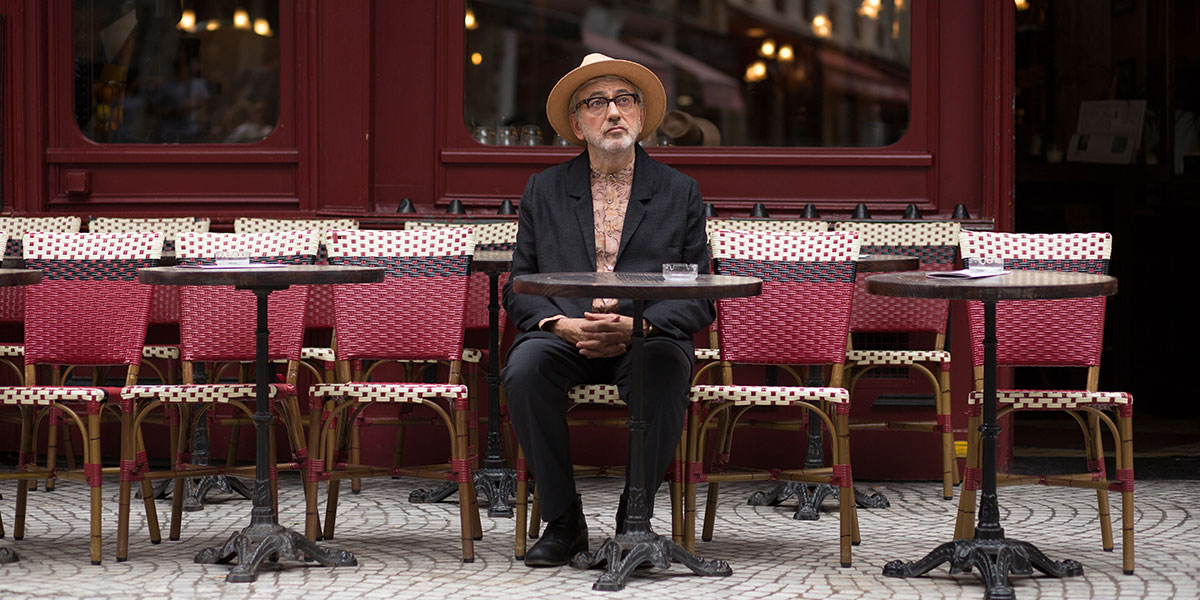
There is a misconception of festival films as being eternally stuffy and self-important, but director Elia Suleiman couldn’t be farther from such concepts. In his return to film, It Must Be Heaven, he tackles the Israel/Palestine conflict through a global perspective. Before walking into the film, I heard one festival-goer complain that “every festival has to have an Israel/Palestine movie.” Luckily for him, Suleiman is aware of this. Heaven is nothing if not self-aware, to the point of being self-effacing. Even as it acts as a serious love letter to Palestine, it makes light of cultural expectations of what a Palestinian film should look like. After all, this is a film that takes place in Paris and New York, only allowing half of its screen time to Palestine. And yet, Palestine feels present, even when Suleiman (playing himself as a silent, deadpan world traveler) wanders the streets of foreign cities. It’s a lofty idea that is made more approachable through humor and whimsy.

It Must Be Heaven was a wonderful film to go in blind to. The PIFF website describes it as “frequently funny,” but I couldn’t have anticipated exactly how funny it would be. One gets the impression that Suleiman wished to play upon these expectations. The opening sequence sets the film up to be a serious religious drama before breaking tone to make a grander point about gate-keeping and borders. This point is made in such a silly, childish way that it’s difficult not to open your heart immediately to what the film has to say. The rest of the film continues in this same spirit, bolstered by a lovable, straight-faced performance by the director.

The idea of national identity recurs throughout, always interrogated through satirical or otherwise comical means. During his time in Nazareth, Suleiman is accosted by his strange neighbors. There is no ill will between them, just a desire to share their experiences with one another, no matter how eccentric those experiences may be. The fraternity shared between Palestinians in an Israeli-occupied city is highly present. France and the US are presented quite differently. In France, we see a procession of fashionable but unapproachable people. The streets are become physically empty during a run of scenes that take place on Bastille Day, showing a lack of connection both to each other and to the revolutionary spirit of the holiday. America is especially lampooned. As an American, I found the sequence showing all the New Yorkers carrying a procession of bigger and more absurd guns to be amusing and enlightening.

That isn’t to say that the whole film is just laughs at the expense of various cultures. It uses those laughs to make broader points about cultural difference, especially from a Palestinian perspective. When Suleiman goes to pitch his film to both French and American distribution companies, he is waved off for different reasons. The French wish for a more distinctly Palestinian film to be touted around at festivals, while the Americans only have interest in potential action films that can be presented in English. Western countries silence the voices of others, but we do it in our own uniquely terrible ways. Despite this continued string of disappointing encounters abroad, Suleiman manages to showcase his own culture through it all. Mentions of Palestine are continual, even when he isn’t there. He goes to a tarot reading in New York and the card reader tells him that Palestine will continue to prevail. Maybe not in his lifetime, but still. It will continue to exist because of the tenacity of its people. Perhaps films like this are helping keep that spirit alive.

In no scene is this more clear than the end, as a group of young, happy Palestinians dance in a club together. Suleiman watches, sipping a drink. For the first and only time in the film, he gives a little smile. It may seem a small gesture of good will, but it carries with it a belief in a more positive future for Palestine.

This review was written by McKinzie Smith

Life as We Know It: A Review of Anna at 13000 Feet

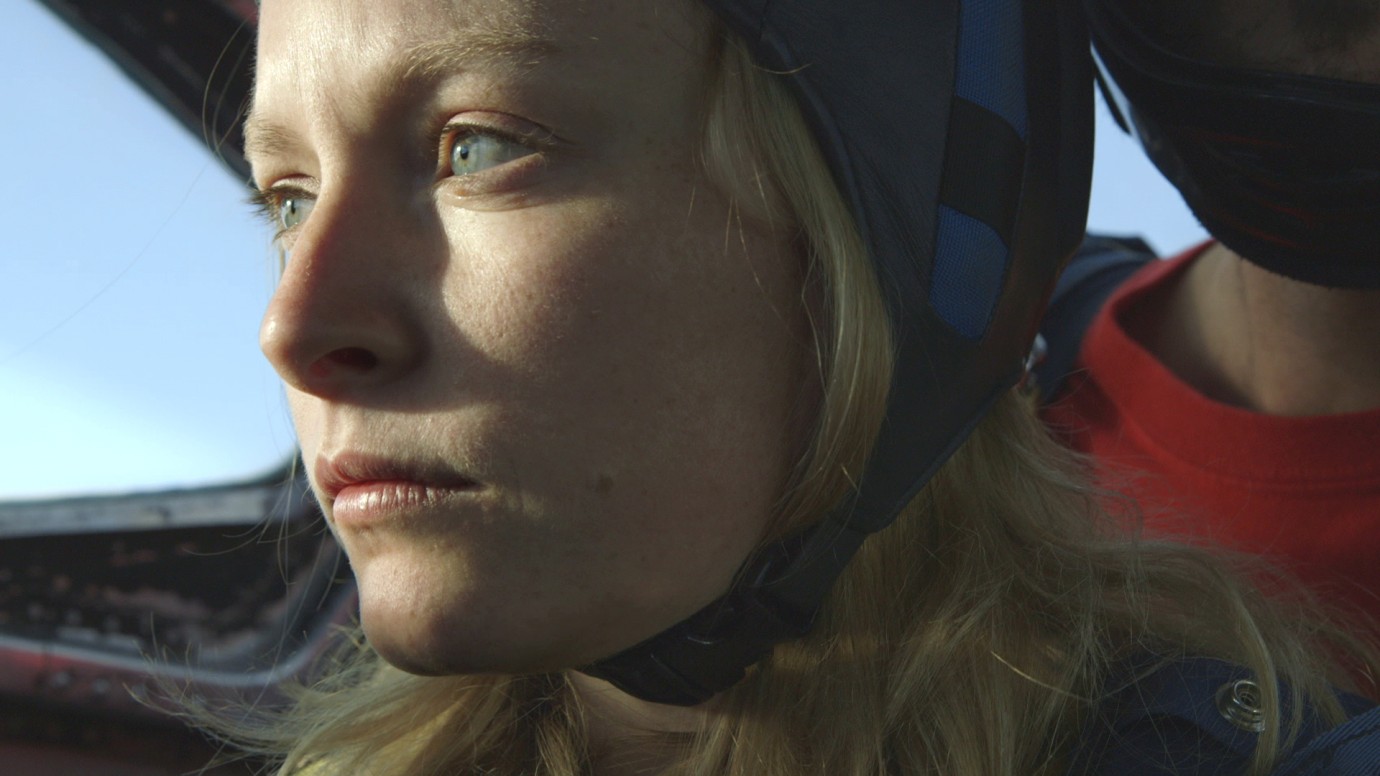
Anna at 13,000 feet directed by Kazik Radwanski is a heartbreaking story that revolves around the concept of loneliness and anxiety. The narrative is built around the character Anna (played by Deragh Campbell)beginning to live on her own while starting full time employment at a local Seattle daycare. Anna as a character is reluctant to conform to any set ideals of being normal, accomplishing so by acting out in strange and bizarre ways that characters find off putting or “crazy”. The 13,000 feet in the title of the film refers to the skydiving an one time activity that becomes Anna’s escape from the rest of society. The significance of the 13,000 feet has to do with the freedom and acceptance that Anna gets from skydiving but reluctantly gets in her regular life. We as an audience see what happens when Anna attempts to show her real self to others first in the wedding of her best friend Sarah (played by Lawrene Denkers), the daycare and the skydiving school. At the daycare and the wedding, Anna, is at her most disjointed from the rest of the world seemingly floating throughout the day compared to the other adults in the film. This is especially true considering the use of children in the film which act as emotional equivalents for Anna. The kids in the film are Anna’s best friends and often act as the only people that she can talk to and share without the fear of judgement or belittlement. At the wedding in lieu of Sarah being her emotional support Anna turns to the best man Matt(played by Matthew Johnson) but outside the wedding this support is never recreated again. At the skydiving school Anna is completely self-relevant she does all of the preparation and her final jump on her own in order to gain a sense of independence. In this sense she is never rejected or belittled at the school and ultimately finds a purpose that she can pursue outside of regular reality.  The films greatest value comes from the cinematography which provides a language to Anne’s motivation. Radwanski constantly uses handheld camera movements to personify Anna’s isolation from the others around her. He achieves this by frantically trying to reframe Anna who is constantly moving in and out of frame. This type of movement is often parried with the use of close ups even when other characters are talking to Anna off screen. This type of shot selection doesn’t change until Anna is able to skydive, framing her overlooking the skyline while in static shots. This is done to put Anna outside the boundaries of her society achieving a level of stratification that she cannot find in anyone else in the film except while skydiving. Her best friend is trying to start her own life, Matt becomes more distant the more Anna reveals herself to him and the kids are too immature to understand the hardships she goes through. To this point skydiving becomes Anna’s moment of solace between the constant boring nature of life, a chance in which the ills of the modern world go by the wayside. Anna’s progression toward the film is not one that is meant to be a self discovery but more as a comment on the unglamorous view of the 21st century person. Radwanski provides the audience with a glaring critique of self therapy and the reliance on other to support you. At the same time he also underlines the importance of finding a purpose in life even if it is in skydiving.

By Nick Garza

The World is Full of Secrets (2019): An Eerie and Nostalgic Exploration of Female Friendships

Do you remember your childhood sleepovers? The ones where you would stay up with your friends, eat pizza, pierce each other’s ears, and try to prank and scare each other all night? The World is Full of Secrets by US director Graham Swon immerses us into this nostalgic experience, while succeeding as an unconventional horror. 

Set in the summer of 1996, five girls have a sleepover and tell increasingly violent scary stories to each other. Though this film lacks in plot, it uses several narrative techniques to keep the audience’s attention. The story in itself is relayed by an older and hardened by trauma Suzie as she narrates her memories of that night. She hints at a horror that will tear apart their friendship, yet their story is not the ones we are told; rather the girls are telling us other stories revolving around brutality on teenage girls. The film itself never visually portrays violence, the imagery is more tender and poetic than it is scary. The horror comes the stories the girls tell, the ominous nondiegetic music that plays thoughout their stories, and the lingering mystery of what will happen to the girls that night.

The act of remembering is shown through the visuals in this film. Swon’s clear affection for cross fades gives the film a dream-like experience, as if we are jumping from one idea to the other within our own consciousness. Nobody can realistically remember every detail from an event in their lives, and this reality is expressed through the editing of the film. This also helps break apart the two single take monologues that run for a whopping seventeen minutes and thirty-four minutes respectively. What the camera chooses to focus on rather what it should be focusing on helps build Swon’s hyper-stylized world that works within the rules of memory and the subconscious. The camera would focus on the girl’s appendages, the microwave, or a staircase rather than the girls themselves. We are always given pieces of the whole rather than the whole, similar to how our memory works. 

The film practices the acts of both distancing the audience and immersing them. The monologues performed by Suzie (Ayla Guttman) and Emily (Alexa Shae Niziak) are single takes shot in close ups. We are uncomfortably close to these girls as they tell us their stories, this claustrophobic experience gives the effect of being a part of the sleepover. Yet, we never get visuals that are relevant to these stories. Left to our imagination, the audience is welcome to wander and create these scenarios in our minds. A thirty minute take is challenging to sit through and a feat to endure. It is uncomfortable and awkward, however it adds to the eeriness of the story. 

The World is Full of Secrets is not for everyone; the monologues are intimidating and the narrative choice of “tell don’t show” is contradictory to what we know about what film can do. However, the mise-en-scene is dream-like and beautiful, the stories are effectively disturbing, and the experience of sitting through these long takes in a theater is satisfying. If you missed it at PIFF, The World is Full of Secrets is a film worth hunting down.

-Written by Anny Gutierrez

PIFF 2020: Cloudy but distinct demarcation between longing and obsession:  and

Emancipation for the past, the beginning of obsession. About the visualization of immensely human emotions. 

 Nothing is more interesting than watching two different movies in a low that have completely dissimilar styles and language but are still similar somehow. At PIFF 2020, the audience could experience this by watching A White, White Day directed by Icelandic director Hlynur Pálmason and Sibyl directed by French director Justine Triet at Cinema 21. These two films have a very different style and, storyline, however, they are both focused on the character’s ‘emotional state’. Two main characters, Ingimundur and Sibyl are living with severe trauma as if they weren’t affected, but they slowly got engulfed in their new obsession and their life is snarled up again.  These two films show the instincts of human being, longing (They both lost someone they love) and obsession by following the character tenaciously, however, the way they visualize the development of those emotional states is completely different. How and what do they chose to convey this complexity? 

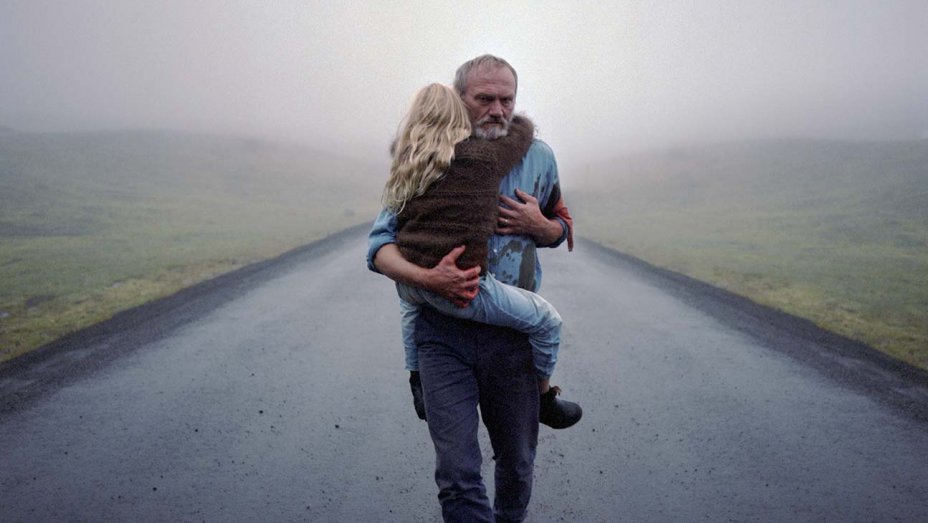
 The salient difference between these two films is how they show the characters and how they make the audience follow them. In that sense, A White, White Day is unkind, whereas Sibyl is kind to the audiences. A White, White Day is full of the long, static takes. the evident point is most of the angles (except the last shot) in this film are wide-angle so it creates psychological distance between the audience and the main character. By doing so this film blocks the audience from relating our emotion to the character easily or excessively. why did the director choose this hard way (the audience can be bored by any possibility) for visualization?  In some ways, this is a great choice to visualize Ingimundur’s emotion because he closed his mind after losing his wife for the accident. So we can not see his mind easily. Also, this film uses another strategy for showing his isolated emotion. They use the nature of Iceland, the hazy fog for representing his blurry emotion. While he is trying to dig into his wife’s secret, the fog lifts but at the end, the only thing left is another hazy fog (his trauma still exists) and the vivid color of the blood (they used color in a clever way as a metaphor of his life) on his clothes. In addition, Hlynur uses ‘Monitors’ throughout the film. The television show talking about the death, surveillance camera monitor, and the desktop monitor for mental counseling, all those things demonstrate isolated Ingimundur as well. However, he finally sabotages the monitor, meaning he finally breaks out from his cage and turns his inner longing to a new excessive obsession. 

 On the other hand, Sibyl plainly shows Sibyl’s emotion to the audience. Sibyl, like Ingimundur from A White, White Day, has suffered from her past relationship who left her and their child. And she becomes obsessed with an actress who is in a similar situation to her and things get worse and worse. The film has rapid story development and scene changes, lots of retrospection of Sibyl that tell what happened to her, and the film keeps showing her emotion explicitly, all of which make the audience participate the story a lot easier than A White, White Day. But this does not mean Sibyl is an easily understandable film. As Sibyl remarks during the movie, “Life is like a fiction, we can rewrite and rewrite whenever we want”, this film has a complicated structure to understand. This film shows her past chaotically without giving any special note that people usually differentiate present and past by using it for not making any confusion to the audience. In addition, we could see her imagination during the film, like reading the fiction that she’s working on. Justine using this disoriented structure as a fog in A White, White Day. This makes Sibyl’s emotion richer to analyze. 

 These are two well-made films that deal with comparable situations and emotions of characters but in completely different ways and surprisingly, they have a similar ending. There is nothing more important than human emotion in the film. But especially because these two films focused on the character’s emotional turbulence and how they change their surroundings and themselves as well, how to visualize their emotion throughout the movie run time is an essential question. And they used every aspect of mise-en-scène wisely to visualize their emotion.  – JK Lee

nipawistmasowin: We Will Stand Up (2019)

I would like to start by issuing a “Spoiler Alert”, so if you don’t like having plot points of films being revealed then you should stop reading reviews and go watch the film.

The documentary nipawistamasowin: We Will Stand Up(2019) followed the story of a Cree-Canadian family seeking justice after the murder of their young family member. The film is mostly a typical criminal justice documentary, though the twist lies in the race element and the gross miscarriage of justice that followed them through the entire process. The filmmaker, Tasha Hubbard, is also a member of the Cree tribe, and her insider status was prevalent throughout the film. She often inserts herself into the story, which breaks the rules of the typical observational documentary. Her style is instead participatory, and this approach would have been impossible if she had not been Cree. Her deep understanding of the abuses the Cree faced over generations guides the film’s determination. This is not a film about minorities complaining about unequal rights, this is a film about the destruction of the native population, the murdering of human beings, and a government who is more or less complicit. One woman is shown calling the whole scenario a message to racists that it is “open season on indigenous people.”

Tasha’s insider status allows a much more personal view of the subject matter. Many of these criminal justice documentaries rely heavily on fact and stoic interviews with family members, because this is generally how a courtroom is supposed to work. Even though she did not know the family well before the murder, they are completely at ease speaking with her because they know they don’t need to be on the defensive. Tasha never challenges the idea that racism is at play because she knows all too well. The fact that she began filming this documentary before the trial even started is proof of that. Even though she could not have predicted the course the trial would take, she knew that there would be injustices to document. 

These injustices started seemingly small, with native jurors being rejected on sight and the lack of communication between the prosecution and the family of Colton, the murdered young man. In the trial they discovered that Colton’s body had been left at the crime scene uncovered for a full day, during which it rained. Though many may be unfamiliar with native customs and beliefs, it’s not hard to understand why that fact would be extremely upsetting for a family to hear. The defense also showed images to the witnesses of the young man’s dead body, putting them in a state of shock and apparently breaking protocols based on Cree beliefs. These were only slights against them in a larger picture, a picture that ended with the white farmer being acquitted entirely.

The evidence was overwhelming, even after a lot of it was washed away in the uncovered crime scene. There was no self-defense claim because the farmer never had reason to believe that the man was a threat, only that his friends were possibly attempting to steal a “quad”. Colton was also shot point blank in the back of the head directly behind his ear. It was no accident. His defense tried to claim that it was, that the farmer had tried to fire into the air initially but the shot was delayed. A gun expert argued that this was impossible and that no delay would last long enough for him to position the gun from aiming at the air to being behind Colton’s ear. The defense brought up some random people to talk about unverified accounts, with completely different guns, of what the defense claimed happened. The gun expert’s testimony was forgotten. Even in this argument, it is still manslaughter as it was an accidental death due to gross negligence with a firearm by the farmer. The family was sure at least that much would go through. By an all white jury he was deemed not guilty, even of accidental death. This was somewhat anticipated given the description of the film, but still utterly shocking that the racism was strong enough to completely ignore the fact that this white man killed a native man.

The film was not over when the ruling was announced, however. Instead Tasha followed them as they spoke to politicians, even the Prime Minister of Canada. The film makes it clear, however, that the politicians were only utilizing them for PR purposes. She shows that the Prime Minister happily posted a photo of their meeting, arranging the mother and sister of Colton to sit next to him for the shot, but only listened to what they had to say and made no promises to change anything at all. The only rule Tasha mentions to change eventually was the lawyer’s ability to dismiss jury members without reason. This is something that is allowed in the states as well, though the other side of the case has the right to challenge. If the prosecution in Colton’s case had the right to challenge the dismissal of the native jurors was left unclear. 

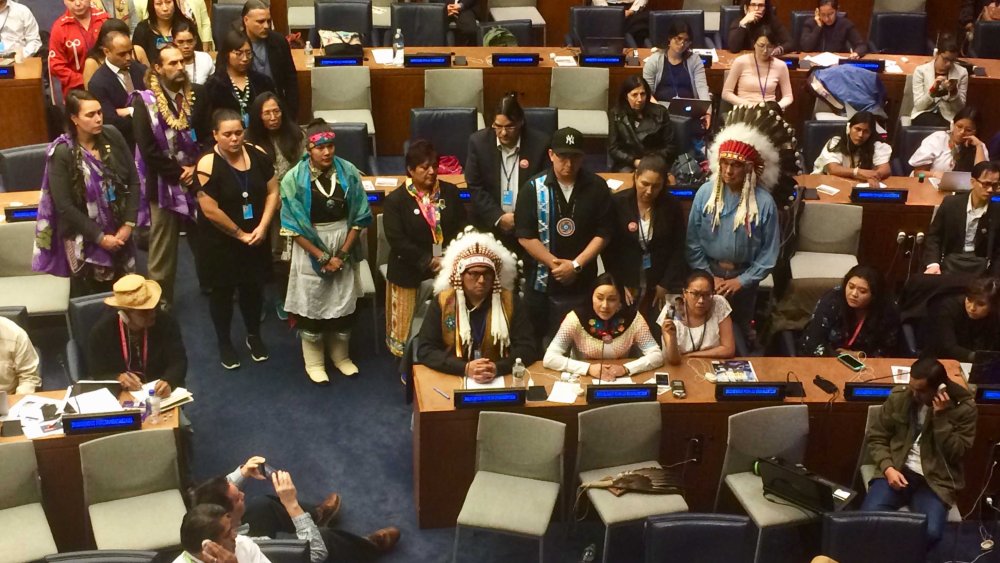
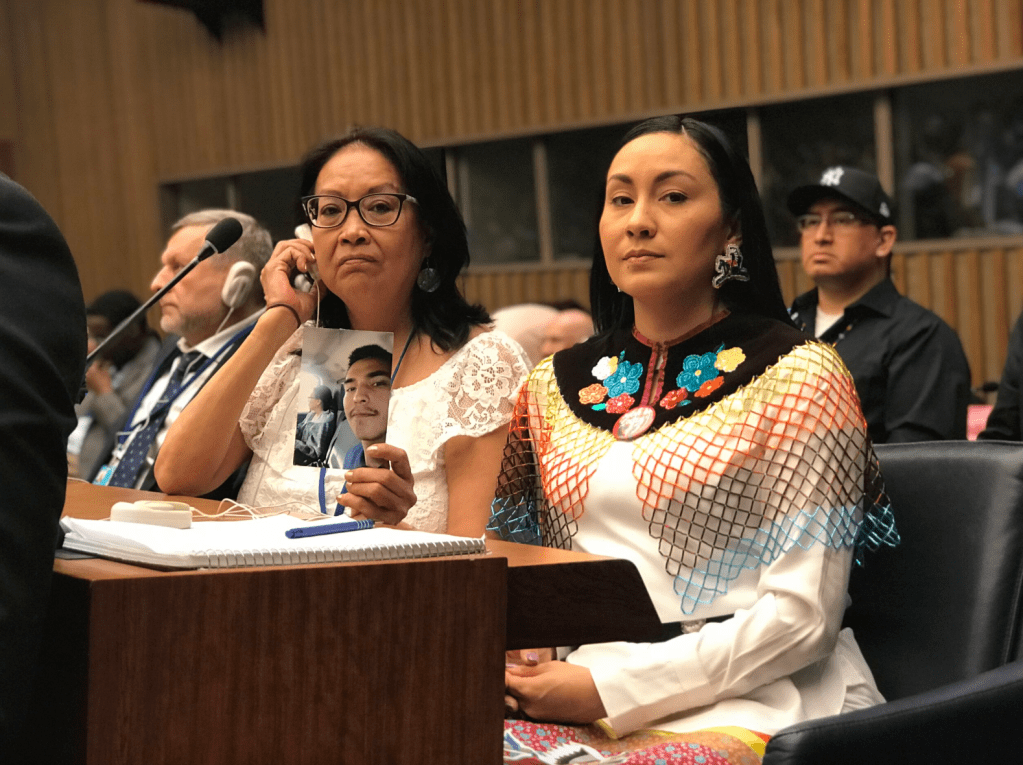
Tasha shows that the only place the family was truly heard was at a UN meeting for native peoples taking place in the United States. The family almost didn’t get to speak, but the council made a special exception for them. Tasha zooms out as the sister speaks, showing the gathering crowd of people standing around the family in support. Whether their address to the UN changed anything is unclear, but it was a very powerful image to more or less end their journey with. She also includes a scene in which Tasha and her son speak with her white adoptive grandfather, who almost appears to defend the white farmer’s actions in killing Colton to protect his belongings. It was an interesting choice to show the values of her own family, adoptive or not, and how they contradict the entire message of the film and of the family; Material belongings(land, “quads”, etc.) are not worth human life. 

She ends with Colton’s sister telling Tasha how much she would have liked Colton if she had been able to know him. It doesn’t end with her cursing the farmer, or the system, or any of the other things that had wronged them throughout the film. She ended with a point on what was truly lost, a life, a human being.

Emma Mayfield

Words: 1070

Children of the Sea (2019)

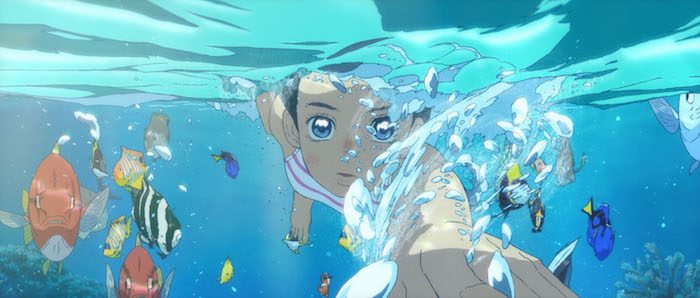
A Japanese animated film from 2019, Children of the Sea is a story mixed with a fantastical visual experience. The showing at the festival was sponsored by the Consulate Office of Japan in Portland, and a short survey was handed out to fill after the film. One of the questions asked if the viewer’s opinions of Japan had changed after watching the film, and whether the change was negative or positive. Another asked if the viewer had a better understanding of Japanese culture after viewing the film. This is an interesting approach to assessing the value of an international film showing. The film did not explicitly discuss Japanese culture in a way that someone would necessarily gain a better understanding. The culture in the film did not appear any different from the culture of any American seaside city. Perhaps the similarities overwhelm the differences, and this may be the intention of the Consulate.

The film is centered around a young girl, Ruka, as she is sucked into a world operating unseen within our own. This is a very common premise, especially in films for children or young adults. There also seems to be a love triangle at play between two brothers. The love triangle in particular is rather unsettling given the implied youth(early teens, likely) of those involved, though their exact ages are never explicitly revealed. There is also a strangeness in the vast difference of their appearance, the younger being dark skinned with dark hair and the older being pale as a ghost with long blond hair. It is almost as if the filmmaker is pitting one appearance over the other, and Ruka seems to prefer the pale, older brother romantically while maintaining a more protective relationship with the dark, younger brother. 

The alcoholic mother was underdeveloped, and her place in the story seemed only as a catalyst to push Ruka into certain situations, like her visit to the aquarium as opposed to going home because her mother was there. It is an odd choice to have her mother’s self-destructiveness not play a bigger role in her life outside of Ruka’s avoidance of her. It is never really faced until the end when the father symbolically removes the bag of empty beer cans from the entrance of their home. This is where the differences between Japanese culture and American culture seem quite different. An American film would have played more into the alcoholic mother and her place in Ruka’s life, while Children of the Sea seems to wave her off as only minorly important. In the end, Ruka’s bond with her mother is strengthened by her memory of a lullaby. In a post-credit scene, the family welcomes a new baby, where Ruka asks her mother where she learned the melody. The focus on the lullaby and it’s connection to the events of the film throughout also seems to be a cultural disconnect. The film tried its best to explain the legends, but it feels as though pieces are missing that do not allow an American audience a true understanding of the film and all of it’s meanings.

Beauty was an element that all audiences could understand. Interspersed in the story are segments of interstellar art. On several occasions, the film looks to the sky through the stars, often combining these images with others for a “multi media” aesthetic in the representation of a mystical world outside of our understanding. Nearly constant flashes of this art style in Ruka’s mind hold us in a fantasy place, facilitating the suspension of disbelief for all of the oddities throughout the plotline. All of these increasingly elaborated sequences of visual artistry lead up to a fantastical display as the film comes to it’s climax. For a few minutes, the film is less of a film and more a visual display of color and movement all surrounding the interstellar themes of the previous displays.

The end message the film leaves with the viewers is that we are children of the stars, or we belong to the stars, something along those lines. It is not the first film to center around such an idea, but it was an enjoyable rendition of the concept. Visually it was quite stunning, and the pacing of the plot keeps a viewer interested throughout. At the same time, it was somewhat lackluster in terms of narrative and the element of confusion with the very young love triangle and other things that are never really explained. It felt as though the film was trying to do too much. There were too many underdeveloped characters with little to no significance in the film, too many sub-plots and themes that the film touched on but never really explored. This left the film as a whole with a sort of “half-baked” feeling, even with its nearly 2 hour run time. It was overall an enjoyable watch, though how memorable the film is is questionable.

  • Emma Mayfield
  • 818 words

Thunderbolt in Mine Eye: An Honest Depiction of Modern Day Adolescence

By Hannah Cumming.

After a successful world premiere at the Slamdance Film Festival, the Portland made feature film, Thunderbolt in Mine Eye, had its Portland premiere on March 10th, at the Portland International Film Festival. A Seed and Spark crowdfunding success story, the film is the brainchild of brother-sister directing team Sarah and Zachary Sherman.  The duo have mastered the art of the awkward silence, and their honest portrayal of modern day adolescence is as refreshing as it is uncomfortable. Teenagers have always been portrayed by 25-30 year old actors in film and TV, so for the Shermans to value realistic and accurate casting speaks volumes about their attention to detail. This film is provocative in its depiction of realistic adolescent sexual relationships, and it doesn’t shy away from the complications that arise for young women during their sexual awakenings.

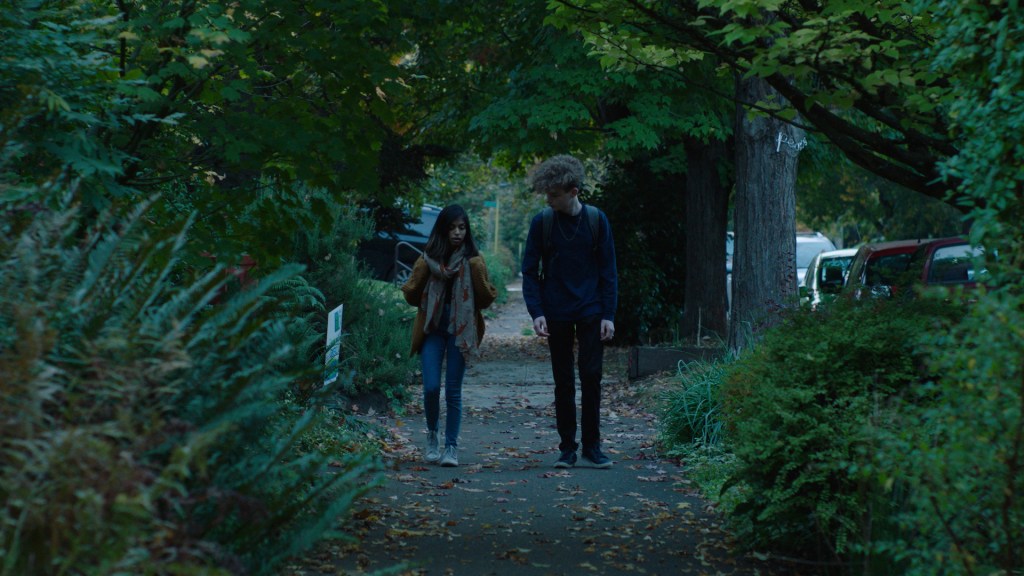
The film follows the budding first relationship between teens Harper (Anjini Taneja Azhar) and Tilly (Quinn Liebling) as they navigate all of the societal expectations and double standards surrounding love and sex. With breathtakingly beautiful exterior locations, the story is a perfect love letter to Autumnal Portland – a sacred time of year for any school-aged individual, which holds so much promise and uncertainty. While this first love only lasts a few weeks – the season never even changes – it is still an intoxicating romance fueled by the natural chemistry shared between Azhar and Liebling.  After Liebling’s acting debut in Netflix’s Everything Sucks! he takes on the character of Tilly, a more mature and three dimensional role, establishing himself as a serious actor in the indie film scene.

After the screening, the directors and Azhar took to the stage to partake in a Q&A facilitated by producer/director/and POWfilm fest founder Tara Johnson-Medinger.  This particular pairing was a great choice, as Johnson-Medinger recently directed her own coming-of-age story with actual teenage actors, titled My Summer as a Goth.  One of the more remarkable aspects of Thunderbolt in Mine Eye is how it inevitably received its funding. Sarah explained that they didn’t expect to fundraise a lot of money, and were planning on keeping the production pretty small, until their team eventually decided to aim higher. Through their crowdfunding campaign on Seed and Spark they raised $15,000 as well as $45,000 from the Duplass Brothers when they won a crowdfunding contest through the fundraising platform. The Duplass Brothers selected the film out of more than 15 finalists and 40 independent films, all surrounding the filmmaker’s and showcasing their hometowns in their films. The Duplass Brothers now serve as executive producers of the film. Finding established filmmakers who want to support independent cinema financially is an incredible feat, and the Duplass Brothers were right to invest in this particular project, which explores new territory in the realm of coming-of-age cinema. 

Thunderbolt in Mine Eye is a charming film that emphasizes the authentic importance of using real teenagers to portray real teenagers. Centered in and around Sherman’s hometown of Portland, the film is a local gem that will share the beauty and magic of the city to all who will see it on the festival circuit. The film also carries a significant amount of progressive under and overtones, as well as a woman of color in the leading role – something not often seen in coming of age narratives. The creation of a new kind of teenager portrayal was very much needed under the current socio-political climate, and the Sherman Siblings have done an excellent job of paving the way for more three dimensional teen characters in media. The film plays again on March 12th, at 3:30pm at Cinemagic!

An Oregon-Made Puppet Horror Masterpiece: Frank and Zed

By Karlee Boon

https://www.kickstarter.com/projects/jesseblanchard/frank-and-zed-100-puppet-monster-movie-feature-len

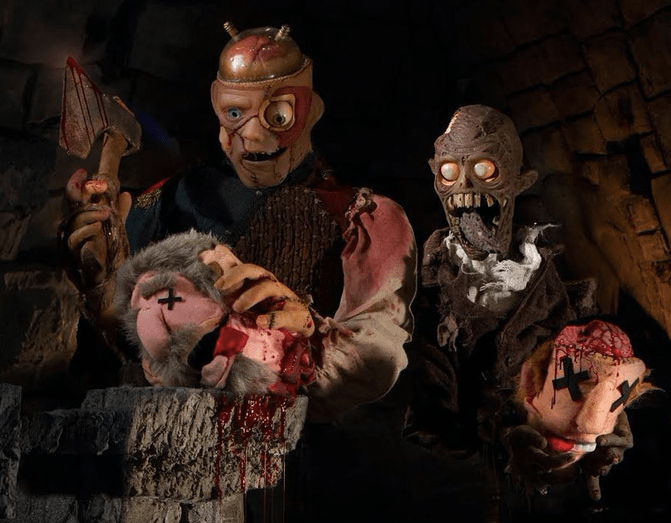
When attending an international film festival, you come to expect to see certain types of films. A horror fantasy-comedy with an all-puppet cast is not one of those films. Frank and Zed, the debut feature film from local filmmaker Jesse Blanchard, was, therefore, enticing right from the start. The project seemed incredibly ambitious and seeped with originality, so I was more than excited to attend its World Premiere at Cinema 21 on Sunday night. The film follows friends Frank, a Frankenstein-esque monster and his lovable brain-eating sidekick, Zed, who live alone together in a dilapidated castle. As the two creatures slowly rot away, they take care of and rely on each other, sharing a close friendship. In the village nearby, a King’s deal with a demon comes back to haunt the villagers following his dead, and when the villagers raid the castle where Frank and Zed live, they are roped into a frenzy of killing. 

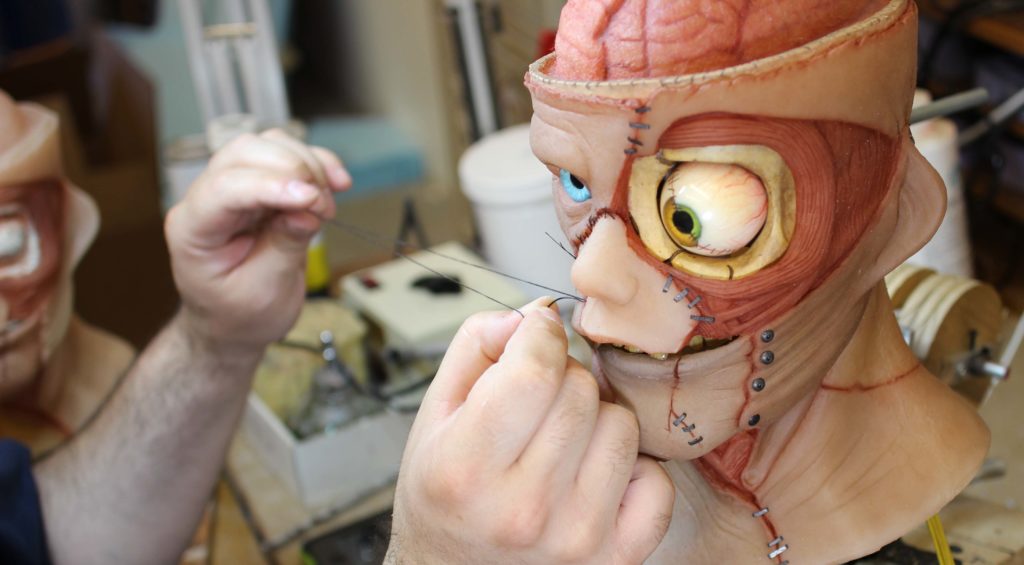
The PIFF site described the film as featuring a “war of epic, puppet-mutilating proportions,” a claim that did not disappoint – Frank and Zed is abundant in ridiculous special effects and over the top gore. In fact, essentially every major component of this film veers on the side of excessive, from the sets, to the sound effects and voice work. The craftsmanship that went into the film was clear in every frame, and the puppeteering was truly phenomenal to watch. As the director stated before the screening of the film began, Frank and Zed was created over the course of 6 years, with filming taking place primarily in his garage. Upon further research, I discovered that Jesse Blanchard raised roughly $20,000 through crowdfunding after four years into creating the film, allowing him to finish and put it through post. The time, effort and talent that went into making Frank and Zed was by far the biggest joy of watching the film.

https://www.dreadcentral.com/news/257715/exclusive-check-puppet-horror-movie-frank-zed-spooky-stills/

Despite the inarguably ambitious production, however, Frank and Zed was by no means a perfect film. Though it had charming moments and an outstandingly original form, the storyline of the film felt lackluster in comparison. Although I was able to feel connected to Frank and Zed, whose character designs were more stylistic and handcrafted, I often felt that moments with the fabric puppet characters tended to be less compelling. The busy designs of the puppets as well as the sets themselves often made action scenes feel confusing and jarring, which took away from the overall enjoyment of the film as well. This was especially apparent in the film’s final battle scene, which lasted roughly 15 to 20 minutes and really suffered from issues with spacial awareness and overall pacing. 

Despite its flaws, Frank and Zed did not disappoint when it came to its overall presentation, and it’s impossible not to be impressed by the intense ambition proven by these filmmakers. Possibly my favorite part of the entire film was the final credits sequence, which was compiled of various behind the scenes footage and really showed off the immense amount of craftsmanship, skill, creativity, and hard work that this film took to create. Seeing the raw talent of this team and the creative energy put into this film was more than enough for me to fall in love with it and I’m looking forward to see where this film goes as it gains recognition outside of Portland.

Nîpawistamâsowin: We Will Stand Up

Nîpawistamâsowin: We Will Stand Up, a Cree documentary from Canada, focuses on the murder of a young Cree man named Colten Boushie, and the subsequent trial of his white killer, Gerald Stanley. Tasha Hubbard, a Cree woman and the director of the film, followed the story of 22-year old Colten Boushie, who was shot in the back of the head at close range by Stanley, as it unfolded. The film captures the struggles the family faced and continue to face in attempting to find justice for Colten. Racism against the Boushie family, the Cree people, and native Canadians in general permeates throughout the film, culminating in the decision made by an all-white jury to acquit Gerald Stanley of all charges. Even with this significant blow to morale, hope, and faith in the justice system, the Boushie family reaches higher and aims for new laws to protect native people and provide fair trials. So far, they have spoken at the United Nations Council in New York City and met with many of Canada’s political leaders in Ottawa.

The film was incredibly powerful and moving. Throughout the screening, people were sniffling in the audience and wiping away tears as the story unfolded. Every passionate and heartwrenching speech given by Colten’s sister, every injustice done onto the family, deepened the heartbreak felt by everyone in the auditorium. The turnout for the film was fair, and mostly consisted of an older crowd. It would have been interesting to see younger people who might not know as much about the injustices in this world, as Nîpawistamâsowin: We Will Stand Up could have opened their eyes. 

The use of different styles of animation to tell different parts of the story, such as to provide historical context and to tell Colten’s story in a different way, was unique and clever. It helped break up the parts of the film that weren’t shot in real time or with interviews. Additionally, Tasha Hubbard narrated over different parts of the film which provided more context and knowledge with which to watch the film and better understand the plight of the Boushie family and the Cree people. As well as being the director of the film, Hubbard is also Colten’s cousin, and her personal connection to the story made it all the more powerful. 

Besides focusing on Colten’s story, Tasha added a layer of understanding and interest by including her sons in the film as well. Because Colten was a younger Cree man, adding the very personal layer of Tasha’s own young Cree sons and showing conversations they have about their past and their present as Cree people made the plight of the Boushie family and the Cree people even more powerful. 

This film is incredibly relevant in today’s world, and Nîpawistamâsowin: We Will Stand Up discusses important issues that must be addressed and solved. Learning more about the injustices inflicted upon the Cree people and on native people in general is vital in creating a better future for all who come after. Nîpawistamâsowin: We Will Stand Up helps further the conversation, educate people, and hopefully it will help lead to necessary structural changes that will help improve our world.

Emma Chitwood

Design a site like this with WordPress.com
Get started