No Closing Night for PIFF 2020

Maria Moreno

It seems only fitting to write about the Portland International Film Festival’s opening night given that it did not get to have a closing night this year. It’s no surprise that PIFF would open with a film set in the Pacific Northwest, specifically Florence, Oregon. Clementine, the feature film debut of Lara Jean Gallagher, is a beautifully shot film which artfully captures the splendor of the Northwest. The film would be amazing if one were to judge it on its visuals alone but it definitely falls flat when it comes to its story. Despite its murky story,  its two lead actors, Otmara Marrero and Sydney Sweeney, both give standout performances as women seeking connection. Their semi-romantic lakeside entanglement seems exciting, like a desperately needed spark, when they first meet each other but gets muddled up amongst the plot about Karen’s (Marrero) abusive ex and Lana’s (Sweeney) dream of becoming an actress. It was certainly a big hit with the audience who gave an extended applause at the end of the film and showered the director and producers with compliments during the Q&A. But one wonders if this film received such a warm welcome at PIFF solely because it almost acts as an advertisement for the beauty of the Pacific Northwest.

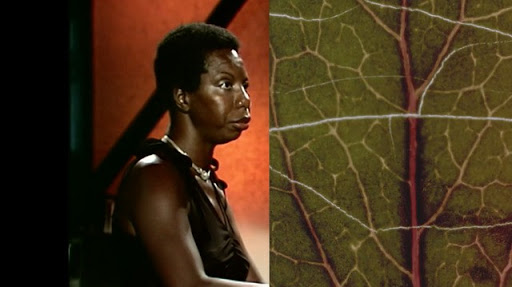
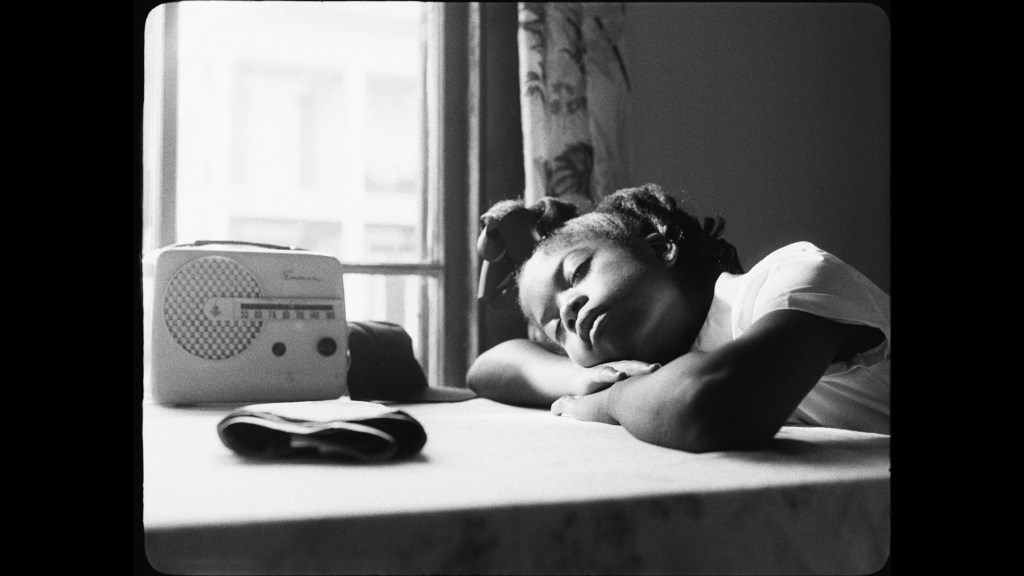
Now, while the theater was packed during Clementine, the 376 seat Whitsell Auditorium was less than a quarter full for the two opening night shorts, which were, arguably, some of the most prestigious works gracing the PIFF screens. The first shown, Garrett Bradley’s America, a re-imagining of American film history to include contributions by African American artists, will be showing in its own exhibit at the Museum of Modern Arts later this year, according to Bradley’s website. It’s a glorious film, which incorporates footage from the film Lime Kiln Club Field Day, thought to be the oldest film with an all black cast (Bradley), to create an archive of African American life in the early days of cinema. Bradley uses stunning black and white imagery to bring to light a whole history of African Americans that’s been lost due to racism. It’s a remarkably moving film which created a perfect dialogue between the second short shown, Ja’Tovia Gary’s The Giverny Document, winner of The Moving Ahead award at the 2019 Locarno Film Festival. The Giverny Document is a “cinematic poem” that meditates on the safety of black women’s bodies in white, Eurocentric societies, such as that of the U.S or France (Gary). Gary stands in the streets of Harlem, asking black women if they feel safe, and juxtaposes that with footage of herself walking through the lush gardens of Claude Monet’s home in Giverny, France, along with footage of Nina Simone and the Facebook live recording of Philando Castile’s death. It’s a hypnotic work, tapping into humanities innate fears about safety and exploring those fears through a group of people who often live every day feeling unsafe. It seemed incredible to me that these works by two prolific black American filmmakers would receive a smaller attendance than a film by a first time director. Perhaps the Portland Film Festival’s audience is more concerned with supporting local work than that of more widely known filmmakers.

America
The Giverny Document

Works Cited

  1. “Garrett Bradley.” Garrett Bradley, www.garrettabradley.com/.
  2. “The Giverny Document (2019).” Ja’Tovia Gary, http://www.jatovia.com/the-giverny-document-2019#1.

Balloon: An Examination of Free Will Through Mise en Scène

Written by Garrett Recker

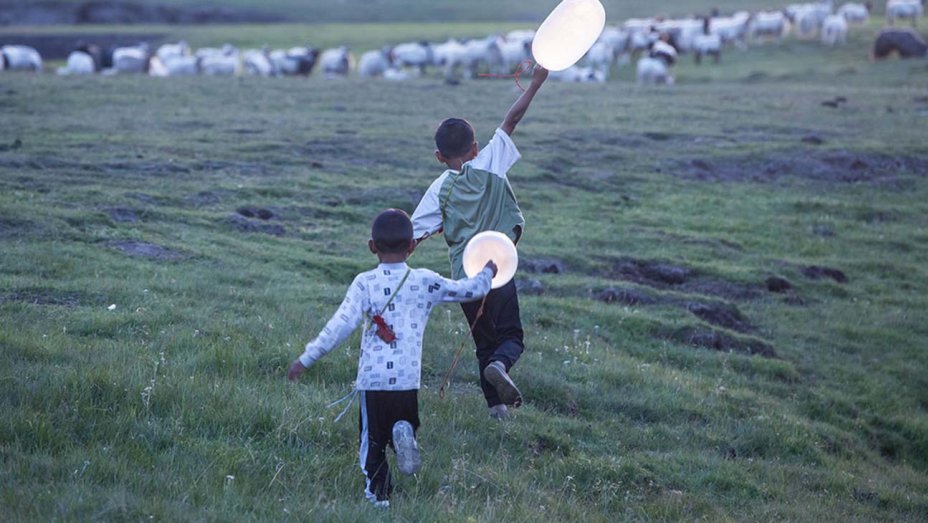
Balloon is a 2019 Chinese drama, written and directed by Pema Tseden, that explores how religious and political barriers control free will from a Tibetan perspective. The opening of the film sets the overall tone by explaining China’s One-Child Policy in dark red text. Families that give birth more than once must pay a high cost child tax if they choose to keep the child. Already, political barriers are at play. If the family is impoverished, as is the one depicted in Balloon, then their will to grow is entirely dependent on income. The mother’s free will is also hampered by political rulers telling her how her body should operate. Tseden’s opening shot critiques this, depicting Dargye, the father figure of the family, talking to his elderly dad through an inflated condom Dargye’s boys thought was a balloon. The boy’s presence dominates the scene with the condom influencing the visuals and their laughter sounding closest to the audience. However, the two boys themselves aren’t seen. The idea of two boys is a paternal longing made impossible through a political barrier, represented here by thin latex. This critical scene depicts how sexual contraception, and previously stated political policies, censor the family dynamic. It isn’t until the “balloon” comes down that the boys may enter the frame. 

Pema Tseden’s Balloon doesn’t follow a traditional narrative with a sole protagonist and their journey. Instead, all the family members share the spotlight, each having their own arc and subplot with the theme of “free will” acting as the common thread. The use of lateral lines to divide the frames are prevalently used throughout the film to highlight the elements that prevent the use of free will. When Dargye goes to his brother to buy a male sheep, a large wooden beam splits the frame in half between both characters. Despite their family tie, the divided frame keeps their economic difference, and the meaning for Dargye’s visit, at the forefront of the scene. They are positioned not as loving brothers but as a shopper and merchant engaged in a transaction. Dargye’s free will is never depicted because of his economic status causes isolation.  

The mother, Drolkar, is also continuously void of her free will. After learning from a monk that her fourth unexpected pregnancy will be the reincarnation of Dargye’s late father, Drolkar is ridiculed by her family for wanting an abortion. Initially, she had willed her husband to use condoms when making love, but her request was met with contempt. Her husband, and other men in the village, view the use of such modern inventions as perverse and shameful. Due to cultural belief in the form of peer pressure, she reluctantly gives up her free will. The family’s low economic status, however, continues to push Drolkar towards an abortion. A fourth child tax would cause starvation for everyone in the family. While outside cleaning the house rugs, Dargye makes a final plea for her to keep the baby. At first they share the frame but as it becomes clear that neither will change their stance, they become divided by the hanging rugs. Just as before, the frame is spliced into two halves highlighting the presence of free will. One of them must once again set their free will by the wayside and abide by the wishes of the other. 

Pema Tseden’s focus on free will, or the lack thereof, crafts a seemingly authentic depiction of an impoverished Tibetan family. The religious and economic regulations of the upper class constrict those of lower status to the point where they lose all autonomy. The characters presented in Balloon aren’t doing what they want but instead what is expected. 

Dealing with Erasure: PIFF’s Shorts Program Number Two

Written By Garrett Recker

During PIFF’s 43rd year, seven collections of shorts were scheduled each with a different approach to an overarching, unifying theme. For the second shorts program, the title was “Chronicles.” The program housed six curated pieces (Remembrance, The Deepest Hole, Transmissions of Unwanted Pasts, The Marshal’s Two Executions, We Only Answer Our Land Line, and Mix-Mix/Halo Halo) that all interpreted the concept of “factual recording” in a unique way based on their genre. These ranged from stop-motion art installation, experimental, comedic, narrative, and archival styles. Geographical origin influenced the style of each piece as well the global perspective of the theme being addressed, with two coming from Oregon, two from Washington, one from Thailand, and one from Romania. While I would have preferred a more globally balanced sampling, I appreciate the program’s avoidance of an entirely West Coast narrative-based focus. 

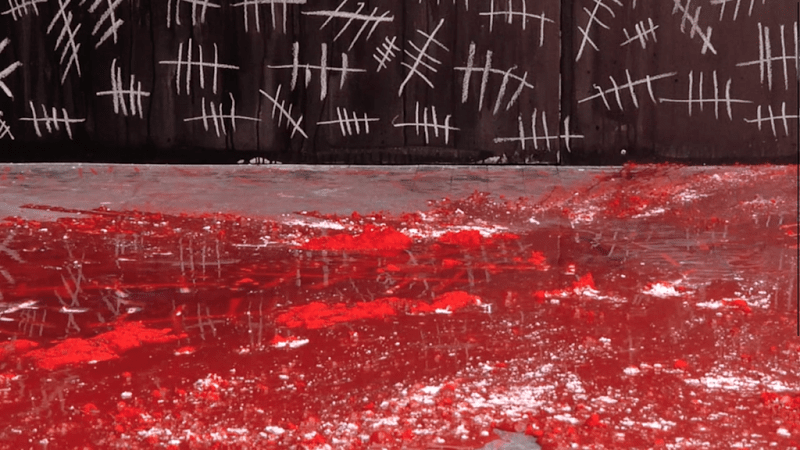
The stand out from the showcase was Sabina Haque’s 2015 short, Remembrance, which was a potent 11 minute direct address of US drone bombing deaths in eight separate countries. During the program’s concluding Q&A panel, Haque stated that the short works to combat erasure and give a voice to those who had tragically lost theirs. Remembrance, unlike the others and strangely in opposition to its end goal, was void of any clear dialogue. Instead, the short played overlapping tracks of percussion instruments and inaudible murmuring from a faceless crowd. This was paired with rapid stop-motion footage of people putting tally marks in white chalk on a black wall. The people appeared and disappeared as sudden blurs, leaving behind only their tally marks. The effect was something reminiscent of a ghostly presence. The existence of the person was marked by a single, vertical white line but their physicality was gone. In a broader perspective, Remembrance reminds us of the mortality of our loved ones who can only really be reflected in family chronicles, especially after they are gone. 

The proceeding short, The Deepest Hole, by Matt McCormick used comedy to address the program’s theme. Here, “factual recording” is a media and religious bestowed label for a fabricated recording of what the 1970’s public were led to believe was screaming voices from the earth’s core. The short opens by explaining its subject; an almost 8 mile deep hole dug by the Soviet Union as part of a scientific discovery project. The narrative is then driven by a released recording collected from the workers who believed their hole had entered Hell. McCormick’s display of old media coverage and concerned religious groups highlights the absurdity of what is so obviously now known to be a publicity stunt by the Soviet Union. The Deepest Hole isn’t as concerned about real factual recordings as it is with labeling fiction as factual. 

Individually, these pieces are strong works that address the program’s theme from different angles. Together, though, they are toxic. From a curatorial standpoint, it makes initial sense to cast a large net for a shorts program–both in genre and geographic origin. It helps broaden the discussion and include perspectives that might be new to a Western audience. The problem, though, is without proper context, the shifts in tone can be detrimental to a film’s lasting impact. Remembrance used its lack of dialogue to create a serious space for audience reflection. It’s based on real events and asks for real emotions to be at play. By itself, I can see this film sitting heavily with people, and I think that’s the director’s intention. The complex emotional responses audiences are left with encourage discussion. It’s all in service of Sabina Haque’s goal; to prevent the erasure of those who have been killed. This reflection never really gets a chance to occur as it’s instantly followed by a comedy. Instead of positioning a film after Remembrance that builds on the short’s work, PIFF pivots tone. This not only erases Haques serious questions from the audience’s minds, but the constant shifts in tone force the overall discussion to remain surface level. So many different things are being said that by the end it feels like nothing was really said at all. The messages of Remembrance and The Deepest Hole are also conflicting. Haque works to bring realization to reality. She doesn’t want those who died to be forgotten and uses factual recordings to do so. These death statistics from drone bombings are irrefutable facts that prevent their erasure. McComick’s work, on the other hand, challenges how seriously things should be taken by showing fabricated recordings. By positioning this after Remembrance, the importance of Haque’s topic is put into question, and essentially, erases those who died.

“4 Months, 3 Weeks, and 2 Days” Le gagnant de la Palme D’or, 2007

By Hannah Cumming

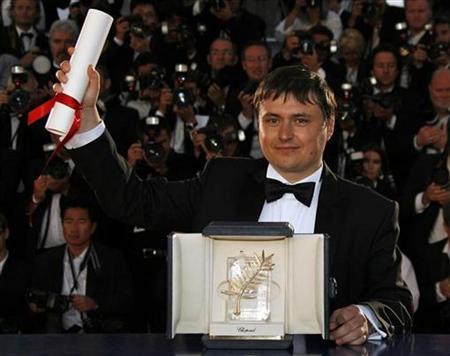
The Cannes Film Festival has always valued the showcasing of politically provocative cinema, as well as international New Wave films. This was the case at the fest in 2007, when the controversial Romanian New Wave film, 4 Months, 3 Weeks, and 2 Days took home the highest honor. Like many filmic movements, the Romanian New Wave is inspired by the lasting effects of an oppressive political era, tackling the traumatic lasting effects of communist Romania regime through neorealism, themes of resistance, liberty, and slow cinema.  The film is a both haunting and scathing critique of communist regime in Eastern Europe, and without an understanding the history of communist rule in Romania, one cannot understand the true meaning behind 4 Months, 3 Weeks, and 2 Days.

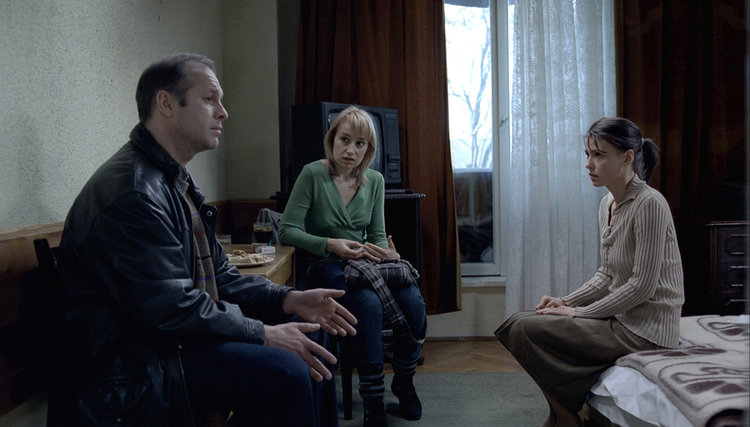
The film follows the effects of Ceausecu’s reign on the every day Romanian – specifically the young female Romanian. In addition to multiple oppressive and abusive actions, in 1967, Ceausescu enacted the anti abortion law, criminalizing abortion and making it punishable by a maximum of 10 years in prison.  This law proved deadly, and was a clear infringement of Romanian women’s rights. The leading character, Otilia, is a young Romanian woman in 1987 who helps her roommate receive an illegal abortion, which proves to have a lasting impact on her life and the way she sees her future.  The effects of political restrictions placed on the population during this time causes much of the conflict throughout the film. Otilia’s roommate, Gabita, has fallen pregnant due to the lack of sex education and available contraception in Romania during this period.  The two girls overcome tremendous obstacles in an attempt to abort the fetus illegally – instilling the help of an illegal abortionist named Mr. Bebe. Mr. Bebe is hard to convince once he discovers that Gabita is farther along than she had said, and they don’t have enough money to pay him for the procedure.  Gabita waited nearly 5 months to go through with the abortion – another result of Romania’s poor sex education, and the criminal aspect of seeking abortion. Everything had to be done in secret. Because the girl’s don’t have enough money, Otilia is forced to have sex with Mr. Bebe in order to afford Gabita’s abortion. Mr. Bebe states that he cannot go through with the procedure unless he gets something in return, because he is risking his freedom.  The pain both women endure in an attempt to get around the oppressive and abusive system will stay with them forever. Otilia spends much of the film breaking other laws and restrictions of personal freedom, from bribery to black market purchases. With an understanding of Romanian politics during this time, audiences can begin to further empathize with the film on a deeper level. Spending the transcendent and slow cinema moments to contemplate the ripple effects of this oppression and find deeper meaning in seemingly meaningless exchanges and actions.  The film utilizes transcendental techniques to showcase the unfair and secretly panicked existence Romanians experienced at that time. With that much government interference, their pain had to be private or repressed. The pain can be found within the “mundane” long takes, minimal dialogue, wide shots, diegetic sound, and natural approach to acting.

The slow cinema art thriller was awarded the highest accolade at the 2007 Cannes Film Festival – the Palme D’Or. The film debuted on the first day of the festival, and the director Cristian Mungiu became the first Romanian to ever win the biggest prize of the festival. The film has contributed to the abortion debate since its release 13 years ago, and its win at Cannes sparked much controversy due to the film’s brief graphic depiction of a freshly aborted fetus. In addition to the film’s commentary on reproductive rights, the film is also a must see for anyone interested in the lasting effects of communism in Romania.

Zed’s Dead Babe and Frank too

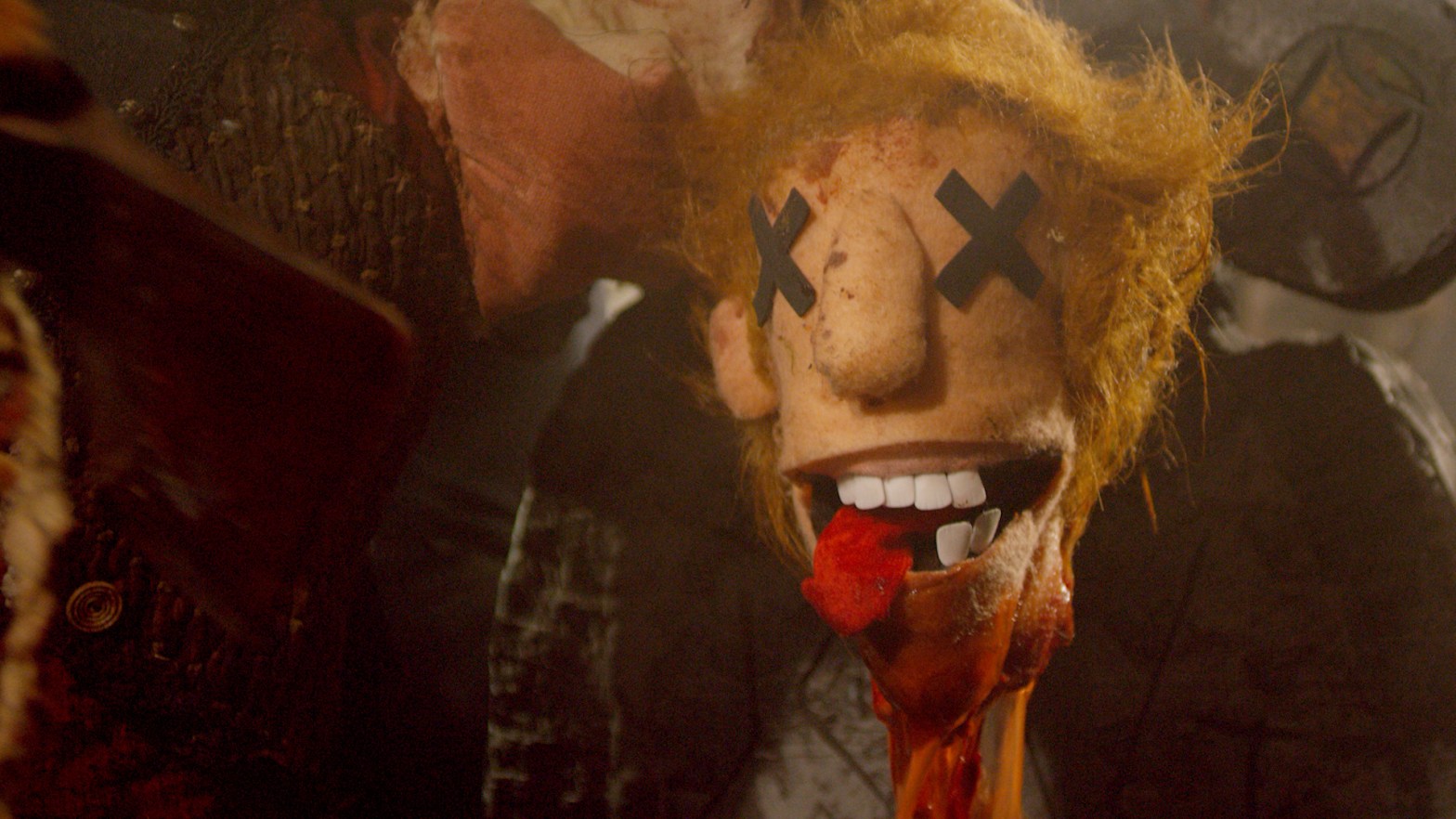
In film there are certain guidelines that make up a genre, these guidelines can be followed religiously or they can be molded into something completely different. For the film Frank and Zed which features of elements of horror, gore and comedy the latter is true. This fever dream of a film exclusively starring puppets as the main characters is a testament to the importance of hybrid film genres and practical effects in film production. Starting off six years ago as a Kickstarter campaign the film has been a labor of love for director Jesse Blanchard and his 100 plus volunteers. The narrative follows the story of Frank and Zed, two monsters one that looks like Frankenstein’s monster and the other a brain hungry zombie battling against a doomed puppet village. The title characters Frank and Zed are co-dependent monsters who have been providing food and protection for one another for decades. This relationship becomes rocky when Zed starts to gain memories of his past life and when the town of puppets begins its first step into completing the prophecy that will end in an “orgy of blood” and the town’s destruction. 

 Frank and Zed completely throws away any expectations of a particular genre film out the window. At points the film revivals most slasher flicks with its intense use of gore and bloody effects but at other points the film can be very emotionally touching. This can ultimately be accounted to the use of comedy which adds moments of levity to the most gruesome of scenes. This inturn adds a level of versatility to the production smoothing over any bumps in the narrative that are lacking such as plot holes. An example would be motivations for characters such as Frank who has virtually no backstory or motivations in the film. This can be a result of the film’s incomplete script that was re-written during and after production forcing the post-production to heavily rely on ADR. While there are no glaring problems with the audio the narrative is full of unfinished ideas and subplots that peak the audience’s interest but ultimately they never come through. One example of this is the fact that Zed can grow back body parts after eating brains. This idea is hinted as a potential way in which Zed can turn back into a human but this is abandoned almost immediately. Although these threads are apparently unfinished it doesn’t take away from the pleasures of the narrative. 

Frank and Zed also exhibit old school filmmaking techniques that build scenes around the idea of the spectacle, this would include the use of giant set pieces or using elaborate practical effects. The spectacle of this film revolves around the violence inflicted upon the puppet characters this is done through dismemberment of their bodies in creative and often hilarious ways. The spectacle of violence forces the audience into the role of a masochist; we become hungry for more violence as the narrative continues. This mimics the prophecy that culminates in an “orgy of blood” that is the third act of the film in which the town storms the monster’s castle. This prophecy is almost completed but the puppet villagers give up on their quest for revenge once they realize the toll it has inflicted on them. The film ends with Frank dying in the battle with the villagers and Zed being killed by a stray arrow from a defeated villager. This type of ending would be better if the character’s arc were more established giving audience reassurances of character motivations but the ending seems almost random. The death of Frank and Zed is not the ending of the film; instead this spotlight is given to the villagers who have little to no backstory or development. The narrative feels incomplete and we are ultimately left wondering about the how and why even after the credits roll. As a film Frank And Zed has it’s problems but it does provide audiences with a completely unique adventure that isn’t for the faint of heart.

By Nick Garza

Blue is the Warmest Color

Blue is the Warmest Color was the winner of the Palme D’Or at Cannes in 2013. A French film directed by Abdellatif Kechiche, himself Tunisian, the movie depicts a young woman discovering the ways of life and of relationships, and who is also on a journey of realizing her own sexuality. Far from relying on the tokenism that sometimes comes with stories that surround underrepresented populations, Blue is a meditation on the lives of young people navigating their feelings and their impact as human beings. At the same time, however, Kechiche is not willing to devalue the power of a lesbian romance film. He seems aware that lesbian love stories aren’t respected as much as their heterosexual contemporaries, and that comes across in Blue. The film touts a controversial 10-minute sex scene between the two main characters. This read to a lot of people as exploitative, especially coming from a male directorial viewpoint. I found this scene to be a radical departure from historical erasure of lesbians in art and society. The bluntness of the scene reads to me, as trying to subvert this erasure by forcing audiences pay attention to a lesbian sex scene for a prolonged amount of time. While there are some people critical of this ‘male gaze’ provided by Kechiche, I believe this misses some crucial points. In bringing a lesbian relationship to the screen, Kechiche doesn’t present the sensual and the intimate moments between Léa and Adèle as normal or quotidian. He revels in them, respects the power in them, and points to the poeticism of romance through meditations on tenderness. Complaints about the male gaze present in this film do, I believe have some merit. For example, it proves that while we are comfortable as a society watching lesbians on screen, they are still going about the business of first falling in love, then being in love, and finally falling out of love. For lesbian cinematic narratives, this is a pretty played out one. And the fact that this film wasn’t made by a gay woman shows where the film industry is at politically, where women rise as beautiful actresses more often than as directors. Despite these very real complaints, Blue pays respect to its characters by not relegating them to a stereotype. To deny a film mainly about women any representation of a male gaze is to deny an important aspect of reality. I think the subtle employment of the male gaze in the film is more integral to the psychology of the characters than critics would like to believe. Blue allows its characters to retain elements of mystery, and illustrates intense longing through gorgeous long takes and extended silences. Body language and facial subtleties put a lot of importance on the acting in Blue, and interpretation of these meditations is enhanced by the stellar performances of Léa Seydoux and Adèle Exarchopoulos. Kechiche illuminates the changes that mundane realities of day to day life can undergo when one is in love by deceptively simple means, and registers the smallest tweak in expression as a tidal wave of emotion in this powerfully tender film. –Sarah Johnson

4, 3, 2: The Suffocating Art of Immersion

Charlie Faulkner

Blog Post 2 (Substitute Assignment For 2nd PIFF screening)

The Palme d’Or is the highest prize possible at the Cannes film festival, and with such a title, there is an establishment of a great deal of prestige and symbolic capital gained from receiving the award. In the theroizations of Pierre Bourdieu, “festivals [such as Cannes are] important sites of cultural legitimization” (Valck, 108). Meaning, that the Palme d’Or canonizes and honors certain films as having significant value and exceptional quality. The 2007 winner of the Palme d’Or was the film 4 Months, 3 Weeks, 2 Days directed by Cristian Mungiu. This film is an essential piece of Romanian cinema; this powerful piece of cinema illustrates a narrative of two women (college roommates Otilia and Găbița) living in the repressive society that existed under the extremely oppressive regime in Romania during the 1980’s. 

The film follows the experience of the unmistakably challenging journey to attempt to recieve a back alley abortion in a time where it is highly illegal. This devastating and intense story focuses on the remarkable courage of women to take control over their own body and autonomy under a period of immense oppression and dominance from the government. The friendship and solidarity between these two women is put to the test by the incredulously impossible challenges to achieve what is necessary. Every moment of this film develops an intense and visceral sensation of tension. Throughout every sequence, every moment you cannot help but hold your breath as the anxiety builds and builds. The film is filled with many long takes that absorb you into their situation and ensures that you are feeling the intensity of their situation in a way that is completely and powerfully immersive. Told over the course of 24 hours, we are with these characters and embedded into their narrative. Even when the main characters fall outside the frame we can hear the actions taking place in other rooms beyond what is seen which too adds to the sensations of captivating feeling of being truly there. We are forced to linger in so many uncomfortable points of view. Whether it’s the POV of Găbița’s legs spread wide after the procedure as she is forced to remain still while the doctor and Otilia freely move about the room, the body of the fetus lying on the bathroom floor as Otilia and Găbița talk in the other room, or the dismal, flickering hotel lobby where Otilia attempts to collect herself after her terrifying journey of disposing the remains of the fetus, these sequences induce and further our anxiety and most importantly force us to look. There is power in being forced into a long take, we have no way to escape what is on screen, instead we must linger in that moment and feel the weight of it. 

The dinner scene is truly a stand out in the film and is one of the longest takes in the runtime. The suffocating tension and endlessly overlapping dialogue as Otilia sits there numb and riddled with guilt and fear knowing the dangers her best friend is going through at that exact moment. There is no cross cutting between the two scenes, which adds to the intensity. We know exactly where Găbița is and what she is undergoing, but we have no ability (as does Otilia) to know exactly how she is doing or at what stage she is at in the process. We are forced to look at this lengthy sequence while our minds, just like Otilia’s, are constantly fixated on Găbița. Otilia’s words are constantly ignored and drowned out by the rest of her boyfriend’s family which leads to many empty gazes as her distress is presented in the form of a vacant and dazed glance. The audience then is directed into the headspace of Otilia and we experience the turmoil she is under. The space is also heavily constricted, the framing is tightly focused so that all the people at the dinner table are taking up the frame some even being just outside of it (other than their hands), the space feels suffocating and because it is a long take it feels as if we have no room to breathe. This too creates a way for us to enter the headspace of Otilia.

The film ends with an excruciatingly silent dinner with Otilia and Găbița after the two have agreed to never speak of what happened again. They sit together in that palpable silence, unable to properly process all that they have had to live through in the past 24 hours. The camera holds on the two of them sitting there, unable to lock eyes with one another. And at the very last seconds of the film, the fourth wall breaks (for the first and only time), as Otilia looks directly into the camera before a quick cut to black. After all this time being immersed into this day with these characters and their struggles, her acknowledging look to the camera forces the audience to process what they have undergone because they will forever be unable to.

PiFf 43: Excavating life in Denmark with “Giraffe”

Matthew Eugene Hunsucker

March 16th 2020

Reporting on PIFF 43: Giraffe for Prof. Kristin Hole Film Festival studies class @ PSU

“In general, while the A-list festivals evoke the classic bourgeois public sphere, with fissures of contradictions and counterpublics erupting from time to time, alternative film festival organizers and participants often see themselves as explicitly embodying counterpublic spheres.” (Wong 91) In Cindy Hing-Yuk Wong essay “Publics and counterpublics” she rethinks the film festival in public spheres. It deals with the idea of subcultures and identity of the public sphere in their relations to film festivals. I’m reminded of this reading as I attend the film Giraffe by Anna Sofie Hartmann from Denmark at the Portland International Film Festival 43 (PIFF43). The film was screened at the Portland Art Museum’s and the Northwest Film Center’s  Whitsell Auditorium. The reason that this film reminds me of this essay, has to do both with the venue and the story of the film. 

At PIFF 43, we get a slice of the Portland culture, which to me is kind of counter to the rest of the culture of the nation in which it resides. I don’t think PIFF itself is subversive. However maybe this year is subversive to its past and regular membership. At the Whitsell the audience though did seem more like their regulars that I have seen there before at other non-PIFF screenings in the past.

The story speaks to me in a way that is counter to what I thought the film might have been. Looking at this year’s program, I seeked to see films that I might have not gone to before. This did not happen quite as planned. With my first screening being that of Frank and Zed, see my last blog post. Then there was this film, Giraffe. It caught my eye with its imagery and description. The opening line “ On the Danish border with Germany, a massive infrastructure project promises to displace hundreds of families” (PIFF bio). Spoke to me as a documentary that would be following the story of people involved with the events.

I really enjoy documentary work, this year at PIFF 43 though they did not break their films up by narrative and documentary work. So I had to take my shot in the dark with this film and others. The film opens up from the point of view of a ferry heading into port. We then follow around Dara, as she explores the world around her and starts to interview people. However Dara is played by Lisa Loven Kongsli, of such films like Wonder Woman and The Lion Woman. This feels and is set up as it was a documentary following characters around this construction project in between Denmark and Germany. 

As the plot of this narrative moves forward it documentary still starts to show its true colors as we see our principal characters interact in a way that if not staged would seem very dishonest. 

The great part of this film is that even being a narrative, we get to see a real and humanist approach to storytelling. As it blurs the line of acting and performance with heart warming passion and depth of reality, normally only seen in films the document the life people.  A must see film for anyone interested in cinema. 

Source of information

Publics and counterpublics by Cindy Hing-Yuk Wong 

https://cinemaunbound.org/films/giraffe

https://www.imdb.com/title/tt8955616/?ref_=nm_flmg_act_4

https://www.imdb.com/name/nm2966840/?ref_=tt_cl_t1

PiFf 43: Getting to know “Frank and Zed”

Matthew Eugene Hunsucker

March 16th 2020

Reporting on PIFF 43: Frank and Zed for Prof. Kristin Hole Film Festival studies class @ PSU

At the world premiere of Frank and Zed, at the Portland International Film Festival 43 (PIFF43). We got to see the hard work director Jesse Blanchard and the rest of his team at Puppetcore Films. A film featuring an all cast of puppets telling the tale of two undead who work at just surviving the world. Their uneasy relationship is disturbed as the local village unravels due to fear of a prophecy coming true. The panic of the leadership leads to the death of villagers, and then a mob forms to defeat our principal characters. We get to see the dependence of the characters Frank (a frankenstein monster like creature) and Zed (a reanimated corpse, with a hunger for brains), as they go through a daily ritual. Frank hunts for brains to feed Zed, mostly it’s squirrels. Once he catches and breaks down the squirrels, and Zed has eaten, he helps Frank by hooking him up into an electric chair, so that evenings lighting strikes will recharge Frank’s heart. Over the course of the narrative you get a sense of Frank’s care for Zed. Almost a sense of a responsibility for his care, more than just a selfish need of self preservation. Towards the end of the film you sympathize with Frank and Zed, and begin to wonder who the real monsters of this story are.

The film played at the local Portland’s Cinema 21, which opened in 1925. I think it was a great pairing for this film seeing that the filmmakers are locals of Portland OR. This was the first year that PIFF would also include aspects from another film festival that the Northwest Film Center puts on. Northwest Filmmakers Festival that is normal in the fall. This film festival normally features filmmakers from the Pacific Northwest (Washington, Oregon, Idaho, British Columbia). This was done in the hope to get some more attention to the local filmmakers. 

This reminds of a paper from Liz Czach “Film Festivals, Programming, and the Building of a National Cinema”. In this essay she speaks to the idea of what a national cinema is and how that relates to Film Festivals and the aspects of programming film in general the lens of cinema in Canada. She speaks to the ideas of taste and value judgments, and how national art style cinemas may get a pass on some aspects of filmmaking like the quality or size of its budget compared to Hollywood. “Despite the problematic nature of film canons and their exclusionary politics, they can still be an important means to value (as well as evaluate) a national cinema.” (Czach 80) In this game of getting your film seen, we filmmakers must play the system somewhat. Going for a national cinema feel for film, may not make big bucks, but it might help it get seen more. 

Six years ago Jesse Blanchard started to work on Frank and Zed. Then PIFF and Northwest Filmmakers Festival were different creatures. Did Jesse seek to have his film entered in both events or just one of them? Much in line with arguments from Czach, I think it could be applied to not only national cinema but also regional cinema. The states and provinces of the  Pacific Northwest have a lot more in common with each other than the rest of their own nation states. I would go to say that this can be seen in the films produced by it’s resident filmmakers.

Source of Information:

Film Festivals, Programming, and the Building of a National Cinema by Liz Czach

https://nwfilm.org/faculty/jesse-blanchard/

https://cinemaunbound.org/films/frank-and-zed

Festival Report

Charlie Faulkner

Film Festivals

Kristen Hole

16 March 2020

Ever Evolving: PIFF Adapts to The Future of Festivals

Programming for an International Festival poses many challenges and requires a great deal of intentionality and effort. With many considerations at play, it is one that requires a keen team that is up to such a task especially in a large scale context. The Portland International Film Festival (PIFF) has been serving the community for 43 years now, and in a time of ever evolving technology, taste, and styles of filmmaking there are even more factors in how to best appeal to the a community the programmers are aiming to reach and engage. These adaptations are difficult to yield and require a lot of fine tuning, in order to strike the correct balance. For its 43rd year, PIFF has begun to attune the festival in a new direction and territory. Change creates a great deal of scrutiny and concerns, but it is certainly clear that PIFF is doing its best to not only set itself apart from other festivals (which is a very common practice in the circuit) but also aiming to simultaneously create an environment that not only supports audiences but filmmakers as well. Film festivals function to serve many purposes, they can develop communities and bring together individuals with a similar passion and admiration for cinema as an art form, bring together filmmakers and expose them to new innovations that can inspire and develop a recognition of new trends in the field, and festivals, especially international festivals, introduce people to cultures and experiences that they otherwise may have never encountered or appreciated before. 

This type of exposure can foster a sense of global empathy and understanding, which is a very valuable practice that can be presented in the form of cinema. The difficulty that arises from international programming is how one approaches selecting films from other countries beyond the U.S, because many people may have not been knowledgeable about these places and ways of life seeing a single film from that country can strongly influence their perspective of that location. One major issue that can arise from this selection and curation is feeding into the poverty narrative of third world countries. When festivals select these stories that reflect images of impoverishment, people of those countries have their overall narrative and story exploited. This is the burden of representation, when one is only exposed to a singular piece from a country they do not know much about, that image can completely shape their judgement. This is a challenge many filmmakers from beyond the U.S have to consider in their films, any portrayal of their experiences can become a singular narrative and it becomes canonized in a certain light. This topic was very well portrayed in the film Woman In The Septic Tank, which deeply criticized the festival circuit for its taste in the overly sympathetic poverty narrative, which creates an audience that views a country as something to be pitied. When the selection of films from these countries is revealed it is very important that we as filmgoers “raise questions not only about what is included but also what is excluded” (Czach, 79). 

This narrative singularizes a culture that is so much more than the elements of destitution that is experienced in some parts of the country. Fighting back the singularity of those overly saturating canons of various countries then becomes a monumental responsibility of the programmer to select a diverse assortment that can help combat this burden of representation. It is my belief that PIFF’s understanding of this issue is very clear in their intentionality within their programming efforts. It is also apparent that the festival aims to the community specifically within Portland. The programming at PIFF aims to accept a tremendous variety in boundary pushing work that are new voices, concepts, and experiences in an array of styles and presentations. Whether it be experimental, documentary, animation, narrative, or hybrid concepts, PIFF includes films that regardless of place, display new perspectives. The conscious decisions within the programming choices allow audiences to “get in touch with the immense and fascinating variety in the ways people live and with the myriad ways in which individuals express their inner struggles” (Macdonald 30). Internal and external struggles are the core of cinema, how it is represented is diverse because it is heavily dominated by the perspective of the filmmaker’s personal experiences and point of view. Within the programmed pieces we see a large variety of such struggles. Films like The World Is Bright discusses topics of mental health and cultural expectations that shape the way such emotions are to be processed and expressed, specifically the challenges in such expression. This Is Not A Burial, It’s A Resurrection tackles the resistance of government interventions that blatantly ignore the importance of preserving traditions, The Fever introduces discussions of the power of indigenous practice amidst facism, Anne At 13,000 FT. explores the complex journey of growing up and facing adulthood, Rocks creates a beautiful slice of life narrative centered around young black girls that simultaneously acknowledges the personal struggles of difficulties in one’s homelife. These are just a few examples of the variety of messages within such films and these themes are often rooted in universal sorrows and struggles within the self. 

One of the most impressive examples of PIFF’s ability to craft diverse programming is their various shorts series. The program features seven different nights of multiple film selections grouped under one specific and stated theme. The themes in the series include the following: Ephemera, Chronicles, Longing, Resistances, Longing, Disposition, Crossing Over, and Puzzling. This concept of grouping films by theme is not a new idea, this strategy has a long history within the festival circuit. In “The Ethical Presenter: Or How To Have Good Arguments Over Dinner” written by Lauren Marks, addresses the importance of “the role of the curator is to prepare a program carefully, then step back and allow the interaction between the works and the audience unfold” (38). This model was well executed at PIFF, the programmed films fell under the selected theme and displayed a great deal of significant planning. There was no real introduction to the films, rather they allowed the audience to apply the knowledge of the theme and reflect within themselves to create meaningful connections. The films deeply varied in subject matter, presentation, and style yet the attention to criteria allowed for a uniquely woven connection that took time and contemplation to truly dissect. According to Marks it is “[the programmers’] ethical responsibility [to present an argument] to both the artist and audiences. An argument that makes clear the criteria for quality, the criteria for pleasure, and the criteria for broader significance. It invites agreement, qualification and dissent” (Marks, 43). In my experience in the viewing of the shorts program I found myself, as Marks described developing my own agreements as well as my scrutiny and dissent in the choices of the films shown. Despite any experience of disagreement it was still an extremely appreciated and enjoyable viewing. Disliking and questioning cinema is a necessary component in crafting our taste, expectations, and meaningful thought provoking questions. It is perfectly okay to experience discomfort and opposition in one’s viewership for these debates on value crafts dialogues that embolden and challenge our personal perspectives and growth.  

Additionally PIFF’s evolving goals aimed to develop a space that encouraged local filmmakers and creatives and created a space for folks to network, learn, and gain more confidence. NW film center has always been passionate about providing this work for the community, so it seems completely natural that this was integrated into the festival. In terms of accessibility, they even offered a free workshop referred to as “Meet The Experts.” Within this session, artists could flock to an informal networking opportunity with industry professionals. This opportunity is very valuable for aspiring filmmakers, writers, etc. Having a no cost event such as this, in a low stakes environment is an excellent move in the direction of accessibility. Cost is often a major barrier for many individuals, and in addition to this factor, meeting with professionals in this way is excellent for those who face challenges with anxiety who would certainly feel better in this relaxed opportunity as compared to a formal pitch.  In addition to this accessible and free program, there were many others included for those with a pass. The variety certainly provides many options for filmmakers to engage in their personal interest and also their weaknesses in order to improve and gain more confidence and knowledge. 

PIFF took some major strides this year to begin developing the festival in a new direction that meets the needs of the community. Though some may scrutinize the lacking amount of films or the showing of a Pixar film on opening night, it is important to acknowledge the great work they have done with great intent. The major changes will likely continue to adapt as PIFF moves into the new and unknown territory. It is difficult for International Festivals to maintain their image and prestige. The subtle but present weight of the standing out will continue to fester and place pressure on curators and programmers alike. This ongoing force will continue to encourage a willingness to adapt to the ever changing trends.

Work Cited

Czach, L. (2004). Film Festivals, Programming, and the Building of a National Cinema. The

Moving Image, 4(1), 76-88

Macdonald, D. (1962). Cinema 16. Film Quarterly, 16(2), 61-62. 

Marks, L. (2004). The Ethical Presenter: Or How to Have Good Arguments over Dinner. The

Moving Image, 4(1), 34-47.

.
Design a site like this with WordPress.com
Get started