
PIFF 43: Capital and Contextualization

Written by Garrett Recker

The Portland International Film Festival’s 43rd year was a jarring experience of cultural reflection and reform mixed with an abrupt, unceremonious conclusion. Having only seen a handful of features and one shorts program, as a whole, I felt the theme of “capital” in PIFF as a festival and its showcased work. While I’ve never attended PIFF in years prior, my scattered discussions with seasoned members informed me of the festival’s recent economic and cultural capital pivot. PIFF reduced its showcase and invited bigger studio production screenings, and it created a feeling of festival exclusivity that worked in the festival’s favor to foster a high-end social capital. This capital was spent to widen the festival’s audience to the general movie goer and include Hollywood studio work that diluted the festival’s credibility in the eyes of the indie artist.

As a yearly event that has spanned decades, the curators approached this year with the goal of boosting PIFF’s economic capital by shifting its cultural capital focus. In “Fostering Art, Adding Value, Cultivating Taste: Film Festivals as Sites of Cultural Legitimation,” writer Marijke de Valck explains these two capitals are at play when a festival balances and develops, or in in PIFF’s case redevelops, their image, stating, “Economic capital refers to money, assets, and other economic resources…Cultural capital determines a person’s social status in society (class), and is formed by knowledge, skills, education, attitudes, and taste” (de Valck 105). Even though both of these capitals can be individually defined, they exist in a symbiotic relationship where an alteration to one affects the other. While PIFF made money in years past, they were never considered as “commercial” as they were this year. A decrease in independent film screenings and a festival kickoff with Pixar’s 2020 Onward implied a greater interest in appeasing the masses, or general movie goers, instead of the smaller art community. 

This year, PIFF was actively changing their symbolic capital—which de Valck defines in this case as a public’s perception of a festival’s “prestige, honor, and recognition”—to directly impact their cultural capital. As of their 43rd year, PIFF now presents itself as housing a more inclusive symbolic capital than exclusive symbolic capital. Shifting to a commercial status allows for more family friendly and cult classic content, which helps to guarantee a general audience size and economic capital. With curation and programming being tailored to wider groups, it invites what Julian Stringer calls in “Global Cities and the International Film Festival Economy” a “touristic and commodified aesthetic” (Stringer 140), which further supports PIFF’s new inclusive symbolic capital and easy-access cultural capital. Their 43rd year came across as a mid-transitional showcase where multiple versions of both capitals were used, equating to a confusing viewing experience, programing layout, and fan base. 

The festival’s showcase is a blend of new mainstream cinema, old cult classics, and recent indie work. Their audience is also ununified with returning members expecting a more sophisticated screening and discussion with the art and general movie-goers who enjoy food, soda and whispered conversation with their neighbor. PIFF has dipped a toe in commercial cultural capital while still relying on their previous audience—expecting a more academic cultural capital—to attend. Atmospherically, both groups clash and neither are satisfied. The opening of the festival promises everyone curations that don’t need contextualization, which never really comes, but the later screenings prove this false.  

Judging by audiences’ responses after such screenings, films like Onward and Prince’s Purple Rain leave the general audience satisfied while those seeking new, global independent films with an empty stomach. Alternatively, no one is left pleased with showings like Shorts 2: Chronicles which haphazardly positions works together creating a clashing of tones, all while providing no cultural or historical contextualization for either type of viewer. In The Ethical Presenter: Or How to Have Good Arguments Over Dinner, writer Laura Marks expresses the attentiveness required for the job, stating, “the role of the curator is to prepare the program carefully, then step back and allow the interactions between the works and audience unfold” (Marks 38). It is my belief that PIFF’s lack of attentiveness and care resulted in a short’s program with curations that couldn’t build a dialogue due to their differing tones and an isolated audience from no contextualization.  

After attending the Cascade Festival of African Film—a festival that utilized outside sources to facilitate contextualization and cultural immersion for a more academic viewing experience—I was surprised to find a lack of any festival provided information to aid a greater audience understanding and assessment before each screening. It is my belief, as a result of this festival, that contextualization for high cultural capital should always be provided whenever possible, regardless of if the film calls for it. At the Cascade Festival of African Film, two in-depth papers were offered to viewers to help communicate what they were about to see. It offered cultural, political, and social context as well as information about the creative team. This was offered to everyone in attendance and it was the audience member’s choice if they wished to engage. It allowed for all bases to be covered and all types of audience members to leave happy. Mahen Boetti elaborates on the implementation of external media to enhance the experience in “Programing African Cinema at the New York African Film Festival,” stating, “Furthermore, we [New York African Film Festival] enhance our film screenings with interactive elements, such as African dance and drum workshops with master teachers, arts, and craft workshops and sampling of African food” (Boetti). In my opinion, this attentiveness should have been present during PIFF. For the Cascade Festival of African Film, the work all stems from African roots. While this is still broad, it’s easier for an audience member to understand the political, social, and cultural aspects at play in the presented piece. PIFF, on the other hand, is an international festival with a global curation, and upon viewing, no context was offered outside the paragraphs in the catalog. This makes analysis of work more complicated, and in the case of their oddly programmed shorts, sometimes confusing. The audience, as a result of their new symbolic capital, all enter the screening with their own varying levels of cultural capital. Seasoned festival goers might be prepared to explore cultural topics in Japan, Iran, Italy or France while the general movie goer, whose film knowledge might be lesser, will disregard the film for its inaccessibility. This lack of context dilutes PIFF’s cultural capital—an implied festival aspect with the utilization of the Portland Art Museum’s Whitsell Auditorium. 

PIFF was an event that didn’t know what it wanted to be. Instead of developing an adjacent festival focused more on economic capital gain with comercial tactics, PIFF pushed the pendulum in the opposite direction. It resulted in a polarized audience. Going forward, either avenue is equally respectable for PIFF’s evolving identity. This identity just needs to be clear.

Work Cited

Bonetti, Mahen. “Programming African Cinema at the New York African Film Festival.” Coming Soon to a Festival Near You: Programing Film Festivals, edited by Jeffrey Ruoff, St. Andrews Film Studies, 2012. 

de Valck, Marijke. “Fostering Art, Adding Value, Cultivating Taste: Film Festivals as Sites of Cultural Legitimization.” Film Festivals: History, Theory, Method, Praxis, edited by Marijke de Valck, Brendan Kredall and Skadi Loist, Routledge, 2016, pp.100-116. 

Marks, Laura U. “The Ethical Presenter: Or How to Have Good Arguments over Dinner.” The Moving Image, edited by Donald Crafton and Susan Ohmer, University of Minnesota Press, 2004, pp. 34-47.

Stringer, Julian. “Global Cities and the International Film Festival Economy.” Cinema and the City, edited by Mark Shiel and Tony Fitzmaurice, Blackwell Publishing, 2001, pp. 134-144.

PIFF 43 Roundup

The Portland International Film Festival is a relatively small but still important event, as it provides a place for Portlanders to gather and discuss films in a variety of ways and contexts. The 43rd iteration of this festival was no different in that regard, though it still stands unique from the years before it. 

There were some significant changes to the Portland International Film Festival this year, including the structure and length of the event. The timeframe was shortened from over two weeks (as it has been for many years), to a little over one. As well, this international festival was combined with the Northwest Filmmakers Festival, making PIFF a festival consisting much more heavily of films from the United States than in previous years. In fact, almost one-third of the films shown this year were from the USA. As well, though the festival was shorter and consisted of less films, there were new additions – such as workshops, panels, and a competition with guest judges. These advancements demonstrate PIFF’s move towards an attempt to become a more renowned and desired festival to be in, and an attempt to garner more festival entries and opportunities. In her essay, Liz Czach discusses the idea of “critical capital,” which is “the value that a film accrues through its success in the festival circuit” (Czach 82). Czach goes on to discuss that in being selected by programmers and critics for festivals, films are given “a level of distinction above its unselected peers” (Czach 82). The decisions made by the Northwest Film Center, who run the Portland International Film Festival, are likely an attempt to achieve what Czach has mentioned – they want to accrue more critical capital for their festival, and in turn, the films they select each year. Cindy Hing-Yuk Wong has another idea as to why competitions are added to festivals, stating “money and opportunity bring people to festivals. In recent decades, many festivals have added multiple competitions to their programs, so that filmmakers can use prizes to secure either distribution or capital for production” (Wong 9). She suggests a move such as the one made by the organizers of PIFF was to aid the filmmakers that are chosen each year, and potentially even to bring more money and opportunity into the realm of PIFF. Both Czach and Wong could be right, and likely are.

Film festivals provide a space in which people can see films they otherwise may not be able to, a place where people can gather and discuss the art of film, and a place where people can expose themselves to different perspectives of life. Adding to this unique power festivals have, question and answer sessions with directors of films at the festival provide a place where people can connect with and better understand the material they watch. It provides the most direct line people can get to understanding how the film they just watched was created. It also allows them to reach inside the minds of the creators to better understand the film. During the Q&A with the directors of We Are Forbidden, a short documentary film about girls in Nepal who share stories of their experiences with menstruation and the stigma surrounding it, viewers were able to better understand the process and even the material of the film because of the Q&A that followed. These sessions, even if they are short and small, help people connect with and understand the subject of the films because they are allowed to discuss and ask questions. 

Accessibility is a key factor in film festivals, and something the Portland International Film Festival needs to be careful with and aware of. PIFF highlighted some stark problems in regards to this practice, but also demonstrated ways in which accessibility can be done well. While festivals are meant to be a place to show film as a higher art, they are also a space to help the local community broaden their knowledge of the art of film, and introduce them to non-Hollywood films they otherwise would not have exposure to. That is why accessibility is so important. A substantial part of the struggle PIFF has in regards to accessibility is cost. For an adult to attend any screening at PIFF, they must pay fourteen dollars. The price does not get much better with students and seniors, as their tickets cost twelve dollars, and a child’s ticket is ten dollars. This means that a family of 4 – two adults and two children – must pay forty-eight dollars to attend a single PIFF screening. That is a significant amount of money for many, and the majority of people in PIFF’s local community are likely unwilling or unable to pay. Price is a powerful tool festivals can use to uphold exclusivity, but it leads to the exclusion of people who could benefit from and enjoy attending. A significant portion of film festivals are about connecting with the local community, and introducing them to new films and new worlds. As Janet Harbord said, “film festivals are events tied to place, part of the calendar of local rituals that perform and enact the specific nature and appeal of a location for both inhabitants and visitors” (Harbord 70). The Portland International Film Festival does not aid its local community by making a ticket to a single screening fourteen dollars, and local support and attendance is vital. But even so, PIFF did hold a free community screening of the Pixar film Onward this year, in an attempt to connect with and better establish a place in the local community. It seemed to be a success, with a large amount of people in attendance. This goes to show how people want to be involved in PIFF, but perhaps cannot afford it.

Conversely, the Portland International Film Festival’s website this year was very accessible, which aided attendees significantly. There was an ample amount of information about the films, and it was organized in a very concise way. There were even multiple formats to view the schedule, making it very easy for people to decide when and where they wanted to attend. The films could also be organized in a multitude of ways so that people could search easily through the films, workshops, and events depending on what they were interested in. A festival having a website as accessible as PIFF’s is key in this day and age, as it makes the potentially overwhelming amount of information to sort through manageable and easy to deal with.

Something that must be addressed when discussing the 43rd Portland International Film Festival is the fact that the second half of the festival was cancelled due to COVID-19 – a pandemic currently wreaking havoc on the world. PIFF was late in responding to the virus, unlike many other events. They sent out no notices of precautions they were taking, and at screenings, there seemed to be nothing they were doing differently to help protect all who came in and out of their screening spaces. Their response though, once it had finally been made, was decisive, and the second half of the festival was ended. It was very unfortunate, and left a lot of people disappointed, but it was the best course of action to protect people from the disease.

To continue, the screenings at PIFF were not busy, and the audience was never full. This could be due to COVID-19, or the multitude of changes made between this year’s festival and previous years, or another unknown reason. Last year, screenings were often sold out, or at least three-quarters full. The pricing was the same, so the change likely did not come from there. For the paid screening of Onward, a Pixar film that was released the same weekend in theaters nationwide, there were only forty or so people in the whole auditorium – a surprise, as Onward likely has much more name recognition than any other film at PIFF. The audiences generally held a balance between men and women, but at the screening of Sunless Shadows – a documentary about young Iranian women incarcerated for killing family members – there were many more women than men. This film dealt with a topic more potent to women, but that should not discourage men from attending too. It is always important to consider how the people attending the festival will relate to the material. People are much more likely to go to a screening of a film about something they can relate to on any level rather than one they cannot. 

The 43rd Portland International Film Festival was an interesting one to be sure. Though not a world-renowned event, PIFF is important to the Portlanders who attend, and to all the filmmakers selected for screening. The Portland International Film Festival provides a space where people can gather, talk, watch, and celebrate films, and deepen the bonds of community that are important to many. While cut short, PIFF was a success this year, as it always has been, because it provided a space for people to unite and appreciate the art of film.

Emma Chitwood

Works Cited

Contingency, time, and event: An archaeological approach to the film festival – Jane Harbord

Film festivals, Programming, and the Building of a National Cinema – Liz Czach

Film Festivals: Culture, People, & Power on the Global Screen, Introduction – Cindy Hing-Yuk Wong

PIFF Final Roundup

By Cornelia Laakso

          This year’s 43rd annual Portland International Film Festival was marked by the introduction of significant structural changes. Perhaps the most significant change was the instatement of a Cannes-style competition format, whereby a jury was set to deliberate on eight films, as well as a main slate of forty-four features and seven blocks of shorts. Additionally, this year’s festival included more panels and workshops than in previous years. The final verdict on the strengths and/or weaknesses of these structural changes has yet to be revealed; in the wake of the COVID-19 outbreak, the Portland International Film Festival—following suit with other film festivals around the world, including the Seattle International Film Festival—suspended programming on day seven of the ten-day festival. Nonetheless, an examination of PIFF’s adoption of a new festival model, as well as this year’s programming strategies and events, reflects a move toward a more singular film festival experience. While PIFF exists outside of the industry festival sphere, its shift toward a model that is similar to that of more prominent global film festivals evokes Julian Stringer’s notion of festival ambition; “…to aspire to the status of a global event, both through the implementation of their programming strategies and through the establishment of an international reach and reputation. Their ambition is to use the existing big festivals as models…” (139).

          Beyond straightforward film screenings, this year’s festival included a number of immersive multi-media experiences. The Mobile Projection Unit, a group of Portland video artists, contributed visual spectacle to opening night with large-scale projections in the Portland Art Museum. John Cameron Mitchell’s podcast, Anthem Homunculus, was showcased in an eight-hour marathon live listening party. The audio-visual experiences “Off-Center Stage at the Armory” and “Berio’s Sinfonia by Rose Bond” offered opportunities to view live music and musically oriented animation. This year saw a diversification of “special screening” films to include a classic and a mainstream blockbuster with Prince’s Purple Rain (1984) and the Disney/Pixar animated feature Onward (2020). The inclusion of these live events, as well as the implementation of the “future/future” competition, signal PIFF’s move toward a more singular festival experience—one that both fits a reproduceable structure and aims to distinguish itself as specific and irreproducible event. This notion is aligned with Janet Harbord’s delineation of the film festival’s unique temporal distinctions; “…in the current era, the film festival ameliorates the effects of deregulated time by making time matter in two seemingly opposing ways. On the one hand, the time of the film program is a structured temporality; the running time of films is stated on the program and the schedule for the whole event set out in advance, providing a temporal rhythm that deregulation has eliminated from other areas of everyday life. Yet on the other hand, the festival harnesses the time of contingency through live events that bookend screenings, introducing into the offering the singularity of an experience that cannot be reproduced at a later date or location” (75-76). This year’s breadth of workshops, panels and special events contribute to a bolstered sense of PIFF’s singularity as an event.

          In considering PIFF’s relationship to the notion of film festivals as sites for cultural legitimization, it is useful to look to the three-person jury selected for the future/future competition, by which work from emerging filmmakers is highlighted. The jury includes Brandon Harris, a Development Executive at Amazon Original Movies, Susan Lewis, Senior Vice President of Original Programming for Starz, and Emily Woodburne, who oversees theatrical sales and distribution for Janus Films. It is notable that all three jury members work in  large production and distribution companies; if PIFF’s adoption of the competition format suggests a move toward an adherence to valuation models which inform symbolic capital, then the corporate associations of this year’s jury underscore economic possibilities. In “Fostering art, adding value, cultivating taste: Film festivals as sites of cultural legitimization,” Marije de Valck applies sociologist Pierre Bourdieu’s concept different types of capital—and conversion from one to another—to the film festival model. Of the possibility for film festivals to provide opportunities beyond symbolic capital, de Valck writes, “First, some festivals maintain strong relations with the commercial film industries. Sundance is a quintessential example; it is Hollywood’s presence, and the lure of independent, indie and corporate exchange that has become Sundance’s main forte. Second, there is the possibility of festival exhibition as a stepping-stone to theatrical release…In other words, symbolic capital can be converted into economic capital” (107). It has yet to be seen whether the inclusion of PIFF’s future/future competition—and its high-ranking jury—will boost any distribution success afforded winners or nominees, but the prospect is intriguing.

          This year’s festival programming reveals a higher volume of work from Northwest filmmakers than in previous years, which is presumably due to the melding of two previously separate festivals. In an interview with The Portland Mercury, Northwest Film Center director Amy Dotson explains the consolidation; “We’re taking the best of PIFF, which is incredible international cinema, and we’re taking the best of Northwest Filmmakers Festival, which is amazing voices in Northwest cinema, and we’re combining those.” While this year’s changes have expanded the selection of Northwest filmmakers’ work, representation of international filmmakers’ work has not grown to match previous ratios. The overall selection at this year’s PIFF has shrunken notably; while that may be considered an undue limitation of possibilities for festival goers, a smaller program also offers the benefit of accessibility. This year’s comparatively small program is doable in scope; that’s to say that it is accessible to the average viewer who might otherwise be overwhelmed by a vast program full of obscure titles. Accessibility and inclusivity are referred to in Amy Dotson’s introduction/mission statement in this year’s festival program; Dotson says, “Our mission over these next ten days—and year-round—is to open the doors wider, to be more inclusive, and to work together to redefine by whom, for whom, and what cinematic storytelling can be.” It remains unclear whether a smaller program will translate into a more concise festival, or whether viewership will broaden and diversify with a broadening and diversifying multi-media approach. It will be interesting to see how PIFF’s shifting structure plays out in coming years.

Work Cited

Stringer, Julian. “Global Cities and International Film Festival Economy.” Cinema and the city: film and urban societies in a global context, edited by Mark Shiel and Tony Fitzmaurice, Blackwell, 2001, pp. 134-144.

de Valck, Marijke. “Fostering art, adding value, cultivating taste: film festivals as sites of cultural legitimization.” Film Festivals: History, Theory, Method, Practice, edited by Marijke de Valck, Brendan Kredell and Skadi Loist, Routledge, 2016, pp. 110-116.

Harbord, Janet. “Contingency, time and event: an archaeological approach to the film festival.” Film Festivals: History, Theory, Method, Practice, edited by Marijke de Valck, Brendan Kredell and Skadi Loist, Routledge, 2016, pp. 69-82.

Lannamann, Ned. “An ‘Unbound’ Portland International Film Festival Features More Northwest Filmmakers Than Ever Before.” Portland Mercury, 27 February 2020.

PiFf 43: Round Up

Matthew Eugene Hunsucker

March 16th 2020

Reporting on PIFF 43 for Prof. Kristin Hole Film Festival studies class @ PSU

In 2020 the 43rd Portland International Film Festival (PIFF 43) happened amongst a few interesting events. First this is the first year with a new director at the helm of its parent organization the Northwest Film Center. With this came the merging of PIFF and the Northwest Filmmakers Festival. The addition of a judge competition for some films. The festival opened up with the Disney/Pixar film Onword. Then it was closed suddenly with worry of the outbreak of the coronavirus pandemic. My original plan for reviewing and oberevering PIFF 43 was to go to films that I might have not had interest in seeing if it was not for a pass to the event. This is not to say that I didn’t have a few films such as Frank and Zed and Giraffe that I wanted to see. How every my plan a roulette of films was cut short before I could put my plan to work. So my round up this year’s event will be before the lens of these two films, my Portland State University class about film feviatals and programming, and my past experiences with PIFF and the Northwest Film Center.

This will be more of a scholarly approach to a round up or a review. With a little from the writers such as Liz Czach and Cindy Hing-Yuk Wong. As well as some excerpts from my class this quarter. To me film festivals have always been this land of magic, and a place where dreams come true. Being a native to Vancouver, WA and inspiring filmmaker, PIFF was the first to catch my attention, and would be the first film festival I would seek for a film of mine to get in. I did not get in at that time, but it did inspire me to learn more and get better at my craft. Over the years I would even get a chance to do an internship at the Northwest Film Center. Which gave me some insight to how the organization and it’s festivals worked. 

As one of things that changed this year was the addition of competitions. In fact according to Wong, “Money and opportunity bring people to festivals. In recent decades, many festivals have added multiple competitions to their programs, so that filmmakers can use prizes to secure either distribution or capital for production.” (Wong Introduction 9) She speaks to the idea of how aspects of the film industry revolves around the culture of film festivals. In her essay she breaks down a bit of history and gives us an introduction to the world of film festivals. How money and profit intertwine in this world. At first glance it might seem like PIFF 43 is selling out or some other nefarious goal. I would say it’s plan to add competitions and to merge PIFF and the Northwest Filmmakers Festival was not in service of profit or to get buddy buddy with big corporate giants like Disney. Rather I believe it was in the service of helping local filmmakers. 

In my first blog post of this series I spoke of Frank and Zed and Liz Czach paper “Film Festivals, Programming, and the Building of a National Cinema”. I felt that if PIFF and Northwest Filmmakers Festival were not one event that Frank and Zed would more likely have been a part of the latter festival. Czach spoke of national cinema’s and to me I took this to align up with regional events as well. Seeing as the United State is a large and diverse nation. That’s regions can act like nations all on their own. If not at least in the minds of the people who live there. “ National cinemas have been largely organized in terms of a body of great works by extraordinary filmmakers” (Czach 78). The Pacific Northwest has a few extraordinary filmmakers such as Gus Van Sant. I would have to disagree with Czach that a national cinema is marked by big names and auteur theory. Rather a feel of the stories and spirit the filmmaker imparts on to their work. What I mean by this can be examined by looking at the two films I saw.

While Frank and Zed premiered at Cinema 21, Giraffe US premiere was at the Whitsell Auditorium. Both lovely and interesting venues, without more indepth research I would say that venues do attract different audiences. In Wong’s oether paper “Publics and counterpublics” she speaks to the idea of subcultures. “Over the years, the definition of “international” has expanded and most film festivals actively solicit films from all comers of the world to the rapt attention of critics, cinephiles, and scholars.” (Wong Publics and counterpublics 89). Yes, both audiences were cinephiles in one form or another. However the crowd at Frank and Zed was a packed house, where Giraffe was much smaller. The atmosphere at both events were quite different. Where the local film had a large audience that could have been made of people who knew the filmmaker and were there to cher on friends and family. The audience seemed to be more diverse, in all categories. With the film from Denmark, I had little representation from people in my age group. If given more time it would have been interesting to talk with both audiences and get to know their reason for showing. Giraffe’s audience reminded me much of the regular members that come and see the films put on at the Whitsell Auditorium by the Northwest Film Center.

This is not to say that this is wrong, or that the audience is not mixed well enough. I actually think that this observation is a sign of great things to come. Because at Whitsell I did see others that I don’t think were regulars of Northwest Film Center. I think Not only has PIFF helped the regional side of filmmaking and programming. That the local and regional filmmakers and their followers also have added to the larger landscape of PIFF. As people who might only be interested in film made by locals might go out and see films made by the larger world community of filmmakers. The merger of PIFF and  Northwest Filmmakers Festival bring money and opportunity to the film community as a whole. That locals will get to see more extraordinary filmmakers from outside of the vision, and extraordinary filmmakers from the local area will get more attention by those traveling the film festival circuit. My hope is that critics, cinephiles, scholars, and everyday film viewers will expand our understanding of film festivals and their role in both the arts and in entertainment.

Source of Information:

“Introduction” Film Festivals: Culture, People, and Power on the Global Screen by Cindy Hing-Yuk Wong 

Publics and counterpublics by Cindy Hing-Yuk Wong

Film Festivals, Programming, and the Building of a National Cinema by Liz Czach

https://nwfilm.org/faculty/jesse-blanchard/

https://cinemaunbound.org/films/frank-and-zed

https://cinemaunbound.org/films/giraffe

https://www.imdb.com/title/tt8955616/?ref_=nm_flmg_act_4

https://www.imdb.com/name/nm2966840/?ref_=tt_cl_t1

Film in the Time of COVID-19

By: McKinzie Smith

It may be safe to say that none of us saw this coming. Outside of even this class, many Portland cinema-goers, myself included, look forward to the Portland International Film Festival every year. Though it had been lacking for me this year, there are few things more disappointing than an event cancellation. This week was full of those moments due to the COVID-19 outbreak. To flatten the curve, staying away from public places is becoming the norm. In this environment, PIFF could not continue. Even if I was disappointed with the event prior to its cancellation, it’s difficult to watch so much of our film community dissolve before our very eyes. Despite my complaints, PIFF remains in my heart.

I mentioned this in my review of Onward, but the elimination of the traditional PIFF categories was my main issue with the festival this year. Though Rastegar was talking about a more open kind of programming strategy in her article on the Women of Color Film Festival, she mentioned something that connects to my previous experiences with PIFF. “The work of programming… became not about selecting the films, but arranging them into programs that would enable unexpected connections.” (Rastegar 189) The multiple PIFF programs created a more holistic experience. If you’re a horror buff, going to PIFF After Dark provided a diverse range of horror films that diverged from trends and tried to “push the boundaries.” Other categories, like Ways of Seeing or New Directors, encouraged engagement with work on a more formal level, as opposed to emphasizing the exotic/cultural experience often inherent to an “international” festival. Just because a film is from Chile, for instance, doesn’t necessarily mean it has something to say about being Chilean.

Seeing a number of films from different programs allowed me to make connections between films, both within their own program and to films in other programs. It made the festival into a guided learning experience. Placing films in a framework of understanding is an important part of the work a festival can do. PIFF choosing to do away with categories and mixing everything together feels like a missed opportunity. As a film scholar, it makes me wish for more; as a consumer, it makes it harder to figure out which films I should go see. These themed programs were sorely missed by many of those I talked to while volunteering. Next year, I’d love to see PIFF go back to that.

Many of the films I saw were just as moving as films I’ve seen in previous years. It Must Be Heaven, Nîpawistamâsowin: We Will Stand Up, and Martin Eden were all stunning in different ways. However, I did notice a higher number of duds than usual. It may be tempting to say that it was just an off year, but I think this connects back to the missing programs as well. Looking through the PIFF schedule book, it could be difficult to tell what the tone or form of a film was going to be. For instance, I thought The World is Full of Secrets was going to be a traditional horror movie, but it was more of an experimental film akin to a visual podcast. I wouldn’t have gone to see the film had I known that and I can’t say that I got much out of it. If The World is Full of Secrets had been in the Ways of Seeing program, as it may have been in previous years, a more appropriate framework could have been set and I would not have been misled.

All of that being said, I still enjoyed my time with PIFF this year. Volunteering is a consistent joy in my life. I’m one of the youngest volunteers, so it has a tendency to bring me out of my comfort zone to talk about film with people I ordinarily wouldn’t interact with (or who wouldn’t ordinarily interact with me). I love seeing people’s reactions as they leave a film; it ranges from awe to disgust, but both emotions are part of the fun. After all, a bad PIFF film is better than no PIFF films at all.

That brings us to the current state of things. As quarantine set in, the Film Center realized it might be time to pack it in. The festival was cancelled on Thursday, March 12, with a promise in the official cancellation email that “PIFF 2.0” would be coming somewhere down the line. Considering how torn apart the Portland film community is right now, it’s important to have something to look forward to and I think the Northwest Film Center/PIFF coordinators know this.

Compared to other major cities, Portland has a small film community. PIFF has been helping to build up this community for decades. I’d say it’s one of our major film institutions, along with the Hollywood Theatre and Movie Madness. Like other cities with large festivals, the idea is to “seek to build on their attractions, festival images, and sense of unique local culture with each passing festival season.” (Stringer 141) When a festival is cancelled, an opportunity to raise up the film culture of a city is lost. PIFF is a part of our “unique local culture,” whether one cares much for it or not. It brings people to our city for film specifically which, as students of film in Portland, we should all be able to agree is a good thing.

The amount of cancellations and closures during this time is staggering. The disappearance of these events and institutions makes cultivation of film culture nearly impossible. It’s given me a sense of hopelessness as I prepare to graduate and head into a now-closed job market. Fears of the pandemic itself aside, our community and livelihoods have been ripped away from us. That is a terrifying thing, as privileged as it may sound when lives are on the line. Theaters were already in a precarious position as more and more people come to value streaming over the theater experience, so I think it’s valid to wonder if we can ever truly bounce back from this.

That’s the pessimistic side of me, anyway. Another part of me says to look backward to the early days of Winter term and, really, to the early days of cinephilia itself. In the past few days, my friends have begun asking me to set up online screenings of films. Every day at 5:30PM, depending on how many people can join, we watch a film together through a service called Kast. It’s certainly not the cinema, but it’s something. It’s exhibition, regardless of its lack of a physical space. As Wim Wenders wrote of Henri Langlois, “the Cinémathéque was not just a place where films were shown–it was rather that the cinema itself was present there.” (Roud xxv)

To put it simply: Cinema will exist whether there is a set exhibition space for it or not. Langlois moved the Cinémathéque around multiple times throughout his life, including into his mother’s apartment. We do what we must to keep the spirit of film alive. As surreal as it is, 2020 has forced cinema underground again. It’s disheartening at first, but there is opportunity to be had. Even if exhibitors have to move online, or to very small, very clean spaces, we will do it. It is not a peripheral concern, it is one of my primary concerns. Without cinema, hope is lost. I am doing my part by screening for small groups of people online. It is all I can do, so it is what I must do.

PIFF has vowed to continue as soon as it is safe. They have done so with no guarantee that people will be back, either because of illness or of fear. Regardless of uncertainty, coming back is a step in the right direction. When we come out of this, things will be difficult. However, we as a community must not stop doing what we love. PIFF has problems. Every festival does. Nevertheless, they’re a huge part of what makes our film culture so rich. If they will be coming back, so will I.

Bibliography

Rastegar, Roya. “Seeing Differently: The curatorial potential of film festival programming.” Film Festivals: History, Theory, Method, Practice, Taylor & Francis Group, pg. 189.

Roud, Richard. “Introduction.” A Passion for Films, John Hopkins University Press, 1983, pg. xxv.

Stringer, Julian. “Global Cities and the International Festival Economy.” Cinema and the City, Blackwell Publishing, 2001, pg. 141.

Dancer In The Dark

Luke Coverdale

Film 486

The second film I screened was Lars Von Trier’s Dancer in the Dark (2000). Having seen Europa (1991) in a film critic class in highschool and having learned about Lars Von Trier’s pension for controversy, I was fascinated to see the film. Björk’s appearance in the film and the music that she and Van Trier created also intrigued me and I wondered what a musical in Von Trier’s Dogme 95 style would be like. With all of this in mind, the film still managed to shock me, especially the ending reminiscent of A Short Film About Killing by Krzysztof Kieślowski, yet even more disturbing and tragic. 

The film centers around Björk’s character, Selma Ježková, a Czech immigrant who has recently moved to Washington with her young son, Gene. She works a lowly job at the small town’s factory, supporting her son out of a rented trailer on the property of Bill and Linda, a local police officer and his materialistic wife Linda. Selma idolizes Hollywood musicals, rehearsing in a production of The Sound Of Music and going to see musicals with her friend and fellow factory worker, Kathy. Her obsession leads to her often escaping the hardships of her life by fantasizing exuberant musical numbers, bound by and inspired by her life around her. 

Selma’s main struggle revolves around a degenerative eye condition that she suffers from, eventually going blind. She saves money in a hidden tin, hoping to afford an operation to save her son from losing his sight, as the condition is hereditary. She has Kathy help her fake her way through an eye test to keep her job at the factory, the first in a series of events that ultimately lead to tragedy for Selma. She ultimately falls to the greed of Bill, who steals Selma’s money to pay for his wife’s debts, leading to a tragically violent confrontation that leads to Selma killing him as the only way to get her money to save her son’s sight. The film takes us through the crushing process of Selma’s trial and eventual execution, leading to a final musical number with no background accompaniment, showing Selma’s loneliness in her final moments, ultimately sacrificing herself to save her son’s sight. 

The film is the third in Von Trier’s Golden Heart Trilogy, which is described as centering around naive female protagonists who maintain their “golden hearts” in the face of the tragedies they face. Often the characters are punished for their naivitiy, with small events having great consequences, as seen in Dancer In The Dark when Selma cheating the eye test is used against her to prove her capable of murder. The two other films in the series, Breaking the Waves (1996) and The Idiots (1998) follow these trends, as well as sharing a Dogme 95 inspired style, a filmmaking movement created by Von Trier and fellow Danish director Thomas Vinterberg. The movement centered around “purifying” filmmaking with a style focused on realism, centered around strictly enforced rules on subject matter, post-production and an entirely handheld style of camera work. While Von Trier created the manifesto to be strictly upheld, the only film of the trilogy to be truly Dogme 95 is The Idiots, which Von Trier himself admits still isn’t perfect. While The Idiots was nominated for the Palme d’Or, Dancer In The Dark took home the award in 2000, along with Björk winning an award for best actress.Many praised the film’s style and songwriting, with one of the songs written for the film, “I’ve seen it all” was nominated for an Academy Award for Best Original Song. However the film and Von Trier continued to be controversial, many saw the film as in bad taste, disgusting and manipulative, as well as it gained further attention in 2017 after Björk posted on facebook that she had been sexually harassed by a Danish film director who would later come to be identified as Von Trier.

The Square (2017)

Luke Coverdale

Film 486

Due to the cancelation of PIFF, I was unable to make it to any screenings unfortunately. Hopefully next year I can make it, but in the meantime I was able to choose between twenty years of Cannes palme d’or winners to write about. With many choices available, I decided to narrow my choices and chose to focus on Scandinavian films, as I haven’t had much exposure or knowledge of film’s from that region, so I thought it would be a good idea to explore it further. The first of the two films I chose was The Square (2017) a Swedish film directed by Ruben Östlund. The Square focuses on Christian, the curator of the X-Royal art museum in Stockholm, who along with dealing with ever growing personal issues must manage the promotion of a new modern art installation, The Square

The film deals with the decadence and absurdity within the modern art community in a satirical way, while also addressing the hypocritical and entitled nature of those involved, mainly centered around the nature of  titular art installation. The Square promotes helping those in need, as those passing by The Square must help whoever is inside. The installation gives the museum workers and the rich donors a hypocritical sense of self satisfaction, which contrasts with a recurring motif of people passing those in need in the streets, caught up within themselves and frequently their cell phones or other distractions from the outside world and other people. 

One of the most enjoyable parts of the film for me was the artwork created for the film, which parodies many tropes seen in modern art. The film begins with Christian struggling to explain a pompous statement for an exhibition that he wrote during an interview, or an eccentric performance art piece where a mostly naked artist acts like an ape, jumping around a decadent dinner party for the museum’s supporters as they all watch in smug amazement. The humor of the film reminded me of the film Velvet Buzzsaw, which was released on Netflix in 2019. Both films offer a satirical take on the modern art world, but with Velvet Buzzsaw approaching it from a horror oriented perspective. 

The film was well received at Cannes, becoming a surprise hit and winning director Ruben Östlund the palme d’or for 2017. He would become the first Swedish director to win the award since 1951, when Alf Sjöberg won the award for Miss Julie. Along with this, set decorator Josefin Åsberg received the Vulcan Award of the Technical Artist, and the film was also selected to be the Swedish entry for Best Foreign Language Film for the 2018 Academy awards, although the film failed to receive a nomination. However the film would come to achieve great success at the 2017 European Film Awards, where it would receive six nominations, winning all of them, four of which were credited to Ruben Östlund due to his extensive involvement in the film. Through all of the festivals, the film’s humor, writing and the performance of lead actor Claes Bang would be attributed to the film’s prolific success.

Film Festivals in the Time of Plague (and After)

By Sam Schrader

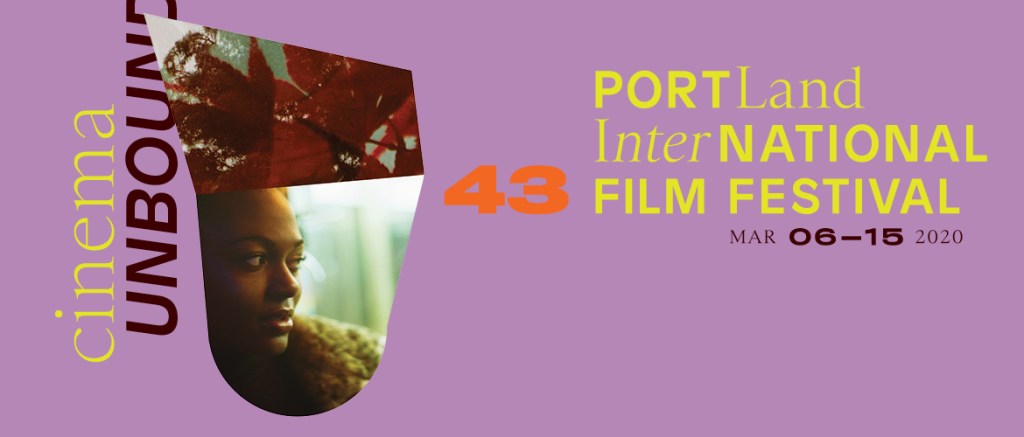
        March 2020 marked the 43rd year of the Portland International Film Festival, managed and hosted by the Northwest Film Center. While the festival has long been a staple of the local cultural scene, this year things were a little different. For the first time in nearly forty years, the NWFC has a new director, Amy Dotson. Dotson, who comes from an impressive background in independent cinema, comes from New York’s Independent Filmmaker Project, where she served as both Deputy Director and Head of Programming.[1] With a new director comes change to the festival itself. This year the festival combined with the Northwest Filmmakers’ Festival, a similar event focused on specifically regional filmmakers. While there was some concern that this would reduce exposure for local artists, the thinking at the top was that the clout of the Portland International Film Festival would overall result in a greater net gain for the filmmakers who would have been featured in the Northwest Filmmakers’ Festival. Another significant change came from the inclusion of special events, panels, and for the first time, judged competition; also in an attempt by the organizers to elevate the status of the festival in the global film community. Along with all the practical changes to the festival, the festival worked to re-brand, claiming the rather absurd moniker “Cinema Unbound.” Will this be the new name for PIFF in the foreseeable future, or should we expect a new and meaningless collection of buzzwords every year?

        As an international event, film festivals are uniquely positioned to be both cultural hubs, promoting tastemaking and intellectual development of the arts, and also venues for entertainment and spectacle. While the big festivals such as Cannes, Venice, and Berlin (which PIFF is trying more and more to emulate) are fairly restrictive for lay people without an abundance of money or connections, in the time since film festivals first began appearing en masse after World War II a remarkable amount of festivals have cropped up around the world varying greatly in size and accessibility, catering to every cinematic niche imaginable. By and large PIFF seems to be concerned with programming what Dorota Ostrowska refers to as the “Cannes film,” or what can more broadly be thought of as a “festival film.” Typically these are characterized by being independent, covering unrepresented narratives or characters, and not receiving much attention beyond the festival circuit (with notable exceptions, of course). This is largely due to the environment of large, high-end festivals which fosters both creative and financial networking between filmmakers and producers of arthouse cinema (Ostrowska 28). In many regards, the “festival film” is hard to describe in clear cut terms, but it’s something that you know when you see it.

        In light of PIFF’s clear trend towards programming “festival films,” it came as a surprise to many (and an outrage to some) that PIFF gave up two spots in their opening weekend to Disney/Pixar’s Onward (2020), a film that is, by no stretch of the imagination a “festival film,” and yet… Here it is. As one of the two PIFF events that I was able to attend before the event was cut short, I went into PIFF’s “free community screening” of Onward without any clear expectations, other than a childlike excitement for seeing a new Pixar film. While it was certainly a controversial choice on the part of the NWFC and PIFF, I think that choosing to program Onward as a free screening with an emphasis on community and the resources that the NWFC offers for young, prospective filmmakers served the community and the festival quite well in the end.

        Another new development that continues to impact just about every aspect of global life, including the Portland International Film Festival, is the rapidly spreading SARS-CoV-2 (severe acute respiratory syndrome coronavirus 2) — the virus responsible for the COVID-19 disease. Unless you have been living under a rock for the past two months, you should be familiar with this disease and the havoc that it is wreaking across the world. Due to concerns from public health experts, the 43rd Portland International Film Festival made the decision to close the festival early, cancelling the last several days of programming and events.

Unfortunately, as the name implies, international film festivals attract an international audience. Among those who travel to and attend the big annual festivals, there is a “circuit” of festivals in multiple countries around the world. In Julian Stringer’s “Global Cities and the International Film Festival Economy,” he cites three distinct definitions of what the “film festival circuit” can mean, the first being a journalistic sense, in which it represents “a closely linked network of interrelated, interdependent events” (Stringer 137). This is all well and good most of the time, but when in times like these that also means that individuals are travelling all over the world from crowded gathering to crowded gathering, acting as extremely efficient disease vectors. Film festivals are excellent venues to exchange and generate cultural capital, but unfortunately that’s not all they can generate.

To anyone who has been paying attention to the spread of the virus and the responses by various governing bodies, the response by PIFF may have seemed like too little too late. Reports suggest that the virus has been spreading through the community for more than a month on the West Coast before it was caught.[2] To ignore the threat of the illness until the last possible minute was nothing short of hubris, and hopefully this will serve as a wakeup call to institutions, both moving forward in the fight against SARS-CoV-2, and in the event of future pandemics. Events and institutions that host gatherings of hundreds of people, like PIFF or Portland State University, are ripe for the spread of infection. It is the duty of these institutions to their communities to be proactive and responsible. It’s frustrating and it’s unfair to have to cancel an event like this, but by making the choice to expose people, they also make that choice for people who would not otherwise have been exposed, especially when a significant portion of the festival’s patrons are over 60 — the age group most at risk for fatal complications. Unfortunately many of us now, in being involved with and studying film festivals, have also been forced to assume the mantle of amateur public health scientists. It’s scary and our futures are anything but certain, however we must lean into this, be proactive, and put the needs of the community above our own.

It will be interesting to see how film festivals and film exhibition more broadly answers the call of the times in regards to remote screenings and the adaptive use of modern technology to those ends. One of the technological devices that festivals like Sundance have been experimenting with recently is the application of virtual reality (VR) and augmented reality (AR). VR is a fully immersive experience, whereas AR involves an interactive interface which is typically overlaid on real images, such as in smart glasses.[3] This technology is not only being used as a way to enhance the festival going experience, but also as a type of new media that can be used for creative output. In fact one of the events at the Portland International Film Festival this year was a workshop led by Michel Reilhac, who is, according to the PIFF brochure, “a filmmaker and immersive media experience designer [who] curates immersive media content and experiences for the Venice Biennale VR competition and for Seriesmania in Lille” (pg. 7). As Liz Czach discusses in her article “Film Festivals, Programming, and the Building of a National Cinema,” film festivals are not just important for the exclusive arthouse community, but can be highly influential in the building and maintaining of a national cinematic output, especially in countries other than the United States, where international Hollywood films dominate the box office. “Programming is about tastemaking,” she says. “The ‘taste’ of the programmer can never be extinguished” (84). In a near-future where anyone with tech savvy can put on a virtual film festival, and anyone with access to the requisite technology can virtually attend the large, previously exclusive festivals like Cannes (or even PIFF, those passes ain’t cheap), the world of film festivals and film programming, as well as interpersonal curation may see a rapid evolution favoring even more diverse and exciting festivals and programming. It will be important not to be overwhelmed by choice or the possibilities of it all, but the personal taste of film programmers will likely shine through brighter and with more influence than ever before. It’s a brave new world, and things are going to get a lot worse before they get better; but they will get better, and I hope I’m around to see it.


[1] https://www.wweek.com/arts/2019/05/07/northwest-film-center-announces-new-director/

[2] https://www.cnbc.com/2020/03/06/doctor-who-treated-first-us-coronavirus-patient-says-covid-19-has-been-circulating-unchecked-for-weeks.html

[3] For more information about the state of this technology, check out this Forbes article: https://www.forbes.com/sites/moorinsights/2020/01/16/pico-north-and-nreal-dominate-xr-at-ces-2020/#54345835fe47

Fahrenheit 9/11

In 2004 the feature length documentary Fahrenheit 9/11 debuted at, and won, the 2004 Cannes Film Festival. Written and directed by and starring Michael Moore, this moving documentary film examines the attack of New York City on September 11, 2001 and what happened to the United States afterward.  By concisely laying out the facts (however seemingly slanted given Moore’s noted liberal leanings) Fahrenheit  presents its audience with a case for how the George W. Bush administration used the attack as a false pretense to enter into war with Iraq and Afghanistan- even though, as the film points out, neither country had much to do with the attack or the attackers for that matter. 

By breaking down relationships between the Bush family and prominent figures in the Middle East, going back decades, and questioning the validity of the official story behind the attack and the string of coincidences surrounding the events of that day, Moore presents the Bush administration as entering into war with Iraq for more personal and economic reasons than as a response to an unprovoked attack. 

An interesting film that makes you think, Moore’s style is engaging and, at times entertaining but it also strikes the right note when it comes to difficult issues. Issues like losing a loved one in war or the attacks themselves but he deals with it in a humanistic and straight forward fashion that is more insightful than depressing. Although the film does cover the attacks, it’s main focus is on the aftermath of the attacks and the foreign policy of the Bush administration. 

Opening with the story behind George W. Bush’s presidency in a surreal “who won it?” election of 2000 (which Moore attributes to media bias) moving to the events of Sept. 11 draws a map of how the United States entered into Southeast Asia unjustly. 

One of the highest grossing documentary films of all time and one of the most controversial, Fahrenheit 9/11 has been accused by some people of being one sided and only presenting one version of the facts. Despite the filmmakers’ obvious political leanings- Fahrenheit 9/11 is an important piece of work because, at the end of the day, it does present the facts and allows the audience to come up with their own answers to some guided questions brought up by Moore.  

Reminiscent of Soviet montage films of the 1920’s, Fahrenheit 9/11 presents and pretty clear distinction between those in power and the powerless working-class. Topics like the use of the Patriot Act and how it was used to infringe upon free speech and how this infringement of rights affected the general populace when the purpose of the bill was to prevent terrorism and future attacks. Moore also highlights the hypocrisy of the political elite who are hellbent on sending troops to war when they refuse to commit their own children to armed service.  

The issues discussed in Fahrenheit, I think, are just as relevant now with our current administration as they were at the time of the film because American foreign policy, as a whole, is worth investigating if for nothing more than having a generally informed electorate and are able to hold those in power, accountable. 

Deep and thought-provoking, Fahrenheit 9/11 exposes the motivations for war and how much power and corruption are prevalent at the highest levels of government. 

-Sword

In Chile, What Can’t Be Seen Doesn’t Exist

Maria Moreno

I can say for certain that I’ve never been as moved by a film as I was by Patricio Guzman’s The Cordillera of Dreams. It’s a grand statement that might seem hyperbolic to those who have never experienced forced migration from your homeland. For a bit of background, my family fled Venezuela in the 2000’s to escape the growing Chavez dictatorship. Unlike Guzman, I have never experienced first hand the violence in Venezuela and the Chavez dictatorship has never been as brutal as the notorious Pinochet dictatorship of Guzman’s native Chile but despite all this, I can relate to the pain of a person who has been forced to leave their country and can never return.

The Cordillera of Dreams uses the Andes mountains as it’s main character, a silent witness to the atrocities of the Pinochet regime and an ever present force. Through his narration and interviews with various people, Guzman paints a portrait of country that has not yet accepted and processed the crimes of the Pinochet dictatorship. For those who do not know, Augusto Pinochet’s dictatorship, which lasted from 1973 to 1990 in Chile, was characterized by the murder and torture of any of its dissenters (Encyclopedia Brittanica). It was a terrifying period of Chilean history and one that has comprised most of Patricio Guzman’s life. “We dream of Chile from afar,” says Guzman in the film, encompassing a feeling common amongst South and Central Americans, especially in today’s world. Throughout the film, the filmmakers love for his country is apparent but it is precisely because of this love that its history hurts him so much. All of the interviewees, other Chilean nationals, express a similar relationship with their country as they recall watching tanks rolling by their classrooms and soldiers kidnapping people before their eyes. It sounds like a nightmare but is contrasted with breathtaking footage of the Cordillera and a grandiose score, creating the dreamlike state evoked by the title. One is absolutely consumed by the magnificence of the Andes mountains and is then confronted with imagery of Pinochet era Chile, as though one is having a dream that turns bad. It’s a magnificent effect and one that only a master filmmaker like Patricio Guzman could achieve.

I think what struck me the most about the film was the audience’s reactions. I fully expected to be surrounded by older people at the 3 PM showing at the Whitsell Auditorium that I attended but what I did not expect were their audible reactions to what they were witnessing. I could hear gasps when footage of women being dragged by their hair were shown and sighs when Guzman turned the audiences attention once again to the majesty of the Cordillera. It was an incredible experience and one that I cannot say I have ever witnessed. The fact that the impact of this event and the significance of these mountains were not lost on an audience that, in all likeliness did not have any substantial knowledge of the events that occurred in Chile, was truly moving.

Works Cited

  1. The Editors of Encyclopaedia Britannica. “Augusto Pinochet.” Encyclopædia Britannica, Encyclopædia Britannica, Inc., 20 Dec. 2019, http://www.britannica.com/biography/Augusto-Pinochet.
Design a site like this with WordPress.com
Get started