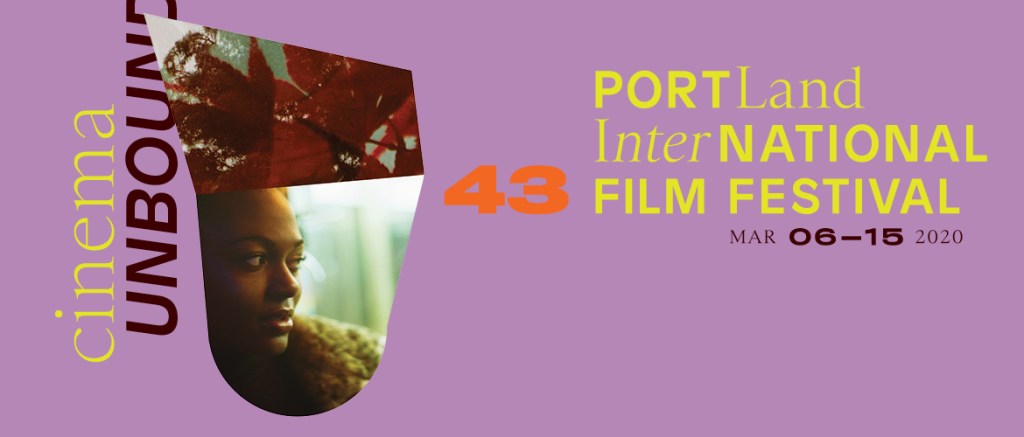
The Portland International Film Festival is a relatively small but still important event, as it provides a place for Portlanders to gather and discuss films in a variety of ways and contexts. The 43rd iteration of this festival was no different in that regard, though it still stands unique from the years before it.
There were some significant changes to the Portland International Film Festival this year, including the structure and length of the event. The timeframe was shortened from over two weeks (as it has been for many years), to a little over one. As well, this international festival was combined with the Northwest Filmmakers Festival, making PIFF a festival consisting much more heavily of films from the United States than in previous years. In fact, almost one-third of the films shown this year were from the USA. As well, though the festival was shorter and consisted of less films, there were new additions – such as workshops, panels, and a competition with guest judges. These advancements demonstrate PIFF’s move towards an attempt to become a more renowned and desired festival to be in, and an attempt to garner more festival entries and opportunities. In her essay, Liz Czach discusses the idea of “critical capital,” which is “the value that a film accrues through its success in the festival circuit” (Czach 82). Czach goes on to discuss that in being selected by programmers and critics for festivals, films are given “a level of distinction above its unselected peers” (Czach 82). The decisions made by the Northwest Film Center, who run the Portland International Film Festival, are likely an attempt to achieve what Czach has mentioned – they want to accrue more critical capital for their festival, and in turn, the films they select each year. Cindy Hing-Yuk Wong has another idea as to why competitions are added to festivals, stating “money and opportunity bring people to festivals. In recent decades, many festivals have added multiple competitions to their programs, so that filmmakers can use prizes to secure either distribution or capital for production” (Wong 9). She suggests a move such as the one made by the organizers of PIFF was to aid the filmmakers that are chosen each year, and potentially even to bring more money and opportunity into the realm of PIFF. Both Czach and Wong could be right, and likely are.
Film festivals provide a space in which people can see films they otherwise may not be able to, a place where people can gather and discuss the art of film, and a place where people can expose themselves to different perspectives of life. Adding to this unique power festivals have, question and answer sessions with directors of films at the festival provide a place where people can connect with and better understand the material they watch. It provides the most direct line people can get to understanding how the film they just watched was created. It also allows them to reach inside the minds of the creators to better understand the film. During the Q&A with the directors of We Are Forbidden, a short documentary film about girls in Nepal who share stories of their experiences with menstruation and the stigma surrounding it, viewers were able to better understand the process and even the material of the film because of the Q&A that followed. These sessions, even if they are short and small, help people connect with and understand the subject of the films because they are allowed to discuss and ask questions.
Accessibility is a key factor in film festivals, and something the Portland International Film Festival needs to be careful with and aware of. PIFF highlighted some stark problems in regards to this practice, but also demonstrated ways in which accessibility can be done well. While festivals are meant to be a place to show film as a higher art, they are also a space to help the local community broaden their knowledge of the art of film, and introduce them to non-Hollywood films they otherwise would not have exposure to. That is why accessibility is so important. A substantial part of the struggle PIFF has in regards to accessibility is cost. For an adult to attend any screening at PIFF, they must pay fourteen dollars. The price does not get much better with students and seniors, as their tickets cost twelve dollars, and a child’s ticket is ten dollars. This means that a family of 4 – two adults and two children – must pay forty-eight dollars to attend a single PIFF screening. That is a significant amount of money for many, and the majority of people in PIFF’s local community are likely unwilling or unable to pay. Price is a powerful tool festivals can use to uphold exclusivity, but it leads to the exclusion of people who could benefit from and enjoy attending. A significant portion of film festivals are about connecting with the local community, and introducing them to new films and new worlds. As Janet Harbord said, “film festivals are events tied to place, part of the calendar of local rituals that perform and enact the specific nature and appeal of a location for both inhabitants and visitors” (Harbord 70). The Portland International Film Festival does not aid its local community by making a ticket to a single screening fourteen dollars, and local support and attendance is vital. But even so, PIFF did hold a free community screening of the Pixar film Onward this year, in an attempt to connect with and better establish a place in the local community. It seemed to be a success, with a large amount of people in attendance. This goes to show how people want to be involved in PIFF, but perhaps cannot afford it.
Conversely, the Portland International Film Festival’s website this year was very accessible, which aided attendees significantly. There was an ample amount of information about the films, and it was organized in a very concise way. There were even multiple formats to view the schedule, making it very easy for people to decide when and where they wanted to attend. The films could also be organized in a multitude of ways so that people could search easily through the films, workshops, and events depending on what they were interested in. A festival having a website as accessible as PIFF’s is key in this day and age, as it makes the potentially overwhelming amount of information to sort through manageable and easy to deal with.
Something that must be addressed when discussing the 43rd Portland International Film Festival is the fact that the second half of the festival was cancelled due to COVID-19 – a pandemic currently wreaking havoc on the world. PIFF was late in responding to the virus, unlike many other events. They sent out no notices of precautions they were taking, and at screenings, there seemed to be nothing they were doing differently to help protect all who came in and out of their screening spaces. Their response though, once it had finally been made, was decisive, and the second half of the festival was ended. It was very unfortunate, and left a lot of people disappointed, but it was the best course of action to protect people from the disease.
To continue, the screenings at PIFF were not busy, and the audience was never full. This could be due to COVID-19, or the multitude of changes made between this year’s festival and previous years, or another unknown reason. Last year, screenings were often sold out, or at least three-quarters full. The pricing was the same, so the change likely did not come from there. For the paid screening of Onward, a Pixar film that was released the same weekend in theaters nationwide, there were only forty or so people in the whole auditorium – a surprise, as Onward likely has much more name recognition than any other film at PIFF. The audiences generally held a balance between men and women, but at the screening of Sunless Shadows – a documentary about young Iranian women incarcerated for killing family members – there were many more women than men. This film dealt with a topic more potent to women, but that should not discourage men from attending too. It is always important to consider how the people attending the festival will relate to the material. People are much more likely to go to a screening of a film about something they can relate to on any level rather than one they cannot.
The 43rd Portland International Film Festival was an interesting one to be sure. Though not a world-renowned event, PIFF is important to the Portlanders who attend, and to all the filmmakers selected for screening. The Portland International Film Festival provides a space where people can gather, talk, watch, and celebrate films, and deepen the bonds of community that are important to many. While cut short, PIFF was a success this year, as it always has been, because it provided a space for people to unite and appreciate the art of film.
Emma Chitwood
Works Cited
Contingency, time, and event: An archaeological approach to the film festival – Jane Harbord
Film festivals, Programming, and the Building of a National Cinema – Liz Czach
Film Festivals: Culture, People, & Power on the Global Screen, Introduction – Cindy Hing-Yuk Wong
 PSU School of Film @ PIFF