The expected virtue of International Film Festivals
Introduction
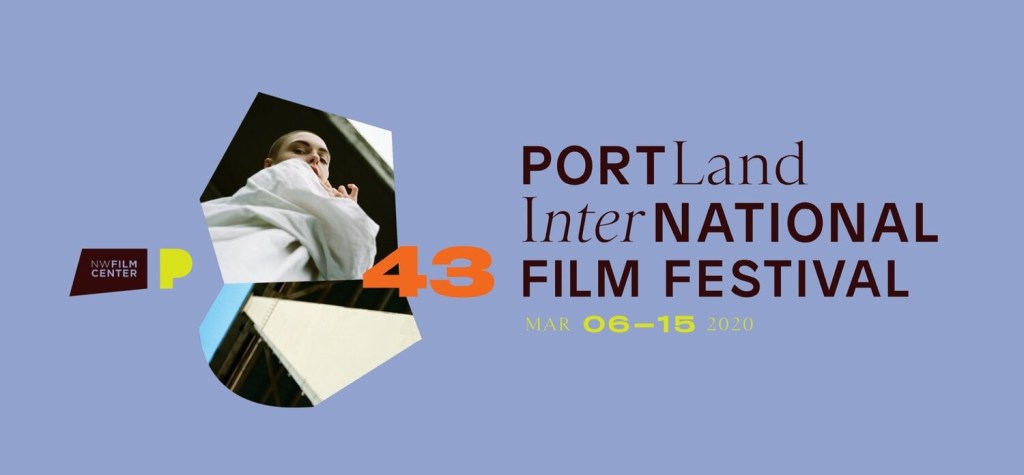
It seems there is nothing more confusing year than this year’s 43rd Portland International Film Festival (PIFF). Because the COVID-19 pandemic made the PIFF delay indefinitely during the middle of the festival season only left 4 days until the closing weekend. This was a huge deal to the people who were willing to join the festival, filmmakers and festival staff. Especially, since PIFF is not a small local, domestic film festival, but it has an international title and uses a bunch of different local cinemas or venues for holding this festival, so this issue was a big shock to PIFF. This unexpected happening approached me as a great confusion, however, from the opening night, March 6th, until March 11th, the day right before their big decision made, It was enough span of time to analyze or agonize about the PIFF’s identity, roles, system, environment, and atmosphere. As this is my very first experience of the PIFF, it was impressive in a lot of ways. Some parts matched my expectations, but the other parts didn’t. Then, what parts of this festival made me feel that way? This writing will focus on 2020 PIFF, where is it located on the film festival world, and how is it trying to define itself by comparing my experiences of participation of International film festival, such as Busan International Film Festival that registered by FIAPF (Fédération Internationale des Associations de Producteurs de Films ) or the USA largest independent film festival, Sundance, and including a small local film festival, and with the studies of film festivals. What does it takes to be a successful international film festival? We will talk about this through the 2020 43rd Portland International Film Festival.
Various roles and responsibilities of the International Film Festival.
Before I start to write down my analysis of PIFF, We should think about the roles and responsibilities of the international film festival. What is the influence of the film festival? In short, every international film festival takes the basic part as a distribution of worldwide films to the audience or the film markets. Therefore, the International film festival makes films emerge to the world, escape for the small limited market, creates worldwide film markets, film production trends, and furthermore, this makes it possible to define the national identity and film history. One of the big parts of the film festival, the program implements lots of things for the festival. 1)“Programming is precisely about tastemaking – on an individual, national, and international level. While the personalities and personal tastes of some international film programmers are readily expressed, others are seen to be submerged within larger discourses, such as the discourse of national cinema.” Naturally, there must be a gap by the scale and awareness of each festival. However, as an international film festival, the influence and responsibilities are great. The economical and historical influence of top tier international film festivals such as Cannes, Berlin, Venice is massive. For their massive influences, long histories of festivals and the assets of the geographical and historical importance of film history affected as a key role, but their endless development and movement to find and define their identity, or the secure their value is the most essential process. They keep pace with the flows of geopolitical or domestic politics, and film history so they could establish their position with their tradition and transformation coexisting. 2)“The success of the Cannes Film Festival is built around its ability to respond to the changes taking place in the film industry worldwide by restructuring the festival’s architecture to accommodate new trends, new films, and new directors.” As we can learn this quotation, Film festival needs to do a lot of challenges to make the film festival successful and influential. Establishing stable position as an international film festival brings lots of advantages to the country. 3)“Consequently, the ambition of many festivals – regardless of their actual size and the catchment area they draw participations and audiences from – is to aspire to the status of a global event, both through the implementation of their programming strategies and through the establishment of an international reach and reputation.”
Identity and role performances of 2020 43rd Portland International Film Festival
This year, PIFF holds a variety of events, programs using various venues, cinemas (PIFF using 6 different auditoriums located in Portland) which include unbounded genres, length, the origin of country films, and also provides different kinds of programs such as special screening and family screening like the other international film festival. They also seek to bring about structural change by introducing competition section (future/future competition) which was not included in previous PIFF. This seems corresponding to the role and identity of the international film festival. They perform and try to match with requirements as an international film festival. However, a closer look at this year’s PIFF, I could notice some unstable parts. One of the notable parts is the way they programmed to promote local films during the festival. In the programs, films that were produced in the local areas of the North West (PIFF is held by NW Film Center) of the country, such as Oregon, Washington, British Columbia are specified as their area name, not as a country name. This characteristic that promotes local films and distributes to worldwide audiences can be seen commonly through the many other international film festivals. 4)“Consequently, films selected for inclusion in a program like perspective Canada are seen as being selected because they are “representative” and adhere to a political agenda of what is good for the nation and good for Canadian film – not necessarily driven by quality, value, or good taste” as Czach remarked, PIFF promotes the local films by using the opportunities of the international film festival. But, another point to be worthy of attention is they don’t differentiate the local films with the other films. PIFF didn’t program the local films as one specific section, they programmed the local films with other country’s films. Especially in the shorts programs, 3-4 local films programmed on average. This is a quite vague choice they made. Even though they’ve stated the origin of the local films on their catalog, but it’s not clearly divided. So this rather suggests to the audience the opportunity to experience concentrated on the local films but invoking discriminative image that PIFF selected the local films more than the other country’s film.
Secondly, the advantages of the introduction of the competition system to the festival could drag more attention and produce a high-quality program. Also, by producing award-winning films from the festival, this can create festival’s identity or affect the world film market. However, the advantage of this system can be worked fluidly by the scale and influence of each film festivals. As more people and press get involved with the festival, the meaning or assets of competition get bigger, but it’s doubtful to acknowledge PIFF has enough power to keep the advantage. Obviously, we can not assure this because this is their very first time to introduce this system to the festival program, but considering the existing stratum of the main audiences and the extent of exposure to the media, the competition can be seen as a challenge rather than a stable choice.
Lastly, the identity of PIFF is not so clear. PIFF is an international film festival and they are programmed as a regular international film festival. They also included local films as well. These structures of the festivals share similarities to other festival. But the film festival has to own its solid identity. If not, the festival will stay in the local community only or could degenerate to the festival that just screens international films. From this point, this year’s identity of PIFF is not firm. Although, this year PIFF of course screened a lot of beautiful films from all over the world, however, because of its variety of genre, style or scale of the production, the identity that could encompass all of this festival as a whole is blurry.
Conclusion
Providing experiences of lots of great international films in a small amount of time to the people is a great virtue of the international film festivals. And this year’s PIFF successfully (unfortunately they postponed half of their festival because of the COVID-19) accomplished it for the audience. However, right now, PIFF seems far from the expected virtues of successful international film festival because of their lacking resources, public relations, screening numbers, and identity. Nevertheless, they didn’t stop to progress and keep seeking new programs to their festival and we believe their endless efforts will see the light of the world in the near future. – JK.LEE
Notes
- Liz Czach, Film festivals, Programming, and the Building of a National Cinema, 84p
- D. Ostrowska, Making film history at Cannes, 29p
- Julian Stringer, global cities and the international film festival economy, 139p
- Liz Czach, Film festivals, Programming, and the Building of a National Cinema, 85p
 PSU School of Film @ PIFF