Maria Moreno
It seems only fitting to write about the Portland International Film Festival’s opening night given that it did not get to have a closing night this year. It’s no surprise that PIFF would open with a film set in the Pacific Northwest, specifically Florence, Oregon. Clementine, the feature film debut of Lara Jean Gallagher, is a beautifully shot film which artfully captures the splendor of the Northwest. The film would be amazing if one were to judge it on its visuals alone but it definitely falls flat when it comes to its story. Despite its murky story, its two lead actors, Otmara Marrero and Sydney Sweeney, both give standout performances as women seeking connection. Their semi-romantic lakeside entanglement seems exciting, like a desperately needed spark, when they first meet each other but gets muddled up amongst the plot about Karen’s (Marrero) abusive ex and Lana’s (Sweeney) dream of becoming an actress. It was certainly a big hit with the audience who gave an extended applause at the end of the film and showered the director and producers with compliments during the Q&A. But one wonders if this film received such a warm welcome at PIFF solely because it almost acts as an advertisement for the beauty of the Pacific Northwest.
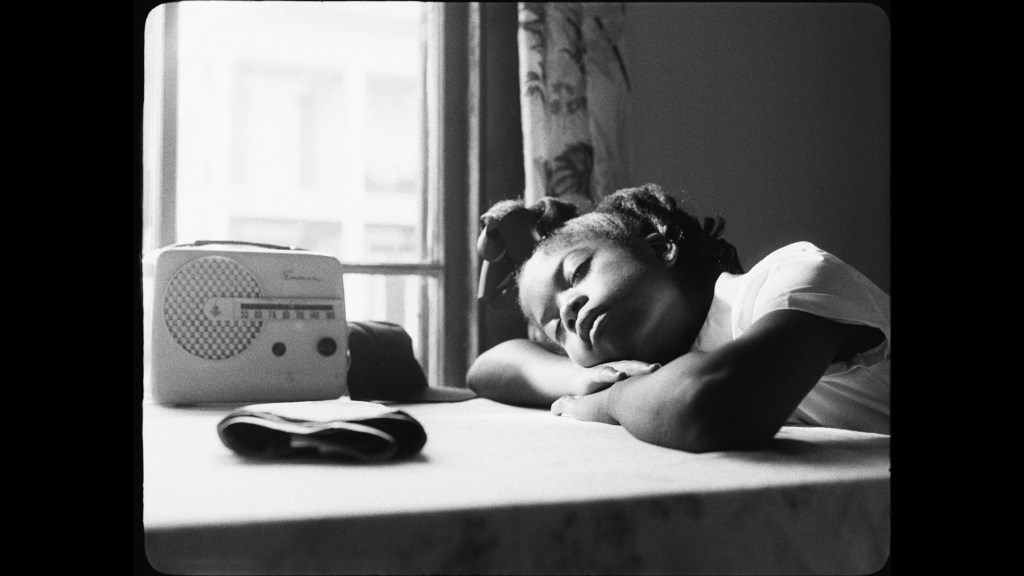
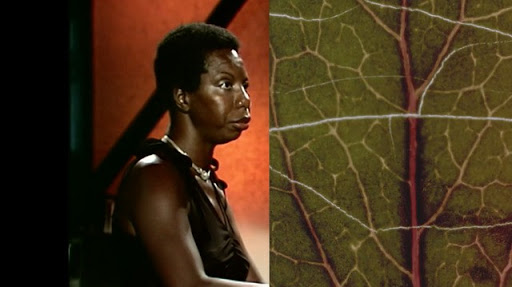
Now, while the theater was packed during Clementine, the 376 seat Whitsell Auditorium was less than a quarter full for the two opening night shorts, which were, arguably, some of the most prestigious works gracing the PIFF screens. The first shown, Garrett Bradley’s America, a re-imagining of American film history to include contributions by African American artists, will be showing in its own exhibit at the Museum of Modern Arts later this year, according to Bradley’s website. It’s a glorious film, which incorporates footage from the film Lime Kiln Club Field Day, thought to be the oldest film with an all black cast (Bradley), to create an archive of African American life in the early days of cinema. Bradley uses stunning black and white imagery to bring to light a whole history of African Americans that’s been lost due to racism. It’s a remarkably moving film which created a perfect dialogue between the second short shown, Ja’Tovia Gary’s The Giverny Document, winner of The Moving Ahead award at the 2019 Locarno Film Festival. The Giverny Document is a “cinematic poem” that meditates on the safety of black women’s bodies in white, Eurocentric societies, such as that of the U.S or France (Gary). Gary stands in the streets of Harlem, asking black women if they feel safe, and juxtaposes that with footage of herself walking through the lush gardens of Claude Monet’s home in Giverny, France, along with footage of Nina Simone and the Facebook live recording of Philando Castile’s death. It’s a hypnotic work, tapping into humanities innate fears about safety and exploring those fears through a group of people who often live every day feeling unsafe. It seemed incredible to me that these works by two prolific black American filmmakers would receive a smaller attendance than a film by a first time director. Perhaps the Portland Film Festival’s audience is more concerned with supporting local work than that of more widely known filmmakers.
Works Cited
- “Garrett Bradley.” Garrett Bradley, www.garrettabradley.com/.
- “The Giverny Document (2019).” Ja’Tovia Gary, http://www.jatovia.com/the-giverny-document-2019#1.
 PSU School of Film @ PIFF