Written By Garrett Recker
During PIFF’s 43rd year, seven collections of shorts were scheduled each with a different approach to an overarching, unifying theme. For the second shorts program, the title was “Chronicles.” The program housed six curated pieces (Remembrance, The Deepest Hole, Transmissions of Unwanted Pasts, The Marshal’s Two Executions, We Only Answer Our Land Line, and Mix-Mix/Halo Halo) that all interpreted the concept of “factual recording” in a unique way based on their genre. These ranged from stop-motion art installation, experimental, comedic, narrative, and archival styles. Geographical origin influenced the style of each piece as well the global perspective of the theme being addressed, with two coming from Oregon, two from Washington, one from Thailand, and one from Romania. While I would have preferred a more globally balanced sampling, I appreciate the program’s avoidance of an entirely West Coast narrative-based focus.
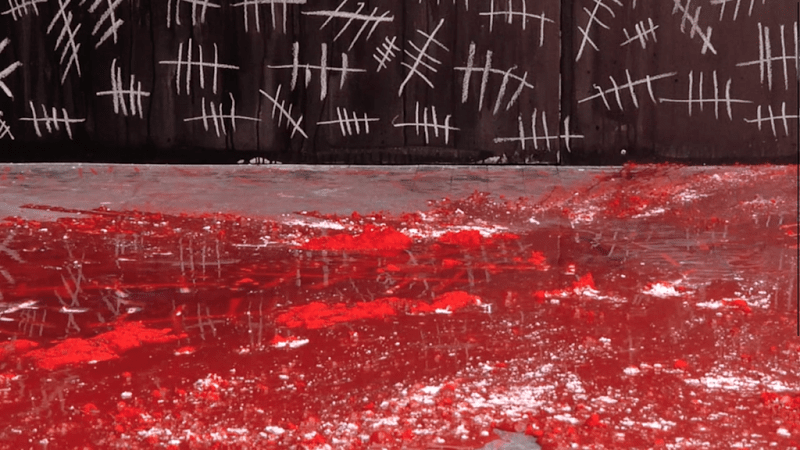
The stand out from the showcase was Sabina Haque’s 2015 short, Remembrance, which was a potent 11 minute direct address of US drone bombing deaths in eight separate countries. During the program’s concluding Q&A panel, Haque stated that the short works to combat erasure and give a voice to those who had tragically lost theirs. Remembrance, unlike the others and strangely in opposition to its end goal, was void of any clear dialogue. Instead, the short played overlapping tracks of percussion instruments and inaudible murmuring from a faceless crowd. This was paired with rapid stop-motion footage of people putting tally marks in white chalk on a black wall. The people appeared and disappeared as sudden blurs, leaving behind only their tally marks. The effect was something reminiscent of a ghostly presence. The existence of the person was marked by a single, vertical white line but their physicality was gone. In a broader perspective, Remembrance reminds us of the mortality of our loved ones who can only really be reflected in family chronicles, especially after they are gone.
The proceeding short, The Deepest Hole, by Matt McCormick used comedy to address the program’s theme. Here, “factual recording” is a media and religious bestowed label for a fabricated recording of what the 1970’s public were led to believe was screaming voices from the earth’s core. The short opens by explaining its subject; an almost 8 mile deep hole dug by the Soviet Union as part of a scientific discovery project. The narrative is then driven by a released recording collected from the workers who believed their hole had entered Hell. McCormick’s display of old media coverage and concerned religious groups highlights the absurdity of what is so obviously now known to be a publicity stunt by the Soviet Union. The Deepest Hole isn’t as concerned about real factual recordings as it is with labeling fiction as factual.
Individually, these pieces are strong works that address the program’s theme from different angles. Together, though, they are toxic. From a curatorial standpoint, it makes initial sense to cast a large net for a shorts program–both in genre and geographic origin. It helps broaden the discussion and include perspectives that might be new to a Western audience. The problem, though, is without proper context, the shifts in tone can be detrimental to a film’s lasting impact. Remembrance used its lack of dialogue to create a serious space for audience reflection. It’s based on real events and asks for real emotions to be at play. By itself, I can see this film sitting heavily with people, and I think that’s the director’s intention. The complex emotional responses audiences are left with encourage discussion. It’s all in service of Sabina Haque’s goal; to prevent the erasure of those who have been killed. This reflection never really gets a chance to occur as it’s instantly followed by a comedy. Instead of positioning a film after Remembrance that builds on the short’s work, PIFF pivots tone. This not only erases Haques serious questions from the audience’s minds, but the constant shifts in tone force the overall discussion to remain surface level. So many different things are being said that by the end it feels like nothing was really said at all. The messages of Remembrance and The Deepest Hole are also conflicting. Haque works to bring realization to reality. She doesn’t want those who died to be forgotten and uses factual recordings to do so. These death statistics from drone bombings are irrefutable facts that prevent their erasure. McComick’s work, on the other hand, challenges how seriously things should be taken by showing fabricated recordings. By positioning this after Remembrance, the importance of Haque’s topic is put into question, and essentially, erases those who died.
 PSU School of Film @ PIFF