By Hannah Cumming
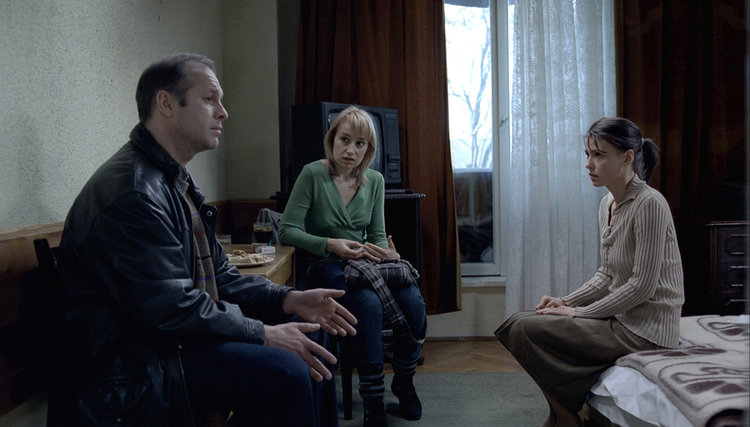
The Cannes Film Festival has always valued the showcasing of politically provocative cinema, as well as international New Wave films. This was the case at the fest in 2007, when the controversial Romanian New Wave film, 4 Months, 3 Weeks, and 2 Days took home the highest honor. Like many filmic movements, the Romanian New Wave is inspired by the lasting effects of an oppressive political era, tackling the traumatic lasting effects of communist Romania regime through neorealism, themes of resistance, liberty, and slow cinema. The film is a both haunting and scathing critique of communist regime in Eastern Europe, and without an understanding the history of communist rule in Romania, one cannot understand the true meaning behind 4 Months, 3 Weeks, and 2 Days.
The film follows the effects of Ceausecu’s reign on the every day Romanian – specifically the young female Romanian. In addition to multiple oppressive and abusive actions, in 1967, Ceausescu enacted the anti abortion law, criminalizing abortion and making it punishable by a maximum of 10 years in prison. This law proved deadly, and was a clear infringement of Romanian women’s rights. The leading character, Otilia, is a young Romanian woman in 1987 who helps her roommate receive an illegal abortion, which proves to have a lasting impact on her life and the way she sees her future. The effects of political restrictions placed on the population during this time causes much of the conflict throughout the film. Otilia’s roommate, Gabita, has fallen pregnant due to the lack of sex education and available contraception in Romania during this period. The two girls overcome tremendous obstacles in an attempt to abort the fetus illegally – instilling the help of an illegal abortionist named Mr. Bebe. Mr. Bebe is hard to convince once he discovers that Gabita is farther along than she had said, and they don’t have enough money to pay him for the procedure. Gabita waited nearly 5 months to go through with the abortion – another result of Romania’s poor sex education, and the criminal aspect of seeking abortion. Everything had to be done in secret. Because the girl’s don’t have enough money, Otilia is forced to have sex with Mr. Bebe in order to afford Gabita’s abortion. Mr. Bebe states that he cannot go through with the procedure unless he gets something in return, because he is risking his freedom. The pain both women endure in an attempt to get around the oppressive and abusive system will stay with them forever. Otilia spends much of the film breaking other laws and restrictions of personal freedom, from bribery to black market purchases. With an understanding of Romanian politics during this time, audiences can begin to further empathize with the film on a deeper level. Spending the transcendent and slow cinema moments to contemplate the ripple effects of this oppression and find deeper meaning in seemingly meaningless exchanges and actions. The film utilizes transcendental techniques to showcase the unfair and secretly panicked existence Romanians experienced at that time. With that much government interference, their pain had to be private or repressed. The pain can be found within the “mundane” long takes, minimal dialogue, wide shots, diegetic sound, and natural approach to acting.
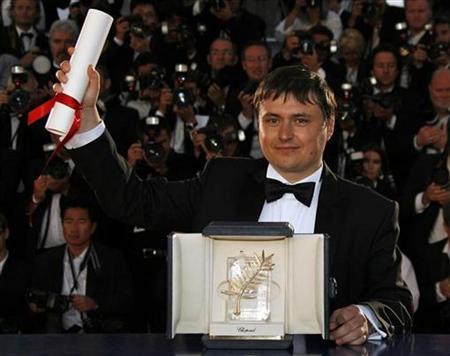
The slow cinema art thriller was awarded the highest accolade at the 2007 Cannes Film Festival – the Palme D’Or. The film debuted on the first day of the festival, and the director Cristian Mungiu became the first Romanian to ever win the biggest prize of the festival. The film has contributed to the abortion debate since its release 13 years ago, and its win at Cannes sparked much controversy due to the film’s brief graphic depiction of a freshly aborted fetus. In addition to the film’s commentary on reproductive rights, the film is also a must see for anyone interested in the lasting effects of communism in Romania.
 PSU School of Film @ PIFF