Emancipation for the past, the beginning of obsession. About the visualization of immensely human emotions.
Nothing is more interesting than watching two different movies in a low that have completely dissimilar styles and language but are still similar somehow. At PIFF 2020, the audience could experience this by watching A White, White Day directed by Icelandic director Hlynur Pálmason and Sibyl directed by French director Justine Triet at Cinema 21. These two films have a very different style and, storyline, however, they are both focused on the character’s ‘emotional state’. Two main characters, Ingimundur and Sibyl are living with severe trauma as if they weren’t affected, but they slowly got engulfed in their new obsession and their life is snarled up again. These two films show the instincts of human being, longing (They both lost someone they love) and obsession by following the character tenaciously, however, the way they visualize the development of those emotional states is completely different. How and what do they chose to convey this complexity?
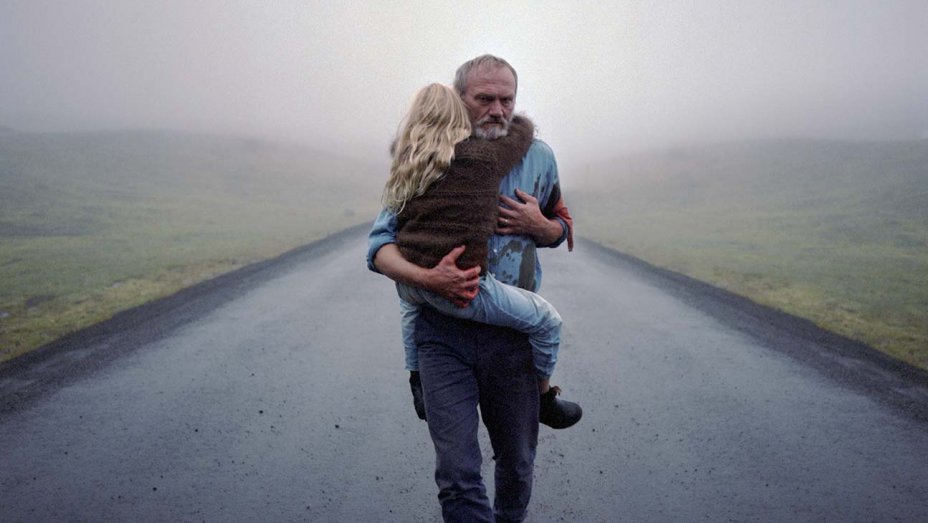
The salient difference between these two films is how they show the characters and how they make the audience follow them. In that sense, A White, White Day is unkind, whereas Sibyl is kind to the audiences. A White, White Day is full of the long, static takes. the evident point is most of the angles (except the last shot) in this film are wide-angle so it creates psychological distance between the audience and the main character. By doing so this film blocks the audience from relating our emotion to the character easily or excessively. why did the director choose this hard way (the audience can be bored by any possibility) for visualization? In some ways, this is a great choice to visualize Ingimundur’s emotion because he closed his mind after losing his wife for the accident. So we can not see his mind easily. Also, this film uses another strategy for showing his isolated emotion. They use the nature of Iceland, the hazy fog for representing his blurry emotion. While he is trying to dig into his wife’s secret, the fog lifts but at the end, the only thing left is another hazy fog (his trauma still exists) and the vivid color of the blood (they used color in a clever way as a metaphor of his life) on his clothes. In addition, Hlynur uses ‘Monitors’ throughout the film. The television show talking about the death, surveillance camera monitor, and the desktop monitor for mental counseling, all those things demonstrate isolated Ingimundur as well. However, he finally sabotages the monitor, meaning he finally breaks out from his cage and turns his inner longing to a new excessive obsession.
On the other hand, Sibyl plainly shows Sibyl’s emotion to the audience. Sibyl, like Ingimundur from A White, White Day, has suffered from her past relationship who left her and their child. And she becomes obsessed with an actress who is in a similar situation to her and things get worse and worse. The film has rapid story development and scene changes, lots of retrospection of Sibyl that tell what happened to her, and the film keeps showing her emotion explicitly, all of which make the audience participate the story a lot easier than A White, White Day. But this does not mean Sibyl is an easily understandable film. As Sibyl remarks during the movie, “Life is like a fiction, we can rewrite and rewrite whenever we want”, this film has a complicated structure to understand. This film shows her past chaotically without giving any special note that people usually differentiate present and past by using it for not making any confusion to the audience. In addition, we could see her imagination during the film, like reading the fiction that she’s working on. Justine using this disoriented structure as a fog in A White, White Day. This makes Sibyl’s emotion richer to analyze.
These are two well-made films that deal with comparable situations and emotions of characters but in completely different ways and surprisingly, they have a similar ending. There is nothing more important than human emotion in the film. But especially because these two films focused on the character’s emotional turbulence and how they change their surroundings and themselves as well, how to visualize their emotion throughout the movie run time is an essential question. And they used every aspect of mise-en-scène wisely to visualize their emotion. – JK Lee
 PSU School of Film @ PIFF