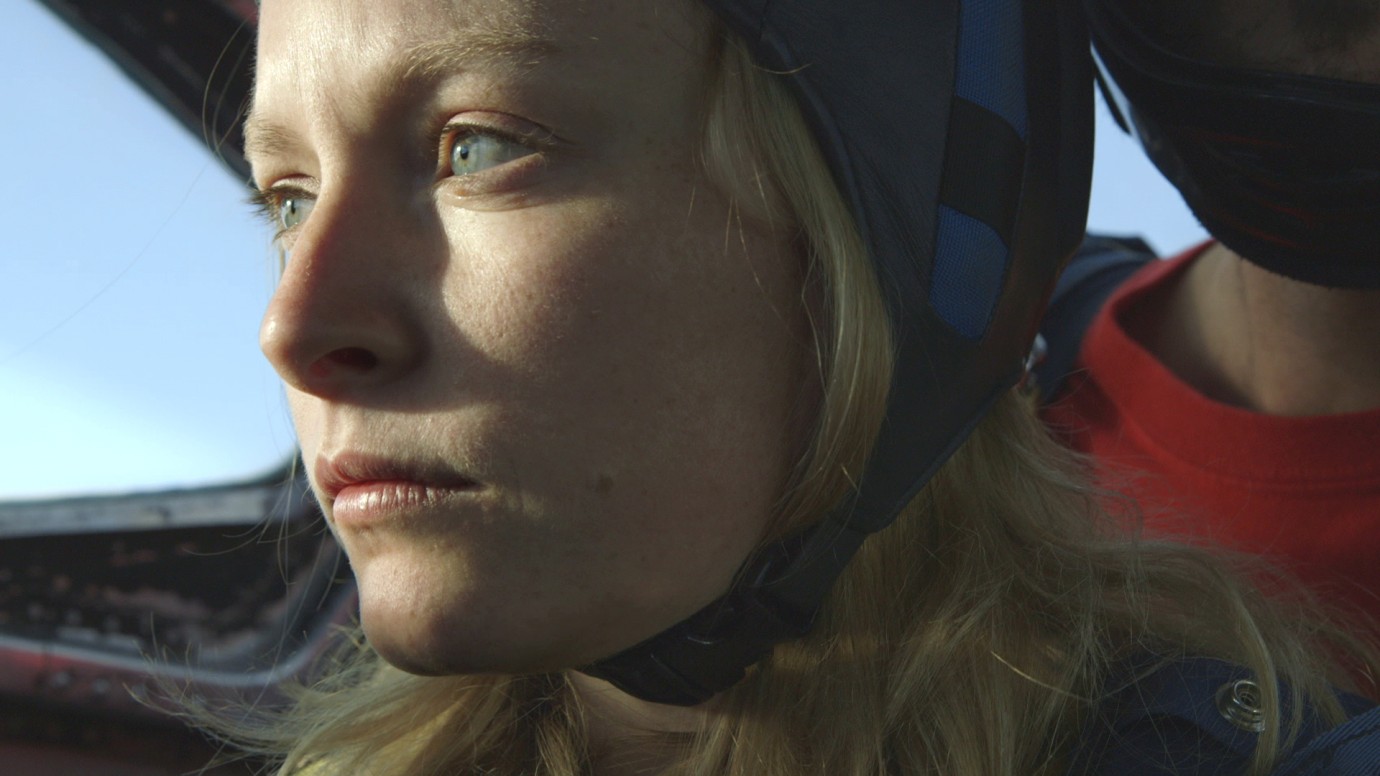
Anna at 13,000 feet directed by Kazik Radwanski is a heartbreaking story that revolves around the concept of loneliness and anxiety. The narrative is built around the character Anna (played by Deragh Campbell)beginning to live on her own while starting full time employment at a local Seattle daycare. Anna as a character is reluctant to conform to any set ideals of being normal, accomplishing so by acting out in strange and bizarre ways that characters find off putting or “crazy”. The 13,000 feet in the title of the film refers to the skydiving an one time activity that becomes Anna’s escape from the rest of society. The significance of the 13,000 feet has to do with the freedom and acceptance that Anna gets from skydiving but reluctantly gets in her regular life. We as an audience see what happens when Anna attempts to show her real self to others first in the wedding of her best friend Sarah (played by Lawrene Denkers), the daycare and the skydiving school. At the daycare and the wedding, Anna, is at her most disjointed from the rest of the world seemingly floating throughout the day compared to the other adults in the film. This is especially true considering the use of children in the film which act as emotional equivalents for Anna. The kids in the film are Anna’s best friends and often act as the only people that she can talk to and share without the fear of judgement or belittlement. At the wedding in lieu of Sarah being her emotional support Anna turns to the best man Matt(played by Matthew Johnson) but outside the wedding this support is never recreated again. At the skydiving school Anna is completely self-relevant she does all of the preparation and her final jump on her own in order to gain a sense of independence. In this sense she is never rejected or belittled at the school and ultimately finds a purpose that she can pursue outside of regular reality. The films greatest value comes from the cinematography which provides a language to Anne’s motivation. Radwanski constantly uses handheld camera movements to personify Anna’s isolation from the others around her. He achieves this by frantically trying to reframe Anna who is constantly moving in and out of frame. This type of movement is often parried with the use of close ups even when other characters are talking to Anna off screen. This type of shot selection doesn’t change until Anna is able to skydive, framing her overlooking the skyline while in static shots. This is done to put Anna outside the boundaries of her society achieving a level of stratification that she cannot find in anyone else in the film except while skydiving. Her best friend is trying to start her own life, Matt becomes more distant the more Anna reveals herself to him and the kids are too immature to understand the hardships she goes through. To this point skydiving becomes Anna’s moment of solace between the constant boring nature of life, a chance in which the ills of the modern world go by the wayside. Anna’s progression toward the film is not one that is meant to be a self discovery but more as a comment on the unglamorous view of the 21st century person. Radwanski provides the audience with a glaring critique of self therapy and the reliance on other to support you. At the same time he also underlines the importance of finding a purpose in life even if it is in skydiving.
By Nick Garza
 PSU School of Film @ PIFF