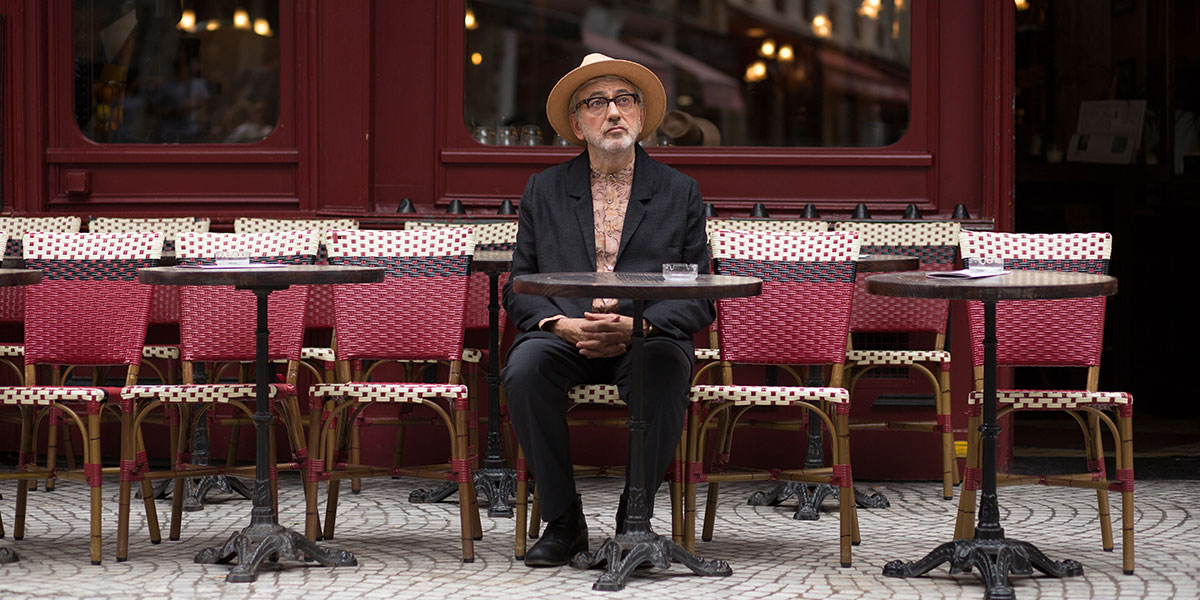
There is a misconception of festival films as being eternally stuffy and self-important, but director Elia Suleiman couldn’t be farther from such concepts. In his return to film, It Must Be Heaven, he tackles the Israel/Palestine conflict through a global perspective. Before walking into the film, I heard one festival-goer complain that “every festival has to have an Israel/Palestine movie.” Luckily for him, Suleiman is aware of this. Heaven is nothing if not self-aware, to the point of being self-effacing. Even as it acts as a serious love letter to Palestine, it makes light of cultural expectations of what a Palestinian film should look like. After all, this is a film that takes place in Paris and New York, only allowing half of its screen time to Palestine. And yet, Palestine feels present, even when Suleiman (playing himself as a silent, deadpan world traveler) wanders the streets of foreign cities. It’s a lofty idea that is made more approachable through humor and whimsy.
It Must Be Heaven was a wonderful film to go in blind to. The PIFF website describes it as “frequently funny,” but I couldn’t have anticipated exactly how funny it would be. One gets the impression that Suleiman wished to play upon these expectations. The opening sequence sets the film up to be a serious religious drama before breaking tone to make a grander point about gate-keeping and borders. This point is made in such a silly, childish way that it’s difficult not to open your heart immediately to what the film has to say. The rest of the film continues in this same spirit, bolstered by a lovable, straight-faced performance by the director.
The idea of national identity recurs throughout, always interrogated through satirical or otherwise comical means. During his time in Nazareth, Suleiman is accosted by his strange neighbors. There is no ill will between them, just a desire to share their experiences with one another, no matter how eccentric those experiences may be. The fraternity shared between Palestinians in an Israeli-occupied city is highly present. France and the US are presented quite differently. In France, we see a procession of fashionable but unapproachable people. The streets are become physically empty during a run of scenes that take place on Bastille Day, showing a lack of connection both to each other and to the revolutionary spirit of the holiday. America is especially lampooned. As an American, I found the sequence showing all the New Yorkers carrying a procession of bigger and more absurd guns to be amusing and enlightening.
That isn’t to say that the whole film is just laughs at the expense of various cultures. It uses those laughs to make broader points about cultural difference, especially from a Palestinian perspective. When Suleiman goes to pitch his film to both French and American distribution companies, he is waved off for different reasons. The French wish for a more distinctly Palestinian film to be touted around at festivals, while the Americans only have interest in potential action films that can be presented in English. Western countries silence the voices of others, but we do it in our own uniquely terrible ways. Despite this continued string of disappointing encounters abroad, Suleiman manages to showcase his own culture through it all. Mentions of Palestine are continual, even when he isn’t there. He goes to a tarot reading in New York and the card reader tells him that Palestine will continue to prevail. Maybe not in his lifetime, but still. It will continue to exist because of the tenacity of its people. Perhaps films like this are helping keep that spirit alive.
In no scene is this more clear than the end, as a group of young, happy Palestinians dance in a club together. Suleiman watches, sipping a drink. For the first and only time in the film, he gives a little smile. It may seem a small gesture of good will, but it carries with it a belief in a more positive future for Palestine.
This review was written by McKinzie Smith
 PSU School of Film @ PIFF