I would like to start by issuing a “Spoiler Alert”, so if you don’t like having plot points of films being revealed then you should stop reading reviews and go watch the film.
The documentary nipawistamasowin: We Will Stand Up(2019) followed the story of a Cree-Canadian family seeking justice after the murder of their young family member. The film is mostly a typical criminal justice documentary, though the twist lies in the race element and the gross miscarriage of justice that followed them through the entire process. The filmmaker, Tasha Hubbard, is also a member of the Cree tribe, and her insider status was prevalent throughout the film. She often inserts herself into the story, which breaks the rules of the typical observational documentary. Her style is instead participatory, and this approach would have been impossible if she had not been Cree. Her deep understanding of the abuses the Cree faced over generations guides the film’s determination. This is not a film about minorities complaining about unequal rights, this is a film about the destruction of the native population, the murdering of human beings, and a government who is more or less complicit. One woman is shown calling the whole scenario a message to racists that it is “open season on indigenous people.”
Tasha’s insider status allows a much more personal view of the subject matter. Many of these criminal justice documentaries rely heavily on fact and stoic interviews with family members, because this is generally how a courtroom is supposed to work. Even though she did not know the family well before the murder, they are completely at ease speaking with her because they know they don’t need to be on the defensive. Tasha never challenges the idea that racism is at play because she knows all too well. The fact that she began filming this documentary before the trial even started is proof of that. Even though she could not have predicted the course the trial would take, she knew that there would be injustices to document.
These injustices started seemingly small, with native jurors being rejected on sight and the lack of communication between the prosecution and the family of Colton, the murdered young man. In the trial they discovered that Colton’s body had been left at the crime scene uncovered for a full day, during which it rained. Though many may be unfamiliar with native customs and beliefs, it’s not hard to understand why that fact would be extremely upsetting for a family to hear. The defense also showed images to the witnesses of the young man’s dead body, putting them in a state of shock and apparently breaking protocols based on Cree beliefs. These were only slights against them in a larger picture, a picture that ended with the white farmer being acquitted entirely.
The evidence was overwhelming, even after a lot of it was washed away in the uncovered crime scene. There was no self-defense claim because the farmer never had reason to believe that the man was a threat, only that his friends were possibly attempting to steal a “quad”. Colton was also shot point blank in the back of the head directly behind his ear. It was no accident. His defense tried to claim that it was, that the farmer had tried to fire into the air initially but the shot was delayed. A gun expert argued that this was impossible and that no delay would last long enough for him to position the gun from aiming at the air to being behind Colton’s ear. The defense brought up some random people to talk about unverified accounts, with completely different guns, of what the defense claimed happened. The gun expert’s testimony was forgotten. Even in this argument, it is still manslaughter as it was an accidental death due to gross negligence with a firearm by the farmer. The family was sure at least that much would go through. By an all white jury he was deemed not guilty, even of accidental death. This was somewhat anticipated given the description of the film, but still utterly shocking that the racism was strong enough to completely ignore the fact that this white man killed a native man.
The film was not over when the ruling was announced, however. Instead Tasha followed them as they spoke to politicians, even the Prime Minister of Canada. The film makes it clear, however, that the politicians were only utilizing them for PR purposes. She shows that the Prime Minister happily posted a photo of their meeting, arranging the mother and sister of Colton to sit next to him for the shot, but only listened to what they had to say and made no promises to change anything at all. The only rule Tasha mentions to change eventually was the lawyer’s ability to dismiss jury members without reason. This is something that is allowed in the states as well, though the other side of the case has the right to challenge. If the prosecution in Colton’s case had the right to challenge the dismissal of the native jurors was left unclear.
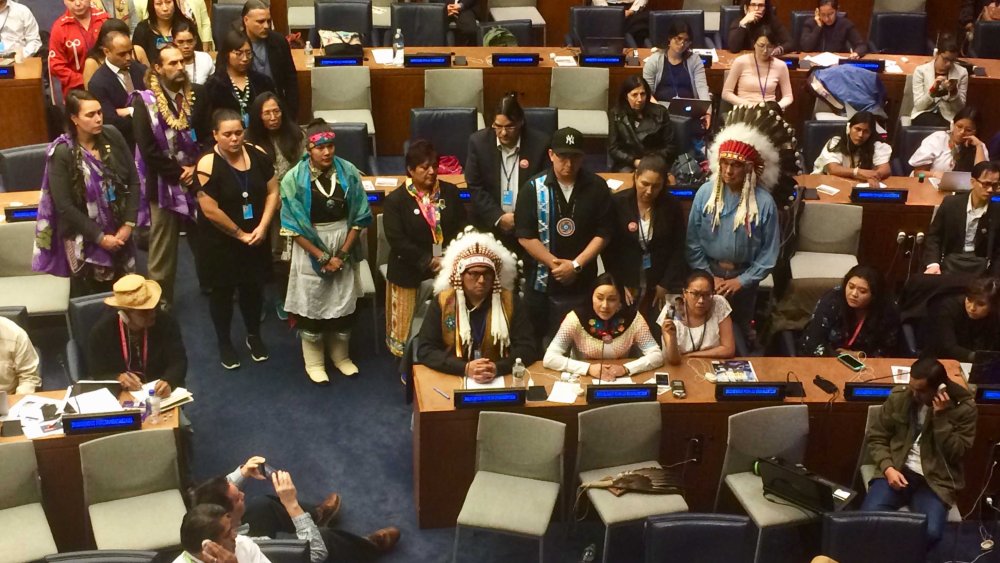
Tasha shows that the only place the family was truly heard was at a UN meeting for native peoples taking place in the United States. The family almost didn’t get to speak, but the council made a special exception for them. Tasha zooms out as the sister speaks, showing the gathering crowd of people standing around the family in support. Whether their address to the UN changed anything is unclear, but it was a very powerful image to more or less end their journey with. She also includes a scene in which Tasha and her son speak with her white adoptive grandfather, who almost appears to defend the white farmer’s actions in killing Colton to protect his belongings. It was an interesting choice to show the values of her own family, adoptive or not, and how they contradict the entire message of the film and of the family; Material belongings(land, “quads”, etc.) are not worth human life.
She ends with Colton’s sister telling Tasha how much she would have liked Colton if she had been able to know him. It doesn’t end with her cursing the farmer, or the system, or any of the other things that had wronged them throughout the film. She ended with a point on what was truly lost, a life, a human being.
Emma Mayfield
Words: 1070
 PSU School of Film @ PIFF