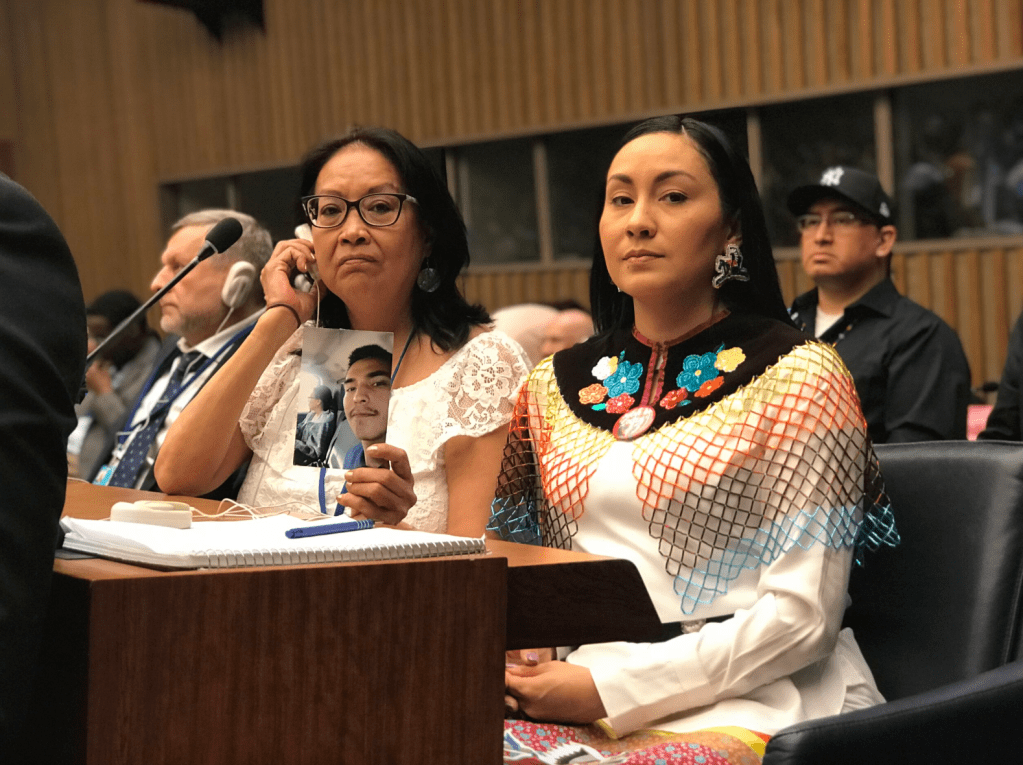
Nîpawistamâsowin: We Will Stand Up, a Cree documentary from Canada, focuses on the murder of a young Cree man named Colten Boushie, and the subsequent trial of his white killer, Gerald Stanley. Tasha Hubbard, a Cree woman and the director of the film, followed the story of 22-year old Colten Boushie, who was shot in the back of the head at close range by Stanley, as it unfolded. The film captures the struggles the family faced and continue to face in attempting to find justice for Colten. Racism against the Boushie family, the Cree people, and native Canadians in general permeates throughout the film, culminating in the decision made by an all-white jury to acquit Gerald Stanley of all charges. Even with this significant blow to morale, hope, and faith in the justice system, the Boushie family reaches higher and aims for new laws to protect native people and provide fair trials. So far, they have spoken at the United Nations Council in New York City and met with many of Canada’s political leaders in Ottawa.
The film was incredibly powerful and moving. Throughout the screening, people were sniffling in the audience and wiping away tears as the story unfolded. Every passionate and heartwrenching speech given by Colten’s sister, every injustice done onto the family, deepened the heartbreak felt by everyone in the auditorium. The turnout for the film was fair, and mostly consisted of an older crowd. It would have been interesting to see younger people who might not know as much about the injustices in this world, as Nîpawistamâsowin: We Will Stand Up could have opened their eyes.
The use of different styles of animation to tell different parts of the story, such as to provide historical context and to tell Colten’s story in a different way, was unique and clever. It helped break up the parts of the film that weren’t shot in real time or with interviews. Additionally, Tasha Hubbard narrated over different parts of the film which provided more context and knowledge with which to watch the film and better understand the plight of the Boushie family and the Cree people. As well as being the director of the film, Hubbard is also Colten’s cousin, and her personal connection to the story made it all the more powerful.
Besides focusing on Colten’s story, Tasha added a layer of understanding and interest by including her sons in the film as well. Because Colten was a younger Cree man, adding the very personal layer of Tasha’s own young Cree sons and showing conversations they have about their past and their present as Cree people made the plight of the Boushie family and the Cree people even more powerful.
This film is incredibly relevant in today’s world, and Nîpawistamâsowin: We Will Stand Up discusses important issues that must be addressed and solved. Learning more about the injustices inflicted upon the Cree people and on native people in general is vital in creating a better future for all who come after. Nîpawistamâsowin: We Will Stand Up helps further the conversation, educate people, and hopefully it will help lead to necessary structural changes that will help improve our world.
Emma Chitwood
 PSU School of Film @ PIFF