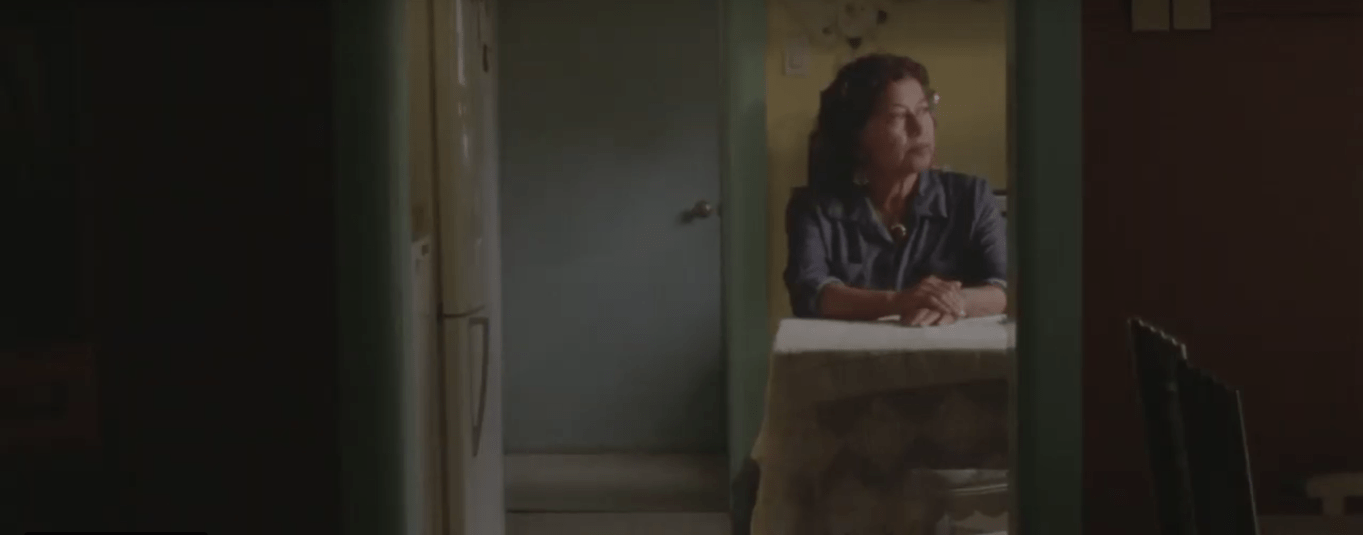
This year at the 43rd Portland International Film Festival, the festival was running a Future/Future Competition. The festival describes this competition as “highlighting boundary-pushing new cinema from emerging filmmakers”(cinemaunbound.org). The first film to play from this selection was Borrufa(2020), which PIFF described as an immigrant woman’s navigation of her husband’s betrayal, and a film that blurred the lines between documentary and narrative. It claimed the film utilized “long, thoughtful takes,” raising the expectations for an aesthetically, if not also narratively, brilliant film. Though perhaps this description was not clear enough for many, as the audience seemed quite appalled by the overall pacing of the film.
The film style had borrowed many elements from Neorealism, such as 3-5 minute takes with little action, little dialogue, and a stagnant camera, often leaving us with an empty frame. The actors were also untrained and confirmed in the talk-back that this was their first film, and all of them had been apprehensive about their roles initially. However, each actor completely embodied their role, filling the story with powerful human emotion. The woman the story primarily follows had a strong sense of loss and longing, highlighted by several solo scenes. One of which, she dances to a slow song in her kitchen, holding her chest as she gently sways alone. Without a word from her we can feel her hurt in the light of her husband’s betrayal, and her loneliness appears overwhelming. In another scene she speaks to her mostly incoherent mother, who sits directly beside her, and she tells her mother how much she misses her presence. Sadly, The actor revealed in the talk-back that the old woman was her actual mother, and she passed 4 months after shooting had completed. Those moments of longing and love for her mother feel so genuine, and it’s because they were.
The shots were primarily empty, leading the viewer to focus on a few particular objects that were visible. In one scene, the woman walks in a garden space, mostly out of view. She disappears completely and yet we continue to sit in that space in her absence. This occurs multiple times throughout, where a character will walk out of frame and the camera stays to watch the empty space the character has left behind. It seems a theme of change and the passage of time are all tied to the characters, plot and the style. This long pensive film about loss holds us in moments of absence, in moments of quiet sorrow, and all of this is so human that it is uncomfortable.
During the talk-back following the screening, filmmaker Roland Dahwen revealed that he wasn’t so interested in the final product, but instead he was more captured by the process of creation. He claimed it was a 7-year journey creating this 110 minute film, and he seemed quite melancholy that the journey had finally ended, interestingly lining up with the themes of his film. His creation was not meant for the masses, it was meant for himself, his actors, and a small community of supporters. The fact that anyone outside of that group would enjoy the film seems merely coincidental. Perhaps this is why the film aggravated so much of the audience, perhaps they could sense that the film was not made for them as mass-market and even most festival films are.
Being the first film to show in this competition, it may have put off quite a few of the attendees. “Boundary-pushing” can mean many things, and in this case the film challenged our sense of a traditional film’s pacing and the attention paid to the most insignificant of details. Slow cinema like this is considered a difficult style to watch, especially for the average audience members used to high paced action movies of Hollywood. Many people walked out of the film, and more complained throughout to their neighbors. This outrage from the audience members was very distracting to anyone who was trying to enjoy the film for what it was. Perhaps the festival should have been more clear in the description of the film that it was not an entertainment piece, but an art piece. This would have whittled the audience down to those who could quietly enjoy the film, and saved angry guests the ticket price of a film they clearly despised.
- Emma Mayfield (717 words)
 PSU School of Film @ PIFF